Drainage problems can affect a single flat even when the other properties in the same building have perfectly functioning sinks, toilets and showers. The most common explanation is a blockage or defect within pipework serving that particular flat, rather than a fault affecting the building’s entire drainage system.
Drainage problems in one flat may develop because of accumulated grease, hair, soap residue, unsuitable items entering the toilet, damaged pipe connections or an obstruction in an individual branch pipe. However, a problem in a shared soil stack or communal drain can also affect one flat before neighbouring properties show any symptoms.
For homeowners, tenants, landlords and managing agents across London, identifying which section of pipework is affected is essential before arranging repairs or deciding who should pay.
DH Drainage Power provides residential and commercial drainage assistance across London and surrounding areas, including drain unblocking, CCTV drain inspections and drain repairs.
This guide explains why drainage faults sometimes affect just one flat, how to recognise warning signs, what steps residents can safely take and when professional investigation may be needed.
How Can One Flat Have Drainage Problems When Others Do Not?
Most apartment buildings have several drainage connections rather than one uninterrupted pipe serving every appliance.
Wastewater from a flat’s kitchen sink, shower, bath and toilet travels through individual pipes before entering larger drainage connections. Depending on the building’s design, these may connect to a shared vertical soil stack or underground drainage system.
A blockage can occur anywhere along this route.
When the obstruction is located in a pipe serving only one flat, the neighbouring properties may continue draining normally. However, an obstruction further down a shared system can affect particular apartments depending on their position and the connections involved.
Individual Branch Pipes
Branch pipes carry wastewater from individual fixtures towards a shared drainage connection.
A blockage inside a kitchen sink branch may affect only that sink. Similarly, an obstruction in the bathroom pipework may cause a shower or bath to drain slowly while the kitchen continues functioning.
Problems limited to one fixture usually suggest that the initial investigation should focus on its connecting pipework.
Shared Soil Stacks
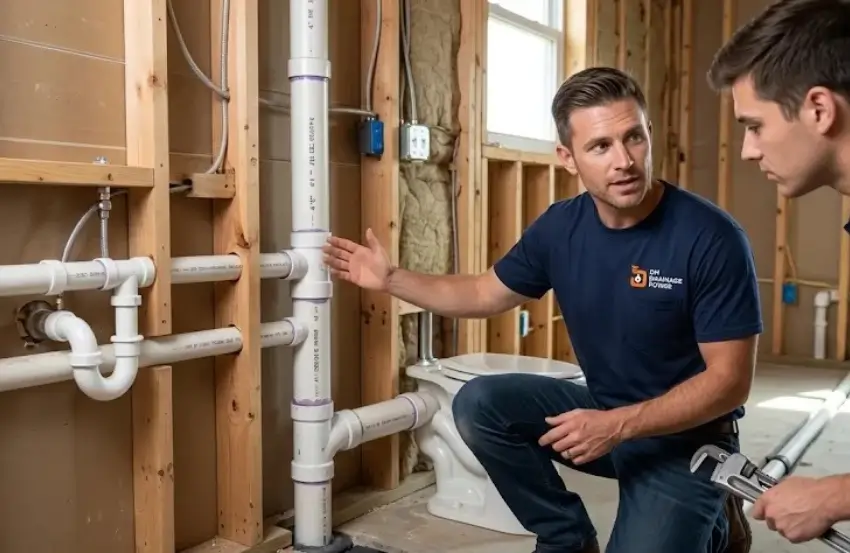
A soil stack is a vertical pipe that carries wastewater from toilets and other connected fixtures through a building.
Several flats may discharge into the same stack at different levels.
An obstruction at a particular point can cause wastewater to accumulate or back up through an affected connection. The symptoms depend on the location of the blockage, pipe layout and wastewater flow.
Consequently, a shared drainage fault does not necessarily mean every flat will experience identical problems.
Underground Communal Drains
In some apartment buildings, wastewater enters underground drainage pipes before reaching a public sewer.
An obstruction in these pipes may initially become noticeable in lower-level flats or at particular drainage outlets.
However, the location of the symptoms alone cannot establish whether the issue involves private plumbing, communal pipework or a public sewer.
A proper drainage assessment may be necessary.
What Are the Most Common Causes of Drainage Problems in One Flat?
Understanding the likely causes helps residents describe the problem accurately and avoid ineffective attempts at clearing it.
1. Grease and Food Waste in Kitchen Pipes
Kitchen drainage pipes frequently collect cooking fats, grease, detergent residue and small food particles.
As these materials accumulate, the space available for wastewater becomes restricted.
Early symptoms may include a sink emptying slowly, unpleasant smells or water returning into the basin.
A blockage within an individual kitchen connection can remain isolated to one flat.
For persistent problems, professional drain unblocking services in London can help investigate the affected drainage route.
2. Hair and Soap Residue in Bathrooms
Hair can combine with soap residue and other debris to form obstructions inside bathroom waste pipes.
This may cause slow drainage from the shower, bath or basin.
In many cases, the issue begins close to the affected fixture rather than within the communal drainage system.
A removable drain strainer can help reduce the amount of hair entering bathroom pipes.
3. Wet Wipes and Unsuitable Flushed Items
Toilet drainage pipes are designed to carry wastewater, human waste and toilet paper.
Wet wipes, sanitary products, cotton buds and similar materials can become trapped in bends or narrowed sections of pipework.
Even products marketed as flushable may contribute to drainage blockages.
Thames Water’s blocked drain guidance explains the common materials responsible for wastewater obstructions.
4. Damaged or Misaligned Drainage Pipes
Not every drainage issue is caused by material trapped inside a pipe.
Cracked connections, displaced joints, internal pipe damage or restricted sections can interfere with wastewater movement.
Some defects may also encourage debris to accumulate repeatedly in the same location.
When blockages return after clearance, further investigation may help determine whether pipe condition is contributing to the problem.
5. Obstructions at Shared Pipe Connections
A flat may have clear internal pipework but still experience drainage problems where its branch pipe joins a shared stack.
The obstruction may be close enough to affect one connection more severely than others.
This is one reason residents should avoid assuming that neighbouring flats are unaffected simply because nobody else has reported a problem.
What Warning Signs Suggest a Flat Has a Drainage Problem?
Drainage faults often begin with minor changes in wastewater flow.
Recognising these signs early can reduce the likelihood of an unexpected overflow.
Common warning signs include:
- A kitchen sink that empties more slowly than usual.
- Water collecting around a shower or bath outlet.
- Gurgling noises when a toilet is flushed.
- Unpleasant smells around sinks or bathroom drains.
- Wastewater rising in one fixture when another is used.
- Toilet water levels changing unexpectedly.
- Repeated blockages affecting the same appliance.
- Wastewater appearing at a low-level drainage outlet.
Some symptoms suggest a localised obstruction, while others may indicate that multiple fixtures share an affected pipe.
What Does It Mean When Several Fixtures Are Affected?
When the kitchen sink, bathroom and toilet experience problems together, the obstruction may be located further along a shared drainage route.
However, multiple symptoms do not automatically prove that a communal pipe is blocked.
The internal drainage layout must be considered before drawing conclusions.
Why Can a Ground Floor Flat Experience Sewage Backflow?
A lower-level flat may be vulnerable when wastewater cannot pass through a downstream pipe.
Wastewater entering the system from higher floors can create pressure or rise towards available lower-level outlets.
In some drainage arrangements, this can result in sewage backing up into a ground-floor toilet, shower or other connected fixture.
Sewage backflow should be treated as urgent because it may involve contaminated water and create a risk of property damage.
Avoid using affected fixtures, keep people and pets away from contaminated areas and contact the building manager or an appropriate drainage specialist.
How Can You Tell Whether the Problem Is in Your Flat or a Shared Drain?
The symptoms can help narrow down the possibilities, although they cannot establish the exact location of every blockage.
| Drainage symptom | Possible explanation | Recommended action |
|---|---|---|
| Only the kitchen sink drains slowly | Grease or debris in an individual waste pipe | Check accessible strainers and arrange assessment if unresolved |
| Shower drains slowly but other fixtures work | Hair or soap residue near the shower connection | Clean accessible debris safely and monitor drainage |
| Toilet and bath are both affected | Possible obstruction in a connected drainage route | Stop unnecessary water use and seek professional advice |
| Wastewater backs up when neighbouring flats use water | Potential shared stack or downstream drainage obstruction | Contact the managing agent urgently |
| Multiple flats experience drainage problems | Possible shared drainage or sewer fault | Coordinate with building management and identify the responsible party |
| Blockage returns repeatedly | Possible persistent obstruction or pipe defect | Consider a professional drainage inspection |
| Wastewater appears at the lowest floor | Possible downstream restriction or backflow | Avoid using affected facilities and arrange urgent investigation |
These examples are indicators rather than definitive diagnoses.
The same symptom can have several causes, particularly in older or altered buildings.
What Should You Do When Only Your Flat Has a Blocked Drain?
Taking a few sensible precautions can help limit damage while the cause is investigated.
Step 1: Identify Which Fixtures Are Affected
Check whether the problem involves one sink, one bathroom or several drainage outlets.
Note when the symptoms first appeared and whether they happen continuously or only when water is discharged.
Avoid repeatedly testing fixtures that are already overflowing.
Step 2: Ask Whether Other Flats Have Similar Symptoms
Contact nearby residents or the building’s managing agent.
Ask whether anyone has experienced:
- Slow-draining sinks or baths.
- Toilets that are difficult to flush.
- Wastewater returning through drainage outlets.
- Unusual drainage noises.
- Unpleasant smells from shared drainage areas.
This information can help establish whether the problem extends beyond one property.
However, a lack of complaints does not rule out shared drainage faults.
Step 3: Avoid Using the Affected Fixtures
Where a blockage is suspected, limit water use through the affected outlets.
Continuing to use a blocked sink, toilet or shower may increase the risk of an overflow.
When sewage is backing up, stop using connected fixtures and seek assistance.
Step 4: Avoid Harmful DIY Methods
Do not mix chemical drain cleaners or repeatedly pour aggressive cleaning products into blocked pipes.
Avoid forcing unsuitable objects through drainage openings or dismantling communal pipework without proper authority.
Chemical products can create risks for occupants and anyone subsequently working on the drain.
Simple measures, such as removing visible hair from an accessible drain strainer, may be appropriate when carried out safely.
Step 5: Notify the Responsible Person
Tenants should report drainage problems to their landlord or letting agent.
Leaseholders should contact their managing agent or freeholder when shared pipework may be involved.
Provide clear information about the affected fixtures, symptoms, dates and any previous drainage problems.
Photographs may also help document an overflow or visible damage.
Who Is Responsible for Drainage Problems in Flats?
Responsibility depends on the drainage pipe’s ownership, the building’s legal arrangements and the terms of the tenancy or lease.
It is not always determined by which flat experiences the problem.
Responsibility for Pipes Serving One Flat
In a leasehold property, internal plumbing and pipes serving only one flat are commonly the leaseholder’s repair responsibility.
However, the specific lease may allocate responsibilities differently.
A tenant should normally report the problem to the landlord or letting agent rather than assume personal responsibility for arranging structural drainage repairs.
Before arranging repairs, check the lease or tenancy agreement and establish whether the affected pipe serves only one flat or forms part of the shared drainage system. Repair responsibility and who ultimately pays may depend on the legal arrangements and the cause of the problem.
Responsibility for Shared Drainage Pipes
Shared soil stacks and communal building drainage are commonly managed by the freeholder, building landlord or managing agent.
The precise arrangements depend on the building’s ownership structure and legal documents.
The Leasehold Advisory Service guidance on repairs and maintenance explains why leaseholders should check their lease before deciding who is responsible.
Responsibility for Public Sewers
Public sewers and adopted lateral drains are generally maintained by the relevant sewerage company.
A shared building pipe does not automatically become a public sewer merely because it serves several flats.
The distinction between building plumbing, private drains and adopted sewers is important.
For properties within its wastewater service area, Thames Water also explains its responsibilities for public and shared sewers.
Can a Managing Agent Arrange Drainage Repairs?
A managing agent may coordinate inspections, access and drainage repairs on behalf of the freeholder or residents’ management company.
In buildings with shared service areas, maintenance work may require access to communal cupboards, basement drainage connections or another flat.
Residents should check who can authorise the investigation before contractors are asked to work on communal infrastructure.
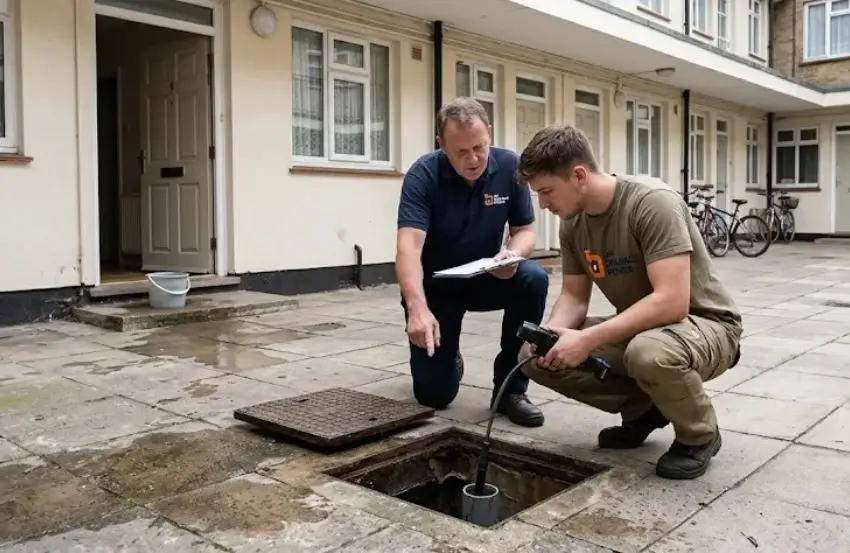
How Can a CCTV Drain Inspection Help Identify the Cause?
When a drainage problem persists or repeatedly returns, visual inspection can help establish what is happening inside accessible drainage pipes.
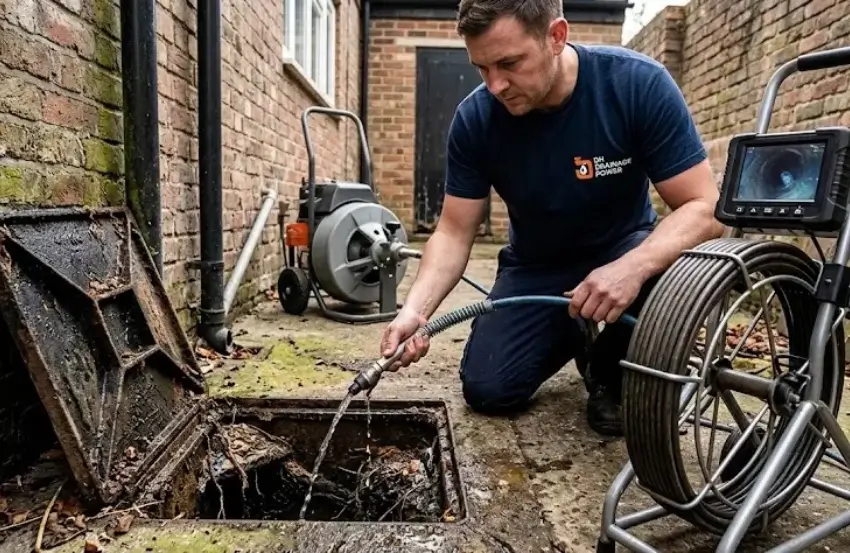
A CCTV drain inspection uses a specialist camera to examine suitable sections of pipework.
Depending on access and pipe condition, it may help identify:
- Obstructions restricting wastewater flow.
- Accumulated grease or debris.
- Cracked or damaged pipe sections.
- Displaced drainage connections.
- Signs of structural deterioration.
- Areas where blockages repeatedly develop.
Camera inspection is not always the first or most appropriate step. Some internal waste pipes are too small, inaccessible or unsuitable for a particular camera system, and an initial assessment may identify a more practical approach.
Does Every Flat Need a CCTV Survey?
No. A simple blockage affecting one accessible fixture may not require a camera inspection.
A survey becomes more useful when the source is uncertain, the problem involves buried or communal drainage, or repeated clearance has failed to resolve the underlying cause.
DH Drainage Power provides drain inspections in London for suitable drainage problems.
What Happens After the Source Is Identified?
The appropriate action depends on the findings.
An obstruction may require drain clearance, while damaged pipework may require repair.
Where a communal pipe or adopted sewer is involved, the responsible party should be identified before work proceeds.
The aim is to address the cause rather than repeatedly treating the same symptom.
How Can Landlords and Managing Agents Reduce Drainage Problems in Flats?
Managing drainage in apartment buildings requires attention to individual properties and communal systems.
Landlords and property managers can reduce avoidable disruption by establishing clear reporting and maintenance procedures.
Keep Records of Previous Drainage Problems
Record which flats have experienced blockages, when they occurred and what work was completed.
Repeated incidents in the same area may suggest a recurring issue that requires further investigation.
A record of the affected fixtures can also help identify patterns.
Communicate Drainage Rules to Residents
Provide clear advice about what should not enter toilets, sinks and shared drainage systems.
Residents should avoid flushing wipes or sanitary products and should dispose of cooking grease appropriately.
Simple prevention advice is particularly useful in buildings with frequent changes of occupancy.
Maintain Access to Communal Drainage Areas
Drainage access points may be located within basements, communal cupboards, gardens or secured service areas.
Managing agents should know where access is available and who can authorise entry.
This can make the investigation of unexpected drainage problems more straightforward.
Investigate Repeat Blockages
Repeated drainage failures should not automatically be treated as separate incidents.
Where problems continue, consider whether the pipe condition, connection arrangement or maintenance history needs review.
What Are the Risks of Ignoring Drainage Problems in One Flat?
Minor drainage symptoms may become more disruptive when the underlying problem remains unresolved.
Potential consequences include:
- Complete blockage of a sink, bath or toilet.
- Wastewater overflowing into occupied rooms.
- Damage to flooring, walls or nearby fittings.
- Unpleasant odours affecting living conditions.
- Repeated disruption to tenants or residents.
- Disagreement over repair responsibility.
- Contamination where sewage enters the property.
A slow-draining sink does not necessarily indicate a serious structural defect.
However, recurring blockages, sewage backflow and multiple affected fixtures deserve prompt attention.
Are Drainage Problems Different in London Apartment Buildings?
London contains a wide variety of residential buildings, including converted houses, purpose-built apartment blocks, mixed-use developments and newer flats.
Their drainage layouts can differ considerably.
Converted Houses
A converted property may have drainage connections altered during the creation of separate flats.
Understanding the current pipe arrangement can be important when investigating which connection serves each property.
Purpose-Built Blocks
Purpose-built apartment buildings may have several flats connected to shared vertical stacks and communal drainage routes.
Access and repair arrangements may therefore involve building management.
Mixed-Use Buildings
Some buildings contain residential flats above commercial premises.
Where drainage systems share connections, problems can be more complicated to trace.
Commercial kitchens and other heavily used facilities may have different maintenance requirements from domestic fixtures.
These building characteristics are relevant throughout Greater London, including residential areas such as Croydon, Wembley, Kingston upon Thames and Hounslow.
DH Drainage Power serves residential and commercial customers across London and surrounding areas.
Frequently Asked Questions About Drainage Problems in One Flat
1. Can a shared drain be blocked even if only one flat has problems?
Yes. A shared drain or soil stack can sometimes cause symptoms in only one flat, depending on the pipe layout and the position of the obstruction. A particular branch connection may be affected before other flats experience noticeable difficulties. A professional assessment can help establish whether the problem is localised or involves shared drainage infrastructure.
2. Why does my ground-floor flat experience drainage problems more often?
Ground-floor flats can be affected by downstream drainage obstructions because wastewater from higher-level fixtures may enter the same system. If the wastewater cannot flow away normally, it may return through lower-level outlets. However, repeated problems can also originate in the flat’s individual drainage connection, so the precise cause needs investigation.
3. Is the landlord responsible for a blocked drain in a rented flat?
Tenants should report blocked drains to their landlord or letting agent promptly. The landlord may be responsible for repairing drainage installations, although liability for a particular blockage can depend on the tenancy agreement, the cause of the problem and applicable law. Tenants should not assume that every blockage is automatically their financial responsibility.
4. Can a blocked drain in one flat affect neighbouring apartments later?
Yes. A blockage that initially affects one branch or connection may develop into a wider problem, particularly where wastewater cannot pass through a shared pipe. However, some obstructions remain confined to one fixture. Residents should report persistent problems early, especially where other apartments use the same drainage infrastructure.
5. Do I need permission before arranging drainage work in a leasehold flat?
Permission may be necessary when work involves communal drainage pipes, shared access areas or building infrastructure controlled by the freeholder or managing agent. Work limited to plumbing within the flat may be treated differently under the lease. Check the building’s requirements before arranging investigations that involve shared facilities.
6. How do I know whether a recurring flat drainage blockage needs CCTV inspection?
A CCTV inspection may be useful when blockages repeatedly return, several fixtures are affected or the source cannot be established through an initial assessment. Camera inspection can help reveal internal obstructions or pipe defects where suitable access is available. Not every blocked sink or toilet needs a camera survey.
7. Who should I contact if sewage backs up into my flat?
Stop using affected drainage fixtures and keep people away from contaminated water. Notify your landlord or managing agent immediately, particularly when shared drainage may be involved. If you suspect a public sewer problem, contact the relevant sewerage company. For private drainage issues, arrange suitable professional assistance without delaying urgent safety measures.
Conclusion: What Should You Do If Only Your Flat Has Drainage Problems?
Drainage problems affecting a single flat usually suggest a fault in an individual waste pipe or branch connection, but shared drainage systems can sometimes produce similar symptoms.
The best approach is to identify the affected fixtures, check whether neighbouring flats have experienced problems, avoid unsafe DIY work and establish who is responsible for the relevant pipework.
Recurring blockages, wastewater backflow and unexplained drainage faults may require professional investigation.
Need Drainage Assistance in London?
DH Drainage Power provides drain unblocking, drainage inspections and drain repairs for residential and commercial properties across London and surrounding areas.
Our emergency drainage assistance is available 24 hours a day, seven days a week.
Call DH Drainage Power: 07897041092
Website: https://dhdrainagepower.co.uk/
Request Drainage Assistance: Contact DH Drainage Power
Explain which flat is affected, what symptoms you have noticed and whether access to communal drainage areas may be required.