If a drain starts running slowly and keeps doing it no matter how many bottles of cleaner go down the sink, I start thinking beyond a simple blockage. One of the most common hidden causes is tree root intrusion.
After more than 20 years working on drains and sewers across London and the South East, I’ve seen the same pattern time and again. A property has mature trees nearby, the drainage begins to slow, smells appear outside, then one wet day the toilet backs up or an inspection chamber fills to the brim. By that stage, the roots are rarely the only issue. They’ve usually found a weak point in the pipe and turned a small defect into a proper drainage problem.
How tree roots get into drains and sewers
Roots do not usually punch straight through a sound modern pipe. That is a common myth. What they do very well is search for moisture, oxygen and nutrients, then work their way into tiny defects that already exist.
That could be a displaced joint, a cracked clay pipe, a worn seal, a poorly made patch repair, or an old connection point that was never properly sealed. Once a fine root gets in, it thickens over time. Then more roots follow. Inside the pipe, that root mass catches paper, wipes, grease and other waste, and the drain starts losing capacity.
A healthy tree is not the problem by itself. A weak pipe usually is.
UK sewer guidance takes this seriously. Water industry guidance says landscaping should be considered alongside sewers and lateral drains so the impact of tree roots can be assessed. It also warns against planting directly over sewers, and advises keeping drains away from trees, shrubs and bushes by at least the canopy width at mature height unless protective measures are used. That’s sensible advice, because once roots find a route in, they rarely stop at “just a little bit”.
Why root intrusion causes slow drainage and blockages
The first sign is often slow flow rather than a full blockage. Water still gets away, but not as freely as it should. A bath may take ages to empty. A toilet may rise higher than normal before dropping. A kitchen sink might gurgle every time the washing machine pumps out.
This happens because roots reduce the clear space inside the pipe. Think of it like a net hanging across the drain. Wastewater can still pass through at first, but solids start catching on the fibres. Grease sticks to the roots. Toiletries get snagged. Then the bore narrows more and more until the drain begins to surcharge.
Once that starts, symptoms become easier to spot around the property.
- Slow-draining sinks or baths
- Toilets that are hard to flush
- Gurgling plugholes
- Bad smells from drains
- Water standing in an inspection chamber
- Waste backing up into low-level fixtures like showers or floor gullies
Water company advice ties these signs to blocked or damaged pipes as well. Slow drainage, odours and wastewater coming back up into the property are all classic warnings that the system cannot discharge properly.
What CCTV drain surveys show when roots are present
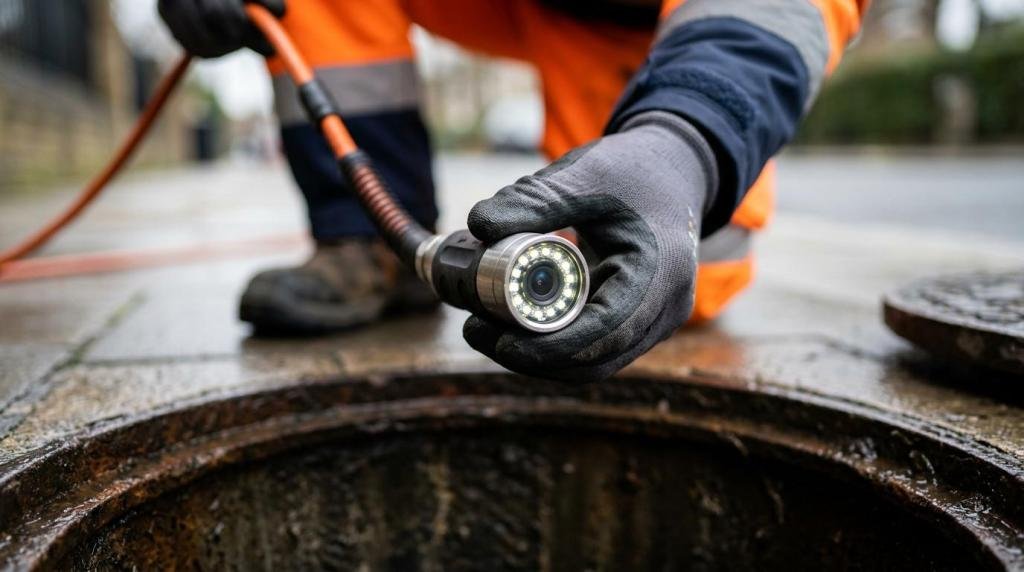
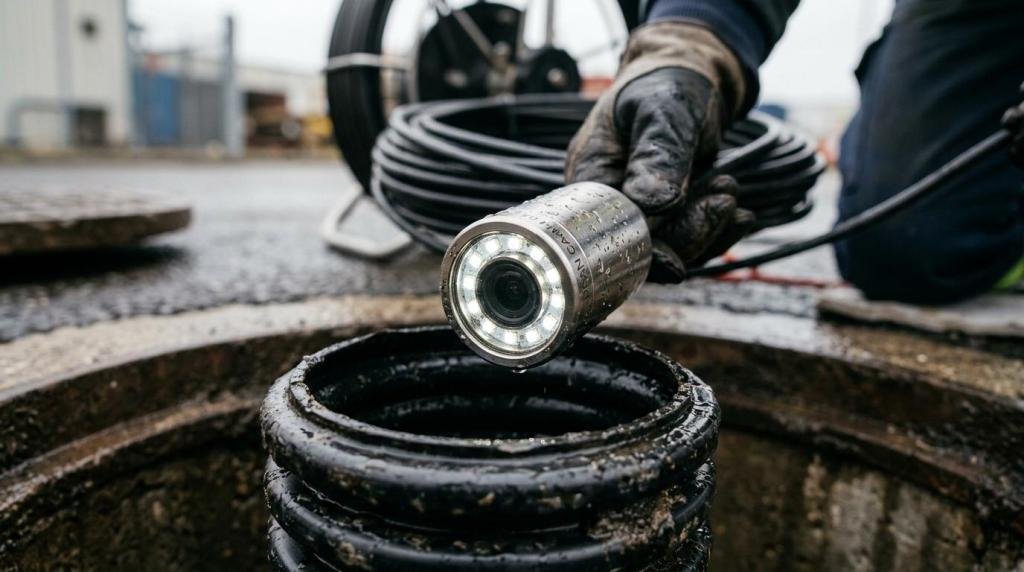
A CCTV drain survey usually tells the real story within minutes. On screen, early root intrusion can look like fine white hairs pushing through a joint. In more advanced cases, it looks like a dense fibrous mat hanging into the pipe, sometimes thick enough to trap debris across the full width.
I often see this in older clay systems. The joints open slightly over time, roots enter, then the pipe starts cracking further as soil movement and moisture changes do their work. In winter and very dry spells, ground movement can make this worse. Water companies and drainage guidance both recognise tree roots and soil movement as causes of pipe damage.
Roots also create a second problem that people do not always think about. Once the pipe is cracked or joints are open, groundwater infiltration can get in. That adds extra water to the system, especially after rain, and can increase the risk of foul sewer surcharging.
Here’s a simple guide to what the symptoms usually point to.
| Symptom | What I often find on CCTV | What usually needs doing |
|---|---|---|
| One sink slow, rest of house fine | Local waste pipe blockage, not usually roots | Internal cleaning or trap clearance |
| Several fixtures slow on ground floor | Root intrusion in external drain run | CCTV, root cutting, then repair |
| Repeated blockage in same place | Roots at a cracked joint or displaced section | Root removal plus patch or lining |
| Bad smells outside near chamber | Standing foul water from restricted flow | Chamber check and drain survey |
| Chamber full after toilet flush | Downstream obstruction or collapsed pipe with roots | Urgent clearance and damage assessment |
Drains most at risk from tree root damage
Not every property with a tree nearby will get root damage, but some drains are much more exposed than others. Older pipework is high on the list, especially clay drains with ageing joints. Shallow runs near front gardens, driveways with planting beds, and rear foul drains close to hedges are all common trouble spots.
Lateral drains can be vulnerable too. That’s the section carrying wastewater from a property to the public sewer. Many owners assume anything outside the house wall belongs to the water company, but that is not always the case. If the pipe serves only your property and sits within your boundary, it is often your responsibility.
The risk tends to rise when a few factors come together.
- Older pipe materials: clay pipes and ageing joints give roots an entry point
- Nearby planting: drains close to mature trees or dense shrubs face more pressure
- Existing defects: cracks, poor connections and displaced joints attract root intrusion
- Limited access: missing inspection chambers or poor roddable access delay early diagnosis
- Repeat debris build-up: grease and wipes cling to roots and make slow flow much worse
I’ve also seen plenty of trouble where old extensions were built over drainage runs without much thought for future access. NHBC guidance is clear that drains should be accessible for maintenance and cleaning, ideally without needing to remove sanitary fittings or enter the building to deal with a blockage. That matters a lot when roots are involved.
Tree root removal and repair methods that actually last
Cutting the roots out is often the first step, but it is not always the full answer. If you only clear the obstruction and leave the damaged joint or crack in place, the roots will usually come back. Sometimes it takes months. Sometimes it’s the next growing season. Either way, repeat blockages are common.
The right fix depends on the condition of the pipe after the roots are removed. If the drain wall is still structurally decent and the defect is local, a patch repair or resin liner can work well. If the pipe is broken, misshapen or collapsed, excavation and replacement is the better job.
This is usually the order I recommend after a root-related blockage is confirmed:
- CCTV diagnosis: identify the entry point, pipe material, depth and extent of damage
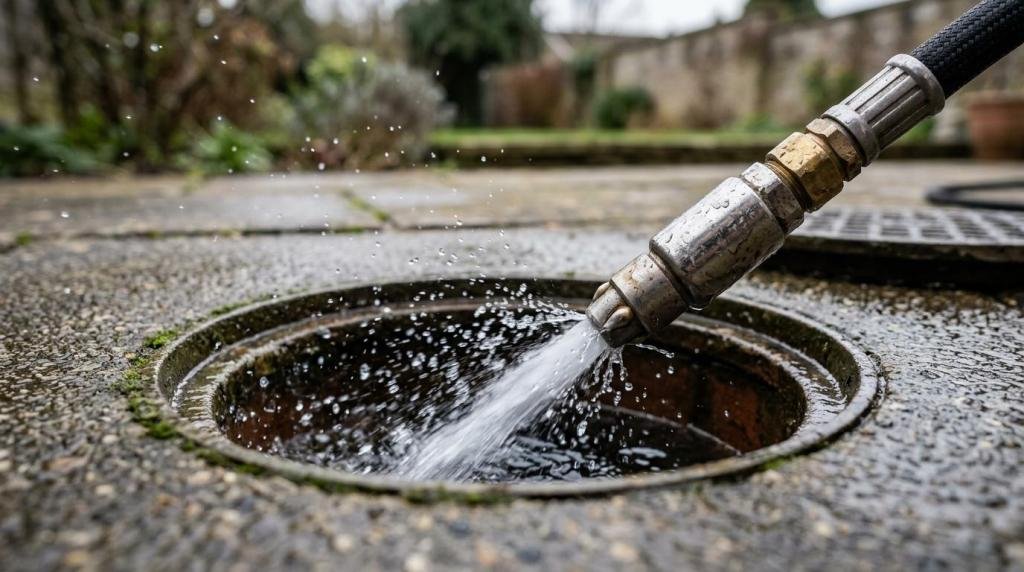
- Root removal: use specialist cutting heads or high-pressure jetting to reopen the pipe
- Repair work: install a patch, full liner, or replace the failed section if needed
- Post-repair inspection: check flow, joints, fall and access points before signing it off
There’s no point pretending all root issues can be sorted with one quick blast of water. Jetting is excellent for clearance, but it does not rebuild broken pipework. I’ve had call-outs where someone paid for the same drain to be unblocked three times in a year because nobody dealt with the actual defect.
Common mistakes people make with tree root drain problems
The biggest mistake is treating repeated slow flow as if it must be grease, scale or “one of those things”. If the same outside drain keeps backing up, there is usually a reason.
Another mistake is pouring aggressive drain chemicals down a root-affected line. These rarely solve a proper root intrusion issue. They can damage fittings, make the chamber unpleasant to work on, and give a false sense that the problem has been fixed when it has only eased for a day or two.
I also see people remove visible roots from an inspection chamber and assume that’s job done. If roots are showing in the chamber, they are very often present in the incoming or outgoing line as well. The chamber is just where you spotted them.
A simple plunger or hand rod has its place, but if the blockage keeps returning, it is time to stop guessing.
Preventing repeat tree root drain problems
Some prevention is about drainage maintenance, and some is about planting decisions. If you are landscaping a garden or managing a site with known drains nearby, it makes sense to know where the pipe runs are before trees go in. Planting directly over a sewer or drain is asking for trouble later.
If there are already mature trees on site, you do not always need to remove them. You do need to keep an eye on the drainage. Periodic CCTV checks make sense where there is a history of root ingress, especially on older foul drains. Catching a small intrusion early is far cheaper than dealing with flooding, excavation and internal clean-up.
A few practical habits help as well:
- keep inspection chambers accessible
- deal with slow drainage early
- avoid flushing wipes and sanitary products
- keep fats, oils and grease out of kitchen drains
- record repeat problem locations for future surveys
Roots alone may restrict a pipe, but roots plus wipes and grease will block it much faster.
When slow drainage points to roots rather than a simple blockage
There are a few clues I look for on site. If a kitchen sink is slow but all toilets, basins and baths are normal, that often points to a local waste pipe problem. If several fixtures are slow, especially on the ground floor, and the external chamber level rises when water is used, the issue is more likely in the drain run outside.
If an upstairs fixture drains poorly while downstairs fittings are still working normally, that can indicate a problem in that section of the property pipework rather than a shared drain outside. Water company advice often uses that distinction when helping people narrow down where the blockage sits.
Roots become more likely when the issue keeps returning, the property has mature planting near the drain line, and outside chambers show restricted flow or visible fibres. That is when a proper inspection saves time and money. You stop guessing, you see the defect, and you can choose a repair that lasts rather than another temporary clearance.
If you have slow drains, repeat blockages or foul water backing up and there are trees or large shrubs near the line, it is well worth getting the drain checked before the next heavy rain finds the weak point for you.