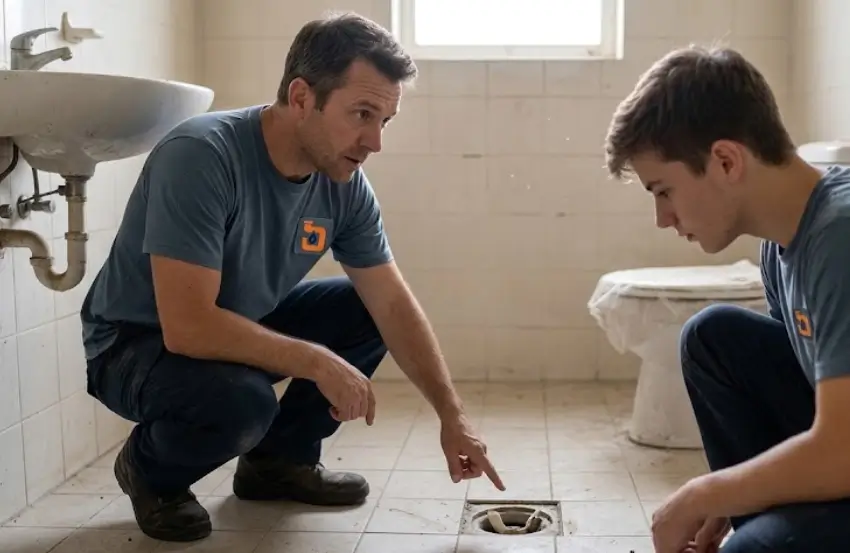
An unpleasant smell coming from a floor drain in a commercial building is often caused by a dry water trap, accumulated organic waste, grease deposits, a partial blockage or a problem with drainage ventilation. These conditions can allow sewer-like odours to enter occupied areas or cause trapped waste to decompose inside the drainage system.
A commercial floor drain smell may be particularly noticeable in restaurant kitchens, public washrooms, utility rooms, storage areas and facilities that remain unused for long periods. In some cases, replenishing a dry trap or removing accessible surface debris can help. However, persistent odours, slow drainage, gurgling or wastewater backing up may indicate a deeper problem requiring professional attention.
For commercial property owners and facilities managers across London, identifying the source matters because drainage odours can affect workplace hygiene, customer comfort and normal business operations.
DH Drainage Power provides commercial drainage assistance across London and Greater London, including drain clearance, CCTV inspections and drainage fault finding.
This guide explains the common causes of floor drain odours, how to recognise warning signs, what building managers can safely check and when professional drainage support is appropriate.
What Causes a Commercial Floor Drain to Smell?
Commercial floor drains collect wastewater from cleaning, washing and other drainage activities. Depending on the installation, they may contain a water trap designed to prevent gases from travelling back into the building.
However, the water seal can be lost, deposits can accumulate and connecting pipework can develop faults.
Understanding the cause is important because an odour originating from decomposing surface waste requires a different response from a smell caused by an incorrectly functioning drainage system.
1. Dry or Empty Floor Drain Traps
A dry water trap is one of the common causes of a commercial floor drain sewer smell.
A conventional water trap retains a small amount of water that forms a barrier between the occupied room and the drainage pipe.
When a floor drain is rarely used, the trapped water may evaporate. Once this happens, unpleasant gases can enter the room through the drain opening.
This problem can develop in:
-
Commercial washrooms that receive little use.
-
Unoccupied offices or vacant retail units.
-
Storage rooms with occasional wash-down activities.
-
Utility rooms where floor drains are seldom flushed.
-
Seasonal commercial premises closed for extended periods.
Where a conventional trap has dried out and the drain is flowing normally, carefully adding clean water may restore the water seal.
However, not every commercial floor drain has the same trap arrangement. Some installations use specialist trap-seal devices or other configurations.
If an odour returns despite regular use, the trap may be leaking, losing its seal through pressure changes or functioning incorrectly.
2. Grease, Food Waste and Organic Debris
Commercial kitchens and food preparation facilities can generate substantial amounts of waste.
Food particles, grease, oils and detergent residue may accumulate inside floor drains, strainers and connected pipework.
Over time, organic material can begin decomposing, producing unpleasant smells even when wastewater still drains away.
Grease deposits can also restrict pipe capacity and retain additional waste.
For restaurants and catering premises, an effective waste-handling routine is essential.
Water UK’s foodservice fat, oil and grease management guidance recommends keeping food waste, oils and grease out of drains and maintaining relevant grease-management equipment.
A commercial floor drain that repeatedly smells after cleaning may therefore need more than surface washing. The internal deposits and surrounding drainage arrangements should also be considered.
3. Blocked or Partially Restricted Drainage Pipes
A partial blockage is another possible cause of bad smells from commercial floor drains.
The drain may appear functional because some wastewater continues flowing. However, a restriction can slow the movement of water and allow waste to remain inside the pipe.
Common contributing materials include grease, silt, food debris, hair, cleaning residues and incorrectly discarded waste.
Warning signs include:
-
Water taking longer than usual to disappear.
-
Unpleasant smells becoming stronger during busy periods.
-
Gurgling or bubbling near drain outlets.
-
Wastewater collecting around the floor gully.
-
Several connected drains showing similar symptoms.
According to Thames Water’s guidance on blocked drains, unpleasant smells and slow wastewater drainage are recognised signs of possible blockages.
When these symptoms occur together, a professional assessment can help establish whether the problem is limited to one floor drain or affects a larger drainage connection.
4. Drainage Ventilation and Pressure Problems
Commercial drainage systems require appropriate venting and pressure control.
When wastewater moves through pipes, pressure changes can affect connected drainage traps.
If ventilation is inadequate or a downstream restriction develops, pressure fluctuations may disturb the water held inside a trap.
This can allow drainage gases to pass into the occupied area.
Gurgling noises may indicate pressure changes, but they do not automatically prove that the ventilation system is defective.
An inspection must consider both pipe restrictions and ventilation arrangements.
Any work involving specialist venting components or above-ground plumbing connections should be assessed by an appropriately competent professional.
5. Damaged Pipework or Faulty Connections
Some persistent floor drain odours originate from damaged drainage components rather than accumulated dirt.
Potential faults include cracked pipes, displaced joints, defective fittings and damaged trap connections.
Wastewater leakage can also contaminate surrounding materials, creating smells that remain noticeable even after the floor surface has been cleaned.
Possible indicators include unexplained damp patches, recurring blockages and odours concentrated around particular drainage connections.
A professional drain inspection in London can help investigate certain faults inside accessible drainage pipes.
However, CCTV inspections are not suitable for identifying every type of plumbing defect, particularly faults in inaccessible above-ground seals or ventilation components.
How Can You Identify the Cause of a Smelly Commercial Floor Drain?
The most useful initial approach is to record the smell alongside other observable symptoms.
Avoid assuming that every sewer-like odour means raw sewage is present.
| Warning sign | Possible cause | Recommended action |
|---|---|---|
| Smell from a rarely used floor drain | Evaporated water seal | Replenish a conventional trap if safe and appropriate |
| Odour after kitchen cleaning | Grease or food residue | Check accessible strainers and waste-handling practices |
| Smell accompanied by slow drainage | Partial blockage | Arrange drainage assessment if the restriction persists |
| Gurgling from connected drains | Pressure imbalance or blockage | Seek appropriate professional investigation |
| Persistent smell with damp flooring | Leaking or damaged drainage connection | Investigate promptly and restrict use if contamination is suspected |
| Wastewater rising through the floor drain | Significant restriction or backflow | Stop affected water use and request urgent assistance |
| Smell returns soon after trap replenishment | Trap seal loss or system fault | Investigate trap and drainage configuration |
This comparison can guide initial checks, but symptoms alone cannot establish the precise cause.
In larger commercial buildings, several drainage branches may be connected. A problem in one area can occasionally affect another part of the system.
For this reason, maintenance records and accurate observations are often more useful than repeated attempts to disguise the odour.
Why Do Commercial Floor Drains Smell After Cleaning?
A floor drain can smell immediately after cleaning because the process disturbs existing organic deposits or moves contaminated residue towards the drainage opening.
For example, washing a commercial kitchen floor may carry food particles into the strainer. If those particles remain inside the gully, bacteria can break them down and create unpleasant odours.
Some cleaning activities also introduce large volumes of water into connected pipework. Where restrictions or ventilation problems already exist, this may make underlying drainage symptoms more noticeable.
Strong fragrances or disinfectants may temporarily mask the smell without removing its cause.
Instead of repeatedly applying cleaning chemicals, building managers should examine whether waste is being collected correctly and whether the drain’s accessible components are maintained according to their manufacturer’s instructions.
Staff should not mix drain-cleaning chemicals or attempt to open contaminated pipework without suitable procedures.
A recurring smell following ordinary cleaning may indicate that professional drainage investigation is necessary.
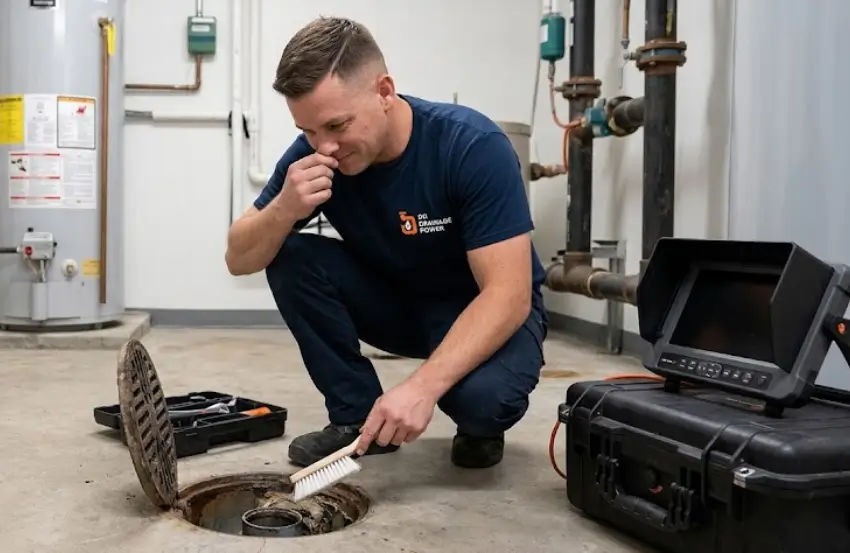
Is a Commercial Floor Drain Sewer Smell Dangerous?
A persistent sewer-like smell should be treated as a warning sign rather than a normal feature of commercial drainage.
Some drainage gases can be harmful at sufficient concentrations. Problems involving sewage leakage also create potential exposure to harmful microorganisms.
However, the presence of a smell does not establish the concentration of any particular gas or prove that the building atmosphere is safe.
The Health and Safety Executive explains that sewage exposure can create significant health risks and that suitable precautions are required when workers encounter contaminated wastewater. See its working with sewage safety guidance.
Commercial property managers should take particular care when they notice:
-
Strong, sudden or widespread sewer-like odours.
-
Sewage or contaminated wastewater entering occupied rooms.
-
Overflowing floor drains.
-
Employees experiencing unexplained illness alongside a strong odour.
-
Smells concentrated near enclosed drainage chambers or service voids.
When an odour is overwhelming, evacuate people from the affected area and seek appropriate emergency advice. Do not enter confined spaces or open underground drainage chambers to investigate.
If a mains gas leak is suspected, follow gas emergency procedures rather than attempting drain maintenance.
How Can Businesses Get Rid of Commercial Floor Drain Odours Safely?
The right action depends on whether the smell originates from surface waste, a dry trap, a blockage or damaged pipework.
Step 1: Identify Which Floor Drain Is Affected
Start by observing the area without dismantling drainage components.
Check whether the smell comes from one drain or several nearby outlets.
Record when the odour is strongest, such as after cleaning, during kitchen service or following a period of closure.
These observations can help identify patterns and support a professional investigation.
Step 2: Check for a Dry Water Trap
Where the drain has a conventional water trap and there is no evidence of blockage or backflow, carefully replenishing the trap with clean water may help.
Only do this where it is appropriate for the installation and permitted by the building’s maintenance procedure.
If the smell returns shortly afterwards, do not assume repeated water top-ups provide a permanent solution.
The trap may require inspection.
Step 3: Remove Accessible Surface Debris
Staff may be able to clean accessible strainers or removable surface components as part of an established maintenance routine.
Use appropriate protective equipment and follow the drain manufacturer’s instructions and workplace procedures.
Avoid pushing debris deeper into the pipe.
Do not remove sealed components, insert tools into inaccessible drains or expose staff to contaminated wastewater.
Step 4: Review Waste Disposal Practices
In food businesses, check that food scraps and waste oils are not being directed into floor drains.
Scrape waste into appropriate bins and use suitable strainers.
Arrange grease-management equipment maintenance through the responsible service provider where applicable.
This helps reduce the material available to accumulate and decompose inside the drainage system.
Step 5: Arrange Professional Drainage Assistance
If the odour persists, a blockage is suspected or wastewater begins backing up, professional investigation is appropriate.
DH Drainage Power provides drain unblocking services in London for residential and commercial properties.
A drainage specialist can assess the reported symptoms and determine whether clearance, CCTV inspection or drainage repairs are appropriate.
How Can Commercial Buildings Prevent Floor Drain Smells?
Preventative drainage maintenance is often more effective than repeatedly responding to unpleasant odours.
The appropriate schedule depends on the building’s usage, the drainage system’s design and the type of wastewater entering the drain.
Commercial property managers can include the following in their maintenance arrangements:
-
Monitor infrequently used drains. Identify outlets whose traps may lose water during extended periods of inactivity.
-
Keep visible strainers clear. Remove accessible debris using safe, approved cleaning methods.
-
Control food waste and grease. Prevent cooking oils and solid waste entering the drainage network.
-
Train cleaning staff. Explain which materials must not be swept or washed into floor drains.
-
Record repeated odours. Include location, time, severity and accompanying drainage symptoms.
-
Respond to slow drainage. Investigate recurring restrictions before wastewater begins backing up.
-
Review professional maintenance needs. Arrange appropriate inspections where the building’s usage or previous drainage problems justify them.
Maintenance frequency should be based on actual conditions rather than an arbitrary interval.
For example, a frequently washed commercial kitchen may need more regular accessible-strainer checks than an infrequently used utility room.
A useful maintenance record should also distinguish between routine cleaning, trap replenishment and professional drainage work.
This helps facilities managers avoid repeating ineffective treatments and provides a clearer history when arranging inspections.
How Do Professional Drainage Inspections Help Identify Persistent Odours?
When safe surface checks do not identify the problem, a professional assessment can help determine whether the odour comes from a drainage restriction or a more significant fault.
The investigation typically begins with reviewing the affected area and discussing the symptoms.
Drainage Assessment
The drainage professional considers where the smell occurs, when it started and whether wastewater flow has changed.
They may also review whether the issue affects one outlet or several connected fixtures.
CCTV Drain Inspection
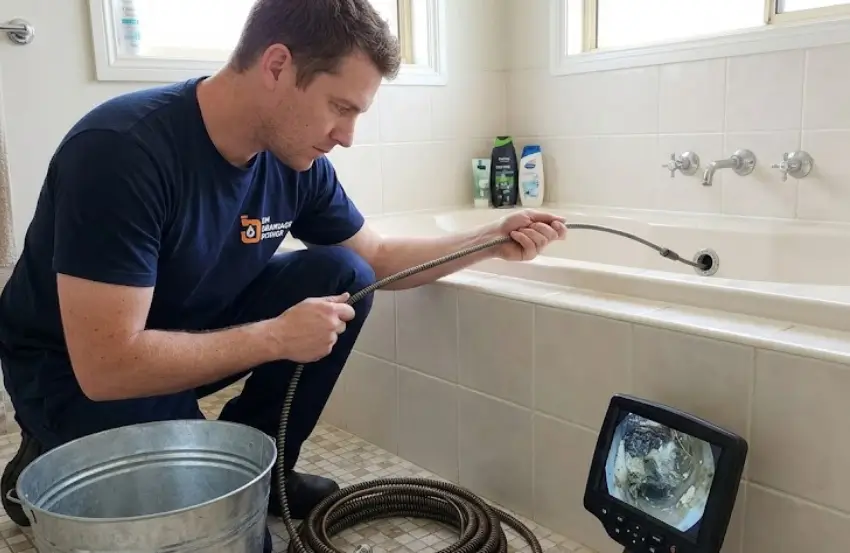
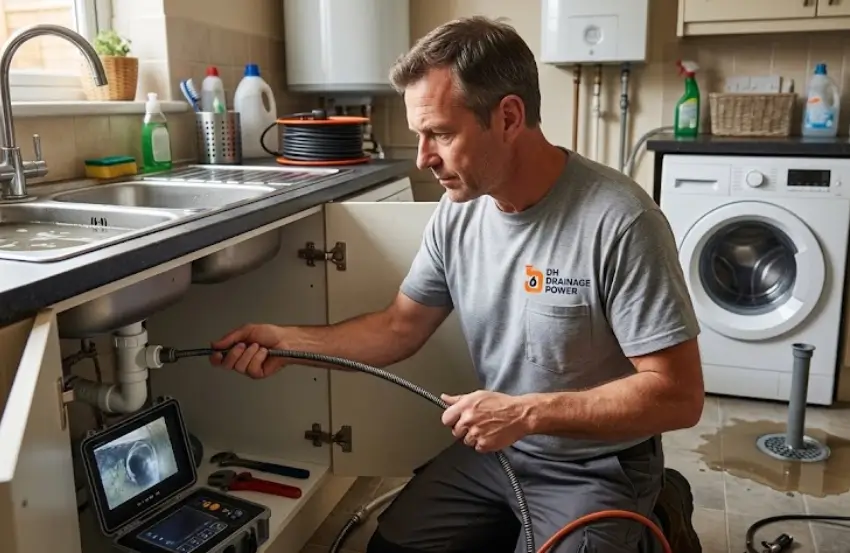
Where suitable, CCTV equipment can provide a view inside accessible drainpipes.
It may reveal accumulated debris, obstructions, damaged sections or displaced joints.
CCTV is particularly useful when drainage faults are suspected below ground or inside pipework that cannot be inspected visually.
However, it cannot necessarily diagnose a dry trap, faulty internal plumbing seal or ventilation component.
Drain Clearance or Repairs
When a blockage is confirmed, the appropriate clearance method depends on the material, pipe condition and accessibility.
Where damage is identified, the specialist can advise whether repair work is necessary.
The purpose is to address the underlying drainage fault rather than simply suppress the odour.
What Should London Commercial Property Managers Consider?
Commercial drainage problems can affect buildings with different layouts, occupancy patterns and maintenance requirements.
Across London and Greater London, facilities may include older buildings with modified drainage connections, modern commercial units and properties with several connected wastewater outlets.
A floor drain serving a busy restaurant in Croydon may experience different waste-loading conditions from one in an office utility room in Wembley.
Similarly, a retail unit in Kingston upon Thames that remains closed for an extended period may experience trap evaporation, while a busy commercial washroom in Hounslow may be more affected by waste accumulation or drainage restrictions.
These are illustrative situations, not documented DH Drainage Power projects.
For landlords and managing agents overseeing multiple premises, a consistent reporting procedure can be particularly useful.
Employees should know how to report unpleasant drainage smells, slow wastewater flow and suspected contamination without attempting unsafe repairs.
Property managers should also establish whether the affected drainage pipe is privately maintained or forms part of a shared or public sewer.
For properties within its wastewater service area, Thames Water explains sewer pipe responsibility and how ownership can depend on the drainage arrangement.
Commercial premises with complex tenancy arrangements may need to consult the relevant lease, building manager or responsible sewerage provider before authorising particular work.
When Should You Contact a Professional Drainage Specialist?
A recurring commercial floor drain smell deserves professional attention when ordinary, safe maintenance does not resolve it or when additional drainage symptoms develop.
Arrange assistance when:
-
The odour continues after an appropriate trap check.
-
Several floor drains smell at the same time.
-
Wastewater drains slowly or repeatedly backs up.
-
Gurgling occurs when nearby fixtures are used.
-
Grease or organic deposits repeatedly restrict drainage.
-
Dampness suggests a leaking connection.
-
A drainage fault is disrupting commercial operations.
Where contaminated wastewater is overflowing, restrict access to the affected area and avoid using connected fixtures until the situation has been assessed.
For suspected faults within the drainage network, DH Drainage Power offers drain clearance, CCTV inspection and drain repair services in London.
A suitable professional can determine whether the problem requires clearance, further investigation or repairs.
Frequently Asked Questions
1. Why does my commercial floor drain smell like sewage?
A commercial floor drain may smell like sewage because its water trap has dried out, waste has accumulated inside the drain or connected pipework has developed a restriction. Drainage ventilation or damaged connections may also contribute. Check for accompanying symptoms such as slow drainage, gurgling and wastewater backups. Persistent smells should be investigated rather than masked with cleaning products.
2. Can a dry floor drain trap cause a strong sewer smell?
Yes. A conventional trap contains water that prevents drainage gases from moving back into the room. When a floor drain is rarely used, this water may evaporate and leave the drainage connection exposed. Replenishing the trap can help where the installation allows it. If the smell returns despite regular use, the trap or connecting drainage system may require inspection.
3. How do you get rid of commercial floor drain odours?
Start by identifying the affected drain and checking for accessible debris. Where safe and appropriate, replenish a dry conventional water trap. Review cleaning and waste-disposal practices, particularly in commercial kitchens. If the smell persists, professional inspection may be necessary to identify blockages, damaged pipework or other drainage faults. Avoid relying on strong chemicals to conceal the problem.
4. Why does a commercial kitchen floor drain smell worse after cleaning?
Cleaning can move grease, food residue and organic debris towards floor drains. When this material accumulates inside strainers or pipework, it can produce unpleasant smells as it decomposes. Washing may also disturb deposits that are already present. Regularly removing accessible waste and maintaining appropriate grease-disposal practices can help reduce recurring odours. Persistent problems may need professional assessment.
5. Is a sewer smell from a commercial floor drain dangerous?
A sewer-like smell does not automatically establish dangerous gas exposure, but it should not be ignored. Some drainage gases can be harmful, and sewage contamination creates additional health risks. Keep people away from overflowing wastewater. If the odour is overwhelming or anyone becomes unwell, leave the affected area and seek urgent assistance. Do not enter enclosed drainage spaces or attempt unsafe investigations.
6. Can a CCTV drain survey identify the cause of floor drain smells?
A CCTV drain survey can identify certain problems inside accessible drainage pipes, including visible blockages, structural damage and displaced joints. However, it may not diagnose dry traps, defective internal fittings or drainage ventilation faults. The most suitable investigation depends on where the smell occurs and whether other symptoms are present. Professional assessment helps determine whether CCTV is appropriate.
7. Who should I contact about a persistent commercial floor drain smell in London?
Contact a drainage specialist when a floor drain repeatedly smells, drains slowly or causes wastewater to back up. DH Drainage Power supports commercial properties across London and surrounding areas with drain clearance, inspections and repairs. For plumbing fittings or ventilation faults, an appropriately competent plumbing professional may also be required. Issues involving public or shared sewers should be reported to the responsible provider.
Conclusion: Keeping Commercial Floor Drains Free From Unpleasant Odours
A commercial floor drain smell can result from something as simple as an evaporated water trap or a more significant problem involving grease deposits, blocked pipes or damaged drainage connections.
The most effective approach is to identify the symptoms, maintain accessible drainage components safely and investigate recurring problems before they disrupt normal building operations.
DH Drainage Power provides residential and commercial drainage services across London and Greater London, including 24/7 emergency drainage support.