An unpleasant odour in a bathroom that has not been used for several weeks is often caused by water evaporating from the drain traps. These traps normally hold water to stop drainage gases entering the room. When the water level falls, smells can travel through the waste pipes and become noticeable around the shower, bath or basin.
A drain smell in unused bathroom spaces may also develop when old soap residue, hair or other organic material remains inside the waste outlets. In some cases, the odour indicates an underlying drainage problem rather than simply a lack of use.
The safest first step is to check whether the fixtures drain normally, replenish their water traps and ventilate the room. Persistent smells, gurgling noises or slow drainage deserve closer attention.
For homeowners, landlords and property managers across London, understanding why bathrooms smell after periods of inactivity can help prevent unpleasant surprises when reopening a guest room or vacant property.
DH Drainage Power provides residential and commercial drainage support across London and surrounding areas, including drain clearance, inspections and repairs when further investigation is needed.
Why Do Bathroom Drains Smell When They Are Not Used?
Most bathroom drainage systems rely on a water seal to prevent foul smells from travelling back into occupied rooms.
The seal is formed by water sitting inside a curved section of pipe, commonly known as a trap. Although wastewater passes through this fitting, a small quantity remains behind.
When a bathroom receives regular use, the water seal is replenished naturally. However, a guest bathroom, spare en-suite or vacant property’s bathroom may receive little or no water for an extended period.
As water evaporates, the protective barrier can become less effective.
This is why a bathroom that was previously clean and odour-free may develop an unpleasant smell after several weeks without use.
How Does a Dry Drain Trap Cause an Unpleasant Smell?
A typical basin, bath or shower waste has a trap designed to retain a water seal.
When enough water evaporates, gases from the connected drainage system may escape through the opening.
You may notice a musty, stale or sewer-like smell around the affected fixture, even though no visible blockage is present.
The rate of evaporation depends on several factors, including room temperature, ventilation, trap design and how long the bathroom has been unused.
There is no universal number of days after which every drain will begin smelling.
Which Bathroom Fixtures Are Most Likely to Develop Odours?
Fixtures that receive little water are more likely to experience trap evaporation.
Examples include:
-
Guest bathroom showers used only occasionally.
-
Spare en-suite basins.
-
Bathtubs that have remained unused for months.
-
Bathroom floor drains, where installed.
-
Washroom facilities inside temporarily vacant commercial premises.
A toilet also has a water seal in its bowl and trap. This can lose water during a prolonged vacancy, although toilet odours may have other causes.
A useful starting point is to identify which fixture has been left unused the longest and whether the smell appears strongest near that outlet.
What Else Causes a Drain Smell in an Unused Bathroom?
Although trap evaporation is a common explanation, inactivity does not rule out another drainage fault.
Several problems may remain unnoticed until someone re-enters a room that has been closed for a prolonged period.
1. Old Soap Residue and Organic Debris
Hair, soap deposits, toothpaste and other waste can remain around plugholes or inside waste fittings after a bathroom’s last use.
When this material stays damp, bacteria can break it down and produce unpleasant odours.
The resulting smell may resemble sewage, even where the main drainage connection is functioning correctly.
Removing visible residue and checking the drain’s performance can help establish whether the issue is limited to the waste opening.
2. Existing Partial Drain Blockages
A bathroom can appear unused and otherwise normal while its connected waste pipe contains a restriction.
An older blockage involving hair, soap residue or other debris may cause water to drain slowly when the fixture is used again.
Odours may become particularly noticeable when standing wastewater disturbs accumulated deposits.
According to Thames Water’s blocked drains guidance, unpleasant drain smells and slow-draining fixtures are recognised warning signs of potential blockages.
Unlike a simple dry trap, a partial blockage may continue causing problems after clean water has been added.
3. Loss of the Water Seal Through Pressure Changes
Water inside a trap can also be displaced by abnormal pressure conditions within connected drainage pipework.
For example, when another fixture discharges wastewater, an existing drainage restriction or ventilation problem may contribute to pressure changes.
These changes can sometimes disturb a trap’s water seal.
A gurgling noise from an unused shower or basin when a nearby toilet flushes may be an important clue.
However, gurgling alone cannot identify the exact fault. A qualified professional may need to assess the system.
4. Damaged Waste Pipes or Connections
Defective joints or damaged pipework may allow unpleasant odours to escape into enclosed spaces.
Periods of vacancy can make these issues harder to detect because nobody is regularly observing the bathroom.
Once someone returns, they may notice an unusual smell near a cupboard, wall penetration or floor.
Persistent odours accompanied by unexplained dampness, staining or recurring blockages should be investigated rather than covered with air freshener.
How Can You Tell Whether the Smell Comes from a Dry Trap or a Blockage?
A dry trap and a partial blockage can both cause unpleasant bathroom smells, but the accompanying symptoms may differ.
The following table can help property owners decide what to check first.
| Warning sign | Possible explanation | Recommended action |
|---|---|---|
| Smell after several weeks of inactivity | Evaporated trap water | Carefully replenish the trap |
| Smell disappears after water is added | Water seal may have been restored | Monitor for recurrence |
| Smell returns shortly after refilling | Trap, ventilation or pipework issue | Arrange further assessment |
| Water drains slowly | Accumulated waste or partial blockage | Check accessible debris; seek help if persistent |
| Gurgling when another fixture runs | Pressure changes or shared restriction | Arrange appropriate inspection |
| Odour with damp patches | Possible defective connection or leak | Investigate promptly |
| Wastewater backs up | Drainage obstruction or other failure | Stop using affected fixtures and seek assistance |
These indicators are not a definitive diagnosis.
If the bathroom has multiple affected fixtures, or the odour continues despite basic maintenance, the fault may involve more than one waste pipe. For broader explanations of drainage odours, read our guide to why a bathroom smells like sewage.
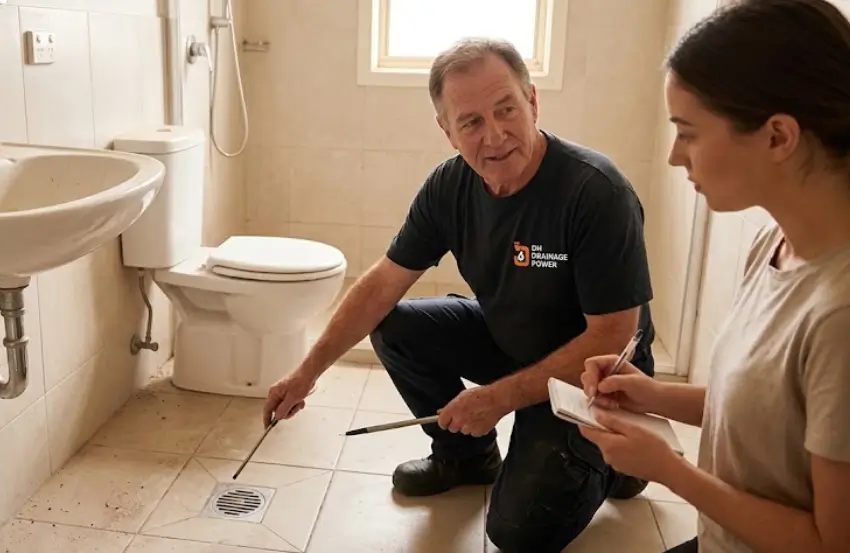
How Do You Get Rid of a Drain Smell in an Unused Bathroom?
The safest approach is to begin with straightforward checks that do not require dismantling pipes or using harsh chemicals.
Step 1: Ventilate the Bathroom
Open a window where practical or use the existing extractor fan.
Air circulation can help disperse accumulated odours, making it easier to assess whether the smell persists after the drains have been checked.
Ventilation alone will not repair a defective trap, blocked pipe or damaged connection.
If the smell is overwhelming or anyone feels unwell, leave the affected area and obtain appropriate urgent assistance rather than continuing the checks.
Step 2: Refill the Water Traps
Where drains are flowing normally and there is no sign of overflowing wastewater, gently run clean water into each unused basin, bath and shower waste.
The aim is to replenish any missing trap water.
Avoid leaving taps running unattended, particularly when reopening a property whose plumbing condition is uncertain.
Flush an unused toilet only after checking that its bowl and connected drainage appear to be functioning correctly.
If water rises unexpectedly or drains poorly, stop and arrange assistance.
Step 3: Check the Plugholes for Accessible Debris
Inspect the visible drain openings for hair, soap deposits or other material.
A removable strainer can often be cleaned without disturbing the wider drainage system.
Wear suitable gloves and follow the manufacturer’s instructions when handling removable fittings.
Do not force objects into the drain or dismantle concealed pipework without appropriate knowledge.
Cleaning visible waste deposits may help distinguish a local odour source from a deeper drainage problem.
Step 4: Observe Whether the Smell Returns
After replenishing the water traps, allow the bathroom to ventilate and monitor the result.
If the odour disappears and remains absent, evaporated trap water may have been responsible.
However, the response to adding water does not prove that the drainage system is free from defects.
A smell that returns quickly, despite regular water use, may indicate a compromised seal, ventilation issue or other fault.
Step 5: Seek Assistance for Persistent Drainage Symptoms
When the bathroom continues smelling despite safe maintenance, professional assessment may be appropriate.
This is particularly important when the smell occurs alongside restricted flow, gurgling, repeated blockages or wastewater backing up.
DH Drainage Power offers drain unblocking services in London for drainage restrictions that require professional attention.
How Can You Prevent Drain Smells While a Property Is Empty?
Preventative maintenance is especially useful for properties that remain unoccupied between tenancies, during refurbishment or while owners are away.
A little preparation can reduce the likelihood of finding a bathroom with an unpleasant smell when the property is reopened.
Keep Water Traps Replenished
Where the property’s water supply remains safely available and its plumbing can be operated, arrange periodic use of rarely used fixtures.
This helps maintain the water seals within their traps.
The appropriate frequency depends on the property’s conditions. A fixed schedule cannot guarantee prevention because evaporation rates vary.
For a property that will be vacant for a long period, ask a suitable plumbing professional about an appropriate shutdown and reopening arrangement.
Remove Waste Before the Bathroom Becomes Unused
Before leaving a bathroom unused, clean accessible strainers and plugholes.
Removing hair and organic deposits reduces the material available to create unpleasant smells.
Check whether water drains normally before the room is closed.
A slow-draining shower should not be ignored simply because nobody expects to use it soon.
Maintain Safe Ventilation
A closed bathroom may develop musty smells from damp surfaces as well as drainage odours.
Suitable ventilation can help control excess moisture, but it should not be treated as a replacement for drainage maintenance.
Ensure that any ventilation arrangements are appropriate for the property’s occupancy and security requirements.
Check for Problems Before a New Occupant Arrives
Landlords and property managers should include bathroom drainage checks in their property reopening inspections.
The aim is to identify problems before residents, tenants or commercial users begin relying on the facilities again.
Useful checks include:
-
Look for water stains and unexplained damp patches.
-
Replenish the traps where safe.
-
Check that the toilet flushes and refills normally.
-
Confirm that sinks, baths and showers discharge without backing up.
-
Listen for unexpected gurgling.
-
Record any persistent odours for follow-up.
These checks help identify obvious problems, although they do not replace a professional inspection where a fault is suspected.
Why Are Unused Bathrooms a Particular Concern for London Property Owners?
Across London and Greater London, properties vary considerably in age, construction and drainage arrangements.
Some contain older drainage infrastructure, while others have modern waste connections serving several bathrooms.
In flats and converted properties, individual fixtures may connect to shared drainage arrangements. This means an odour noticed in an unused bathroom might not originate from that room alone.
However, a building’s age or location does not automatically indicate a drainage problem.
The practical concern is that unused bathrooms receive little attention, allowing existing defects to remain unnoticed.
Guest Bathrooms and Spare En-Suites
A guest bathroom may be used frequently during holidays but remain untouched for the rest of the year.
Where the shower or bath has not received water, its trap may lose some of its water seal through evaporation.
Adding bathroom drain checks to normal household maintenance can help prevent recurring odours.
Rental Properties Between Tenancies
Landlords managing residential properties in areas such as Croydon, Wembley and Hounslow may encounter bathrooms left unused during vacant periods.
Before a tenancy begins, it is sensible to confirm that all sanitary facilities are operating correctly.
If recurring drainage smells are discovered, record the symptoms and arrange an appropriate inspection before the room returns to regular use.
Commercial Premises with Infrequently Used Washrooms
Some offices, shops and other commercial premises have toilets or washrooms that receive little use.
A washroom that remains closed for a prolonged period may develop an odour through the same trap evaporation process found in residential properties.
Facilities managers should include infrequently used bathrooms in their maintenance schedules and report any persistent drainage symptoms.
For businesses, identifying a developing drainage issue can also help avoid interruptions when previously closed facilities reopen.
When Does an Unused Bathroom Smell Require Professional Drainage Assistance?
Not every bathroom odour requires specialist drainage work.
A trap that has simply dried out may begin working normally after its water seal is restored.
However, some symptoms suggest that replenishing the trap will not resolve the underlying cause.
Consider arranging professional drainage assistance when:
-
The sewer-like smell continues after water traps have been replenished.
-
Multiple bathroom fixtures become slow or blocked.
-
Water backs up into the shower or bath.
-
Gurgling occurs whenever another fixture is used.
-
Drainage odours repeatedly return after normal use resumes.
-
There is evidence of damaged underground drainage.
-
Wastewater escapes into the bathroom or adjoining areas.
In these circumstances, the investigation should be matched to the symptoms.
How Can a Professional Drain Inspection Help?
A drainage specialist may begin by assessing the reported symptoms, the affected fixtures and how wastewater moves through accessible sections of the system.
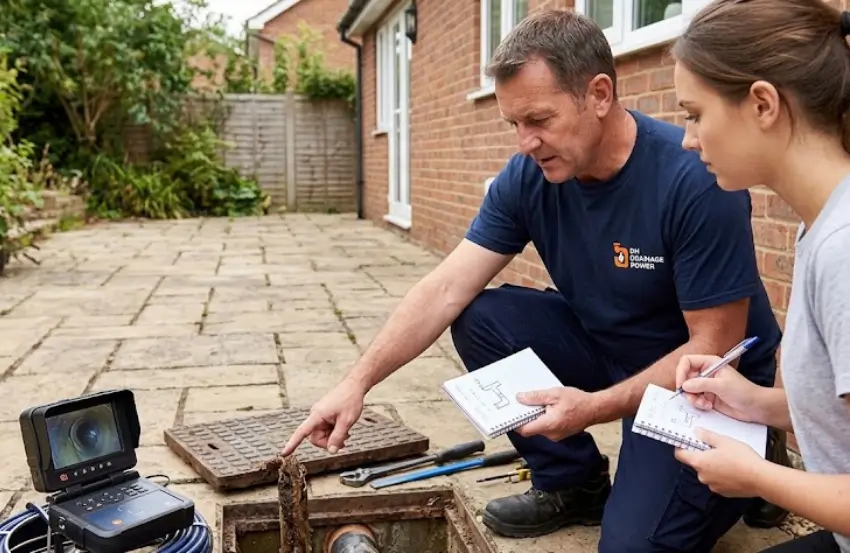
Where a restriction or underground drainage defect is suspected, a professional drain inspection in London may be appropriate.
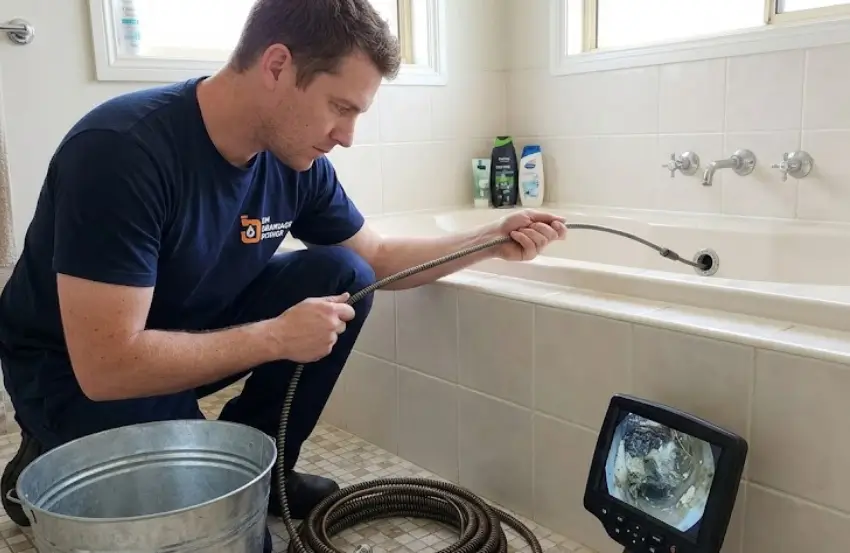
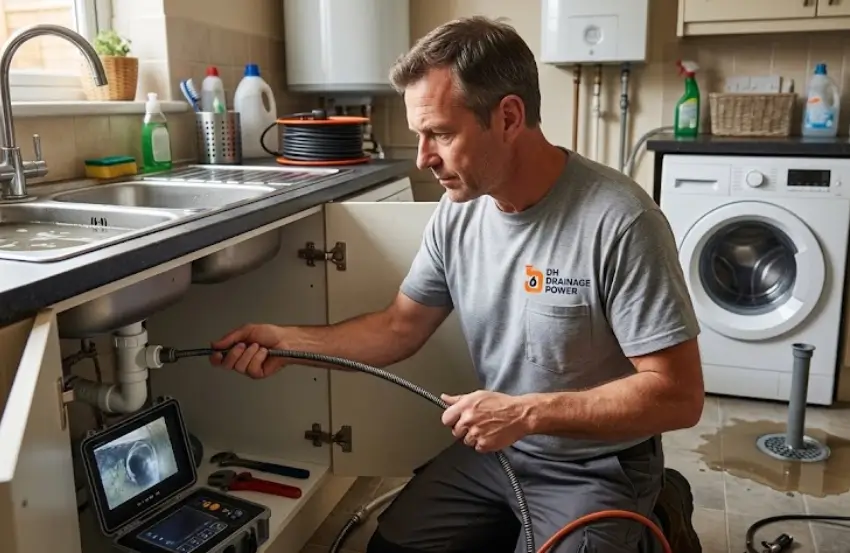
CCTV drain inspection equipment can help identify visible problems inside accessible drainage pipes, such as obstructions, damaged sections or displaced joints.
However, a CCTV survey is not necessarily suitable for identifying an empty water trap, defective toilet connector or fault within above-ground plumbing ventilation.
Some problems require investigation by an appropriately qualified plumbing professional.
What Happens When the Problem Involves a Shared Sewer?
The responsibility for a drainage problem depends on where the fault occurs and which properties the pipe serves.
For example, a private drain serving only one property may be the property owner’s responsibility, while a shared sewer may be maintained by the relevant wastewater company.
Thames Water explains sewer pipe responsibility for properties within its wastewater service area.
Establishing responsibility can help owners and managers contact the correct organisation rather than arranging unnecessary private work.
What Drainage Maintenance Mistakes Should You Avoid?
A bathroom that smells after someone leaves it unused can encourage quick fixes, but some approaches may make the situation worse.
Avoid these common mistakes:
-
Pouring chemical drain cleaners into a fixture without knowing why it smells.
-
Mixing cleaning chemicals or combining different drain treatments.
-
Using excessive force to remove concealed waste fittings.
-
Covering an odour with fragrance while ignoring repeated blockages.
-
Continuing to use fixtures when wastewater is backing up.
-
Assuming that every sewage-like smell is caused by a dry trap.
-
Leaving an unused bathroom unchecked for long periods.
Chemical drain products may contain hazardous substances, and mixing them can create dangerous reactions.
Where a previously applied product may still be present, do not add another cleaner or attempt intrusive clearance.
Preventative disposal habits also matter. Water UK’s advice on preventing sewer blockages explains how wipes, fats and other unsuitable materials contribute to sewer restrictions.
Keeping these materials out of drainage systems can help reduce avoidable problems, even when people do not use bathroom facilities frequently.
Frequently Asked Questions About Drain Smells in Unused Bathrooms
1. Why does my unused bathroom smell like sewage?
An unused bathroom may smell like sewage because water has evaporated from the basin, bath or shower trap. Without enough water inside the trap, drainage gases can enter the room. Old organic residue, a partial blockage or a defective waste connection may also be responsible. If the smell continues after replenishing the traps, further investigation is advisable.
2. How long does it take for an unused bathroom drain to smell?
There is no fixed period. Some traps retain sufficient water for a considerable time, while others may lose their water seals sooner. Temperature, ventilation, trap design and the initial water level all influence evaporation. Check a bathroom that remains unused for several weeks or months before returning it to regular use, especially if an unpleasant odour develops.
3. Will pouring water down the drain stop the smell?
Adding clean water can stop an odour when the cause is an evaporated water seal. It replenishes the trap and helps restore the barrier against drainage gases. However, this approach will not repair defective pipework or remove a deeper blockage. If the smell returns quickly, or the fixture drains slowly, arrange a suitable assessment rather than repeatedly adding water.
4. Can an unused shower drain cause the entire bathroom to smell?
Yes. A single shower drain with a depleted water seal can allow unpleasant gases to enter a small bathroom. Air movement may then distribute the odour throughout the room. However, a strong smell is not proof that the shower is responsible. Check the basin, bath and toilet as well, and pay attention to drainage performance and recurring symptoms.
5. How do landlords prevent drain smells in empty rental properties?
Landlords can include water-trap maintenance and drainage checks in their vacant-property inspection arrangements. Before new occupants arrive, check accessible waste outlets, replenish traps where safe and confirm that fixtures discharge normally. A property left empty for an extended period may also need a suitable plumbing recommissioning assessment. Investigators should examine persistent odours before the facilities return to regular use.
6. Can a drain smell indicate a serious problem even when the bathroom is unused?
Yes. Although trap evaporation may be a straightforward explanation, a recurring smell can also indicate a blockage, defective connection or damaged drainage pipe. Warning signs include slow drainage, repeated gurgling, dampness and wastewater backing up. An overwhelming smell or suspected contamination requires particular care. Do not rely on odour strength alone to determine whether the area is safe.
7. Who should I contact about an unused bathroom drain smell in London?
For suspected blocked drains, recurring wastewater backups or underground drainage faults, contact a drainage specialist. DH Drainage Power provides residential and commercial drainage assistance across London and surrounding areas, with 24/7 emergency availability. For problems involving sanitary fitting seals or above-ground plumbing ventilation, an appropriately qualified plumbing professional may need to assist.
Conclusion: Keep Unused Bathroom Drains Free from Unpleasant Odours
An unused bathroom often produces a drain smell linked to evaporated water traps, but accumulated waste, partial blockages, and defective pipework can create similar symptoms.
Regularly replenishing traps, cleaning accessible drain openings and checking bathroom facilities before reopening a property can help prevent avoidable odours.
When smells persist, return repeatedly or occur alongside slow drainage and wastewater backups, professional investigation may be necessary.