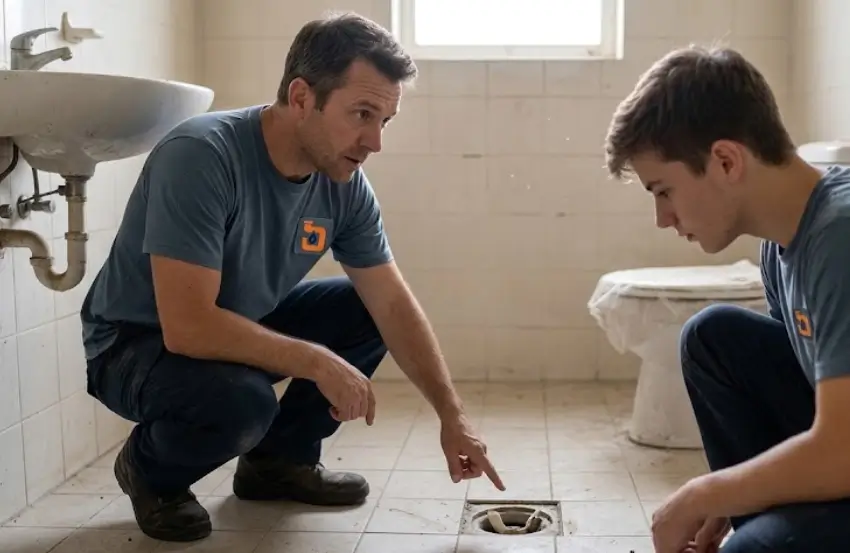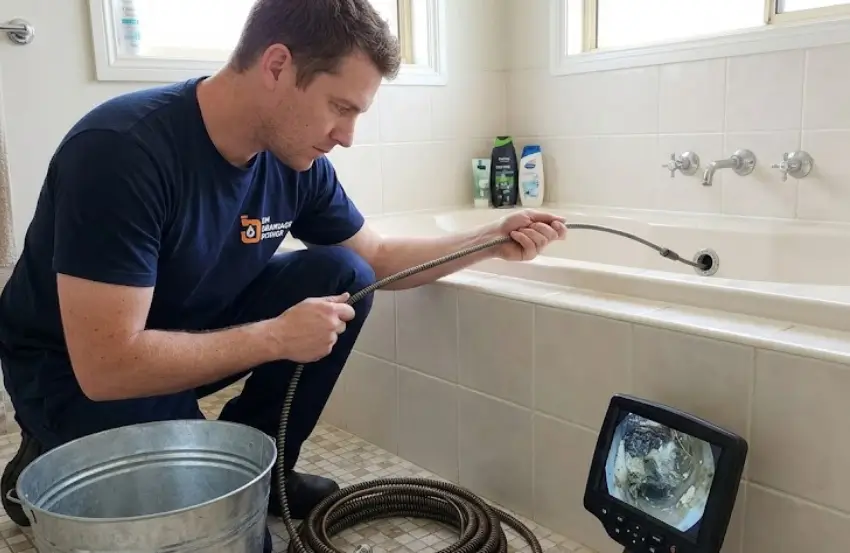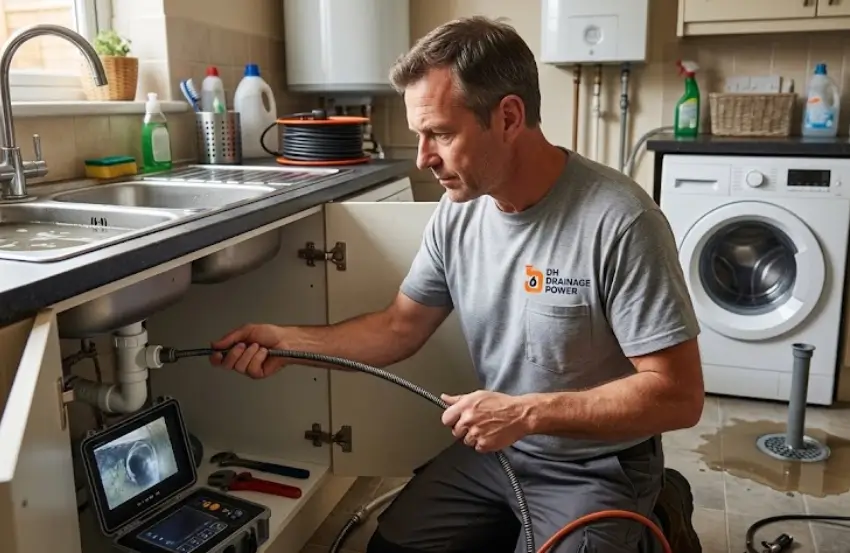
A bathroom that suddenly smells like sewage may have a dry drain trap, a partial blockage, a faulty toilet seal, a ventilation problem or damaged drainage pipework. These problems can allow unpleasant gases or odours from wastewater to enter the room instead of remaining contained inside the drainage system. A sewage smell in bathroom areas should not be ignored, particularly when it keeps returning after cleaning. The most useful first step is to identify where the smell is strongest. Check whether it comes from the shower, basin, bath, toilet or another drainage opening. Look for slow-draining water, gurgling noises and damp patches, as these can help distinguish a simple maintenance issue from a fault requiring attention.
For homeowners, landlords and commercial property managers across London, recognising these warning signs can help prevent disruption and further drainage problems.
DH Drainage Power provides residential and commercial drainage assistance across London and surrounding areas, including CCTV drain inspections, blockage clearance and drain repairs. Understanding the possible source of the smell will help you explain the symptoms clearly and arrange the appropriate professional assessment.
What Causes a Sewage Smell in Your Bathroom?
A sewage odour usually indicates that gases from the drainage system or unpleasant smells from waste deposits are entering the bathroom.
Bathroom pipework is designed to carry wastewater away while preventing drainage gases from escaping into occupied rooms. One important part of this system is the water trap, which holds a small amount of water to create a barrier between the room and the connected waste pipe.
When that barrier disappears or the drainage system develops a problem, odours can become noticeable.
1. A Dry or Empty Bathroom Drain Trap
A dry trap is a common explanation for a sewer smell in a bathroom that is rarely used.
Most basins, baths and showers have a water trap beneath the waste outlet. The water retained inside this fitting blocks gases travelling back through the pipe.
If the bathroom has not been used for an extended period, that water can evaporate. This leaves an open route for drainage odours.
You might notice this problem in:
-
Guest bathrooms that remain unused for weeks.
-
En-suite showers that are rarely switched on.
-
Unused bath wastes.
-
Floor drains in suitable commercial washrooms.
What you can do: Run a modest amount of clean water into the affected drain to refill its trap, provided the drain is not blocked or overflowing.
If the smell disappears and stays away, evaporation may have been the cause. If it returns soon despite regular use, the trap or the wider drainage system may need inspecting.
2. Hair, Soap and Organic Waste Inside Bathroom Drains
Bathroom drains regularly carry hair, soap residue, toothpaste, shaving products and other everyday waste.
Over time, this material can collect around a plughole, inside a trap or along the waste pipe. Bacteria can break down trapped organic material and produce unpleasant odours.
A sewage odour from a bathroom drain does not always mean sewage is flowing backwards. Sometimes, decomposing waste close to the outlet produces a similar smell.
Common signs include slow water drainage, dark residue around the plughole and odours that become stronger when water is running.
If the problem appears limited to one basin or shower, check for accessible debris before assuming there is a serious sewer fault.
3. A Blocked or Partially Restricted Waste Pipe
A partial blockage can prevent wastewater from moving freely through the drainage system.
Water may still pass through the pipe, but hair, scale, soap deposits or other debris can restrict its capacity. Wastewater and organic material may remain in the pipe for longer, increasing unpleasant smells.
According to Thames Water’s blockage guidance, slow-draining fixtures, difficult toilet flushing and unpleasant drain smells are recognised signs of potential blockages.
A blockage becomes more concerning when several bathroom fixtures are affected together.
For example, if flushing the toilet causes a shower drain to gurgle, the issue may involve a shared waste connection or a deeper drainage restriction.
Professional drain unblocking in London may be appropriate when these symptoms persist.
4. A Faulty Toilet Seal or Waste Connection
If the smell is strongest around the base or rear of the toilet, the source may be a defective seal or waste connection.
Toilets connect to the drainage system through fittings designed to prevent wastewater and gases from escaping.
A damaged, loose or poorly fitted connection may allow unpleasant odours into the room, even when the toilet still flushes normally.
Warning signs can include:
-
A persistent smell concentrated near the toilet.
-
Dampness around the toilet base or waste connection.
-
Visible movement in an improperly secured toilet.
-
Odours that become more noticeable after flushing.
A faulty connection should be assessed by an appropriately qualified plumbing professional. A drainage specialist may also be needed if there are signs of an obstruction or fault farther along the drain.
Do not assume that applying sealant around the toilet base will solve the problem. It may conceal moisture without repairing the defective fitting.
5. Drain Ventilation or Pressure Problems
Plumbing systems require appropriate ventilation so wastewater can flow while air pressures remain balanced.
If a vent becomes obstructed or a pressure-control fitting malfunctions, pressure changes may disturb the water retained inside bathroom traps.
This can allow sewer gases to pass into the room.
One indication is a gurgling sound from a basin or shower when another fixture discharges water.
For example, the shower drain may make bubbling noises whenever a nearby toilet flushes.
However, gurgling does not prove that a vent is blocked. Similar symptoms can occur when wastewater encounters a partial blockage.
A qualified plumber or drainage professional should investigate recurring pressure-related symptoms rather than relying on guesswork.
6. Damaged Drainpipes or Underground Drainage Faults
An unpleasant smell may occasionally come from damaged pipework rather than the bathroom fixture itself.
Cracks, displaced joints, root intrusion and other structural faults can interfere with the normal movement of wastewater.
Depending on the location of the defect, odours may escape through damaged connections or contaminated surrounding materials.
Other warning signs could include repeated drainage blockages, unexplained damp patches, or a smell that becomes more noticeable near a particular wall or floor.
Where an underground drainage defect is suspected, a professional CCTV drain inspection can help identify certain pipe defects without unnecessary excavation.
However, a CCTV survey will not necessarily identify faults in above-ground plumbing connections or ventilation fittings. The inspection method should match the suspected problem.
How Can You Identify Where the Sewage Smell Is Coming From?
The most effective approach is to compare the location of the smell with the behaviour of the bathroom fixtures.
An odour by itself cannot reliably identify the fault. Combining several symptoms gives a clearer indication of what should be checked.
| Bathroom symptom | Possible cause | Recommended next step |
|---|---|---|
| Smell from an unused shower | Dry water trap | Refill the trap with water if the outlet drains normally |
| Odour from a basin plughole | Hair, soap or organic residue | Clean accessible debris safely |
| Smell and slow drainage | Partial waste pipe blockage | Arrange assessment if simple cleaning does not help |
| Odour around toilet base | Defective toilet seal or connector | Contact a suitable plumbing professional |
| Gurgling when toilet flushes | Pressure imbalance or shared drain restriction | Arrange a plumbing or drainage inspection |
| Sewage smell with repeated backups | Deeper drainage blockage | Seek professional drainage assistance |
| Persistent smell with dampness | Leaking or damaged pipework | Investigate promptly to prevent further damage |
This comparison is a starting point rather than a substitute for an inspection.
The strongest smell is not necessarily directly above the defective pipe. Air movement, enclosed spaces and connected drainage fittings can make the source difficult to identify.
Why Does Your Bathroom Smell Like Sewage After a Shower?
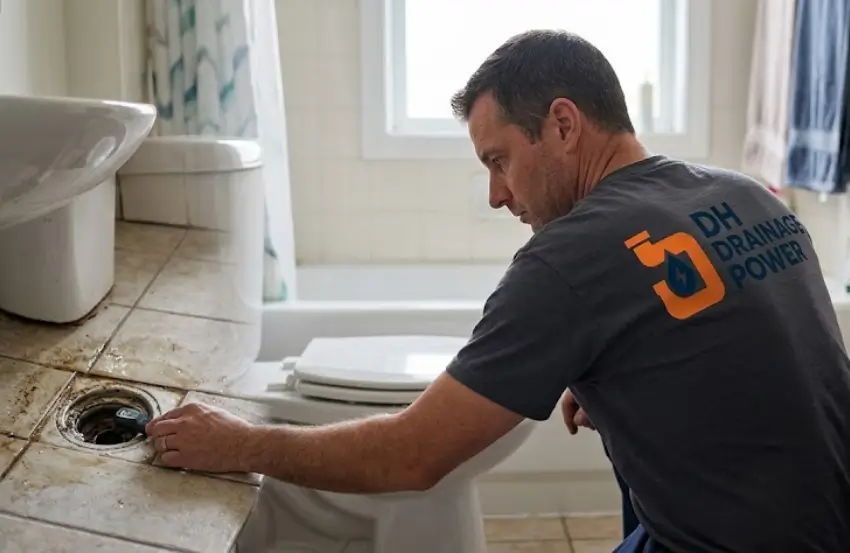
A sewage smell after showering may result from warm water disturbing residue inside the shower waste, a partly blocked trap or changes in air pressure as water enters the connected pipework.
Warm water can make existing odours more noticeable, particularly where hair and organic material have accumulated.
If the shower drains normally but smells unpleasant, inspect the visible waste opening for residue.
If water stands in the tray, drains slowly or causes other fixtures to gurgle, there may be a restriction farther down the pipe.
A smell that occurs only after the shower runs should not automatically be blamed on a dry trap. The shower has just supplied water, so residue, poor drainage or trap performance may be more relevant.
Where several fixtures are affected, a professional assessment can determine whether the problem is local to the shower or connected to the wider drainage system.
Why Does the Bathroom Smell Like Sewage at Night?
Some households notice bathroom odours more strongly during the evening or overnight.
This does not necessarily mean the drainage problem becomes worse at night.
Several circumstances can affect when a smell is noticeable, including reduced ventilation, closed bathroom doors, changes in airflow and periods when water is not being used.
Odours may accumulate in a small bathroom when extraction is switched off or windows remain closed.
A bathroom near bedrooms may also be more noticeable overnight because the surrounding environment is quieter and household activity has reduced.
If the smell occurs regularly at particular times, record when it appears and whether nearby appliances or toilets were used beforehand.
Patterns can be useful when investigating intermittent odours associated with drainage pressure changes or defective connections.
Can Heavy Rain Cause a Sewage Smell in the Bathroom?
Heavy rainfall can coincide with drainage problems, particularly where there are existing restrictions, damaged connections or combined drainage systems.
Some older properties across London have drainage arrangements in which foul wastewater and rainwater enter a combined sewer network.
During significant rainfall, the increased volume entering such systems can place additional demand on drainage infrastructure.
However, rainfall alone does not explain every bathroom odour. A smell appearing during wet weather may also be influenced by local drainage restrictions, air pressure changes or defects within the property.
Watch for additional signs such as wastewater backing up into low-level fixtures, outdoor gullies overflowing or multiple drains becoming slow.
If these symptoms occur together, avoid unnecessary water use and arrange appropriate assistance.
Where the problem appears connected to a public or shared sewer, contact the relevant sewerage company. Thames Water explains sewer ownership and responsibility for properties within its wastewater service area.
Is a Sewage Smell in Your Bathroom Dangerous?
A persistent sewer-like smell should be investigated rather than simply covered with fragrance.
Drainage gases can contain substances such as hydrogen sulphide, and sewage-related faults may also indicate exposure to contaminated wastewater.
The level of risk depends on the source, concentration, ventilation and whether actual sewage leakage is present.
A faint intermittent smell does not automatically establish dangerous gas exposure. Equally, smell strength alone cannot establish whether an atmosphere is safe.
Take extra care when you notice:
-
An unusually strong or sudden sewer-like odour.
-
Sewage entering a shower, bath or floor drain.
-
Wastewater collecting on bathroom flooring.
-
Several drains backing up simultaneously.
-
Unexplained symptoms such as dizziness or nausea alongside a strong odour.
If the smell is overwhelming or anyone feels unwell, leave the affected area and obtain appropriate urgent assistance.
If you suspect a mains gas leak rather than a drainage odour, follow gas emergency procedures instead of attempting drain maintenance.
Avoid entering enclosed drainage spaces or opening underground chambers to investigate odours yourself.
How Can You Safely Remove a Sewage Smell from Your Bathroom?
The correct action depends on whether the odour comes from accessible residue, an empty trap or an underlying drainage fault.
Step 1: Identify the Affected Fixture
Check where the odour seems strongest without dismantling plumbing or opening drain chambers.
Look for signs around the shower, basin, bath and toilet.
Notice whether the smell appears after flushing, showering or using another connected fixture.
Step 2: Check for an Unused Dry Trap
If a rarely used shower or basin smells unpleasant and is draining freely, run enough clean water to replenish the water seal.
Allow time for the room to ventilate, then check whether the odour returns.
A recurring smell after the trap has been refilled may indicate a problem requiring further assessment.
Step 3: Remove Accessible Debris
Inspect the visible plughole or removable strainer for hair, soap residue and other accumulated debris.
Wear suitable gloves and follow the manufacturer’s instructions for any removable components.
Avoid pushing waste farther into the pipe or dismantling inaccessible fittings.
If cleaning products have already been applied, do not add other chemicals. Mixing drain-cleaning substances can create hazardous reactions.
Step 4: Improve Bathroom Ventilation
Use the bathroom extractor fan or open a window where safe and practical.
Improving airflow may reduce the concentration of unpleasant odours while you investigate.
However, ventilation cannot repair a faulty seal, blocked waste pipe or damaged underground drain.
Step 5: Seek Professional Assistance When Needed
If the smell continues, returns quickly or appears alongside slow drainage and gurgling, an inspection may be necessary.
Professional intervention is particularly important when a blockage affects several fixtures or wastewater begins backing up.
Avoid common mistakes: Do not repeatedly pour chemical drain cleaners into the system, force tools into inaccessible pipework, or ignore a persistent odour simply because the bathroom appears clean.
How Can You Prevent Sewage Odours from Returning?
Preventing bathroom odours requires attention to both everyday maintenance and the condition of the drainage system.
Simple habits can reduce the build-up of waste that contributes to unpleasant smells.
Useful preventative measures include:
-
Run water periodically into rarely used bathroom traps.
-
Remove visible hair from shower and basin strainers.
-
Avoid washing large quantities of debris into plugholes.
-
Never flush wipes, sanitary products or other unsuitable materials.
-
Address slow drainage before it develops into a complete blockage.
-
Investigate recurring gurgling or unexplained odours.
-
Keep bathroom ventilation working appropriately.
-
Arrange professional attention where drainage symptoms continue.
For additional prevention advice, see Thames Water’s waste disposal and blockage prevention guidance.
These actions help reduce avoidable blockages, but they cannot prevent every defect.
Ageing pipework, damaged joints and building drainage design can also influence whether unpleasant odours develop.
When Should You Call a Professional Drainage Specialist?
A professional drainage assessment is appropriate when a sewage odour persists after basic, safe checks or occurs alongside signs of a more serious drainage problem.
You should consider seeking assistance when:
-
Sewage smells return despite regular use of the affected fixture.
-
Bathroom drains repeatedly become slow or blocked.
-
Water rises in a shower or bath when another fixture is used.
-
The toilet frequently gurgles or flushes poorly.
-
Several connected drains are affected.
-
Wastewater backs up into the property.
-
Structural drainage damage is suspected.
Problems involving overflowing wastewater need more urgent attention because of contamination and property damage risks.
DH Drainage Power provides drainage services across London and Greater London, including Wembley, Croydon, Hounslow and Kingston upon Thames.
Its listed services include drain unblocking, drain inspections, sewer clearance and drain repairs.
The appropriate service depends on the fault identified rather than the smell alone.
How Do Professionals Investigate Persistent Bathroom Drain Odours?
A drainage investigation usually begins by understanding where the odour occurs and whether other fixtures are affected.
Initial Symptom Assessment
The specialist may ask when the smell started, whether it follows water use and whether slow drainage or repeated blockages are present.
This helps determine whether the issue is likely to involve a fixture, waste connection or underground drain.
Drain Inspection and Fault Finding
Where an accessible drainage run is suspected of being blocked or damaged, a CCTV drain survey may help reveal deposits, root intrusion, cracked pipes or displaced joints.
Some faults, including defective toilet seals and ventilation fittings, require different plumbing checks.
Appropriate Clearance or Repair
If a blockage is confirmed, suitable drain clearance techniques can help restore the flow of wastewater.
Where a pipe defect is found, the recommended next step may involve repairing the damaged section.
The solution should address the confirmed fault rather than simply disguising the odour.
What Should London Landlords and Businesses Do About Bathroom Sewage Smells?
Persistent sewage smells can affect more than household comfort.
For landlords and property managers, a recurring odour may suggest a maintenance issue requiring investigation, especially when tenants have reported repeated drainage problems.
For commercial premises, bathroom drainage faults can affect washroom usability, hygiene and day-to-day operations.
A practical approach is to record the location of the smell, any affected fixtures, when the issue was reported and whether wastewater is backing up.
The next step should be an appropriate inspection, with urgent situations prioritised where sewage exposure or loss of usable facilities is involved.
In properties with several bathrooms, the relationship between affected fixtures can provide useful clues about whether the problem is local or shared.
DH Drainage Power offers residential and commercial drainage assistance across London and surrounding service areas, including Watford, Slough and Guildford.
Frequently Asked Questions
1. Why does my bathroom smell like sewage even when it is clean?
Cleaning bathroom surfaces does not remove odours coming from inside the drainage system. A dry water trap, faulty toilet connection, partially blocked waste pipe or ventilation problem can allow smells into an otherwise clean room. Check whether the odour is strongest near a particular fixture. If it continues after safe basic checks, professional assessment may be necessary.
2. Can a sewage smell come from a shower drain?
Yes. A shower drain can produce unpleasant odours when its trap loses water, hair and soap residue accumulate, or connected pipework develops a restriction. If the shower is rarely used, replenishing the trap with water may help. Where the smell returns repeatedly or the shower drains slowly, further investigation is advisable.
3. Why does my bathroom smell like sewage after flushing the toilet?
Flushing changes water flow and air pressure inside connected drainage pipes. If there is a partial blockage, inadequate venting or a faulty connection, odours may become noticeable after flushing. Gurgling in nearby basins or showers can provide an additional clue. A professional should investigate recurring symptoms, particularly when multiple fixtures are affected.
4. Can a sewage smell in the bathroom disappear on its own?
Some temporary odours disappear after you refill a dry trap or remove accessible debris. However, you are unlikely to permanently resolve a smell caused by damaged pipework, a defective seal, or a deeper blockage without addressing the underlying problem. You should not dismiss repeated odours simply because they disappear between episodes.
5. Is it safe to sleep near a bathroom that smells like sewage?
A mild smell does not automatically mean dangerous exposure, but the source should be investigated. Ventilate the affected area where safe and avoid using fixtures that are backing up. If the odour is overwhelming, sewage is leaking or anyone develops concerning symptoms, leave the area and seek urgent assistance. Never rely on smell alone to judge gas exposure.
6. Can a CCTV drain survey identify the cause of a sewage smell?
A CCTV drain survey can help identify visible problems inside accessible drainage pipes, including blockages, displaced joints and certain types of damage. However, it may not detect defective toilet seals, dry traps or faults in above-ground ventilation components. The most suitable inspection depends on the location of the odour and the symptoms present.
7. Who should I contact about a persistent sewage smell in a London bathroom?
For problems involving blocked private drains, recurring wastewater backups or suspected underground drainage faults, contact a drainage specialist such as DH Drainage Power. An appropriate plumber may be required for fixture seals or plumbing ventilation faults. If the problem appears connected to a public sewer, report it to the relevant sewerage company. DH Drainage Power provides 24/7 emergency drainage support.
Conclusion: Don’t Ignore a Persistent Sewage Smell in Your Bathroom
A sewage smell in the bathroom can result from a dry water trap, accumulated waste, a blocked pipe, a faulty toilet connection or damaged drainage infrastructure.
The most important step is identifying where the smell originates and whether other drainage symptoms are present.
Simple maintenance may resolve minor odours, but repeated smells, gurgling drains and wastewater backups deserve professional attention.