If you own a home in Guildford, drain repairs can feel confusing at first. The main question is usually simple: who is responsible, and what should you do next? Once you know where the damaged pipe sits, the process becomes much clearer.
A lot of drain problems start small. A toilet that drains slowly, a bad smell near the kitchen sink, a gully that overflows in heavy rain, or damp ground near an inspection chamber can all point to a fault below ground. Left alone, those smaller warning signs can turn into flooding, property damage, and higher repair costs.
What drain repairs in Guildford usually involve
Drain repairs cover more than just clearing a blockage. If a pipe has cracked, shifted, collapsed, or been pushed out of line by tree roots, it usually needs more than a quick unblock.
In most homes, the problem falls into one of these areas: a private drain serving your property, a lateral drain that runs beyond your boundary, or a public sewer. That difference matters because it often decides who pays and who should be contacted.
A proper repair may include finding the fault with a CCTV drain survey, cleaning the line with high-pressure water jetting, then repairing the damaged section. In some cases the fix is done from inside the pipe with relining. In others, a small excavation is still the best option.
Who is responsible for drain repairs at your Guildford property?
This is the part most homeowners want answered first.
Ofwat’s current guidance says the drains and private sewers that carry household waste are normally the householder’s or landlord’s responsibility up to the point where they connect to the public sewer. Since the transfer rules changed in 2011, responsibility is usually split at the property boundary. In plain terms, the section within your boundary is often yours, while the sewer network beyond that point is commonly the water company’s.
That said, every layout is different. Older homes, shared drainage runs, extensions, and converted buildings can make ownership less obvious. A CCTV survey and a site check usually make this much easier to confirm.
| Drain type | Usual location | Usual responsibility |
|---|---|---|
| Private drain | Within your property boundary | Homeowner or landlord |
| Lateral drain | Carries waste away from your property, often beyond boundary | Usually Thames Water |
| Public sewer | Shared sewer network serving multiple properties | Thames Water |
| Road gully or highway drain | On roads or pavements | Local highway authority or council route |
If you are unsure, do not guess and start digging. It is better to confirm ownership first, especially if the drain serves more than one property.
What are the common signs of a damaged drain?
Some symptoms point to a blockage. Others suggest a structural fault.
If the same issue keeps coming back after plunging or using shop-bought drain cleaner, there is a fair chance the pipe itself is damaged. Recurring problems often mean the drain needs inspecting, not just clearing again.
Common warning signs include:
- Slow draining sinks, baths, or toilets
- Repeated blockages
- Bad smells inside or outside
- Gurgling pipework
- Overflowing inspection chambers
- Damp patches or sinking ground
- Water backing up during rain
One sign on its own does not always mean a broken drain. Several signs together usually mean it is time to get it checked properly.
How Guildford flood risk can affect drain repairs
Guildford homeowners also need to think about local drainage conditions, not just the pipe under the garden.
Guildford Borough Council’s flood risk information looks at flooding from several sources, including sewers, surface water, groundwater, and rivers. The borough’s flood documents also say sewer flooding does happen locally. That matters because a drain fault may be linked to wider pressure on the network, especially in heavy rain.
Guildford’s Strategic Flood Risk Assessment explains that sewer flooding can happen when rainfall exceeds network capacity or when drainage infrastructure fails. It also says these events can be local, fast, and unpredictable. That is why a drain that seems fine in dry weather can suddenly overflow during a storm.
Flood water is another concern. The council warns that flood water is often contaminated with sewage and pollution. So if a chamber, gully, or manhole is backing up during wet weather, keep clear of the water and avoid trying to lift covers yourself.
For homeowners planning bigger building works, Guildford Borough Council also requires extra drainage checks on major developments. Schemes of 10 or more homes, or 1,000 square metres of non-residential floor space, must include Sustainable Drainage Systems and surface water drainage details. That rule is aimed at larger projects, but it shows how seriously local drainage and runoff are treated in the area.
What causes drain damage in older and newer Guildford homes?
The cause of the fault often affects the repair choice and the cost.
Older properties may have ageing clay pipes. These can crack, let roots in, or shift at the joints over time. Newer systems are not immune either. Ground movement, poor installation, heavy vehicle loading, and wipes or fat build-up can all lead to trouble.
A few of the most common causes are:
- Tree roots: fine roots enter tiny cracks and keep growing inside the pipe
- Ground movement: shifting soil can open joints or create dips in the line
- Fat and grease: kitchen waste sticks to the pipe and traps debris
- Collapsed sections: broken pipework stops flow and causes repeated backing up
- Poor repairs: patch jobs sometimes hide the real fault instead of fixing it
This is why the same blocked drain should not be cleared again and again without checking the pipe condition.
How a professional drain repair is normally carried out
A good repair starts with diagnosis, not guesswork.
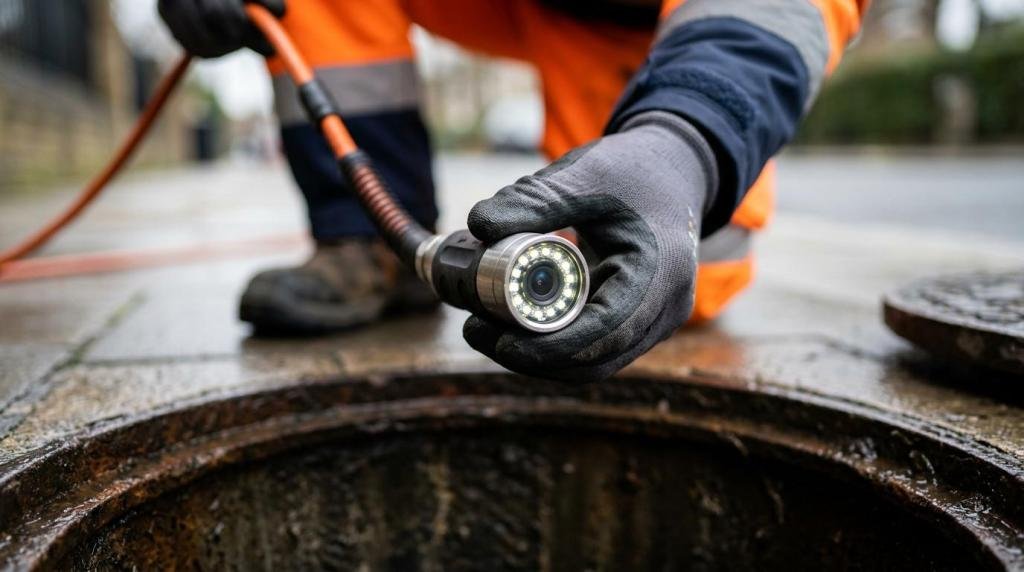
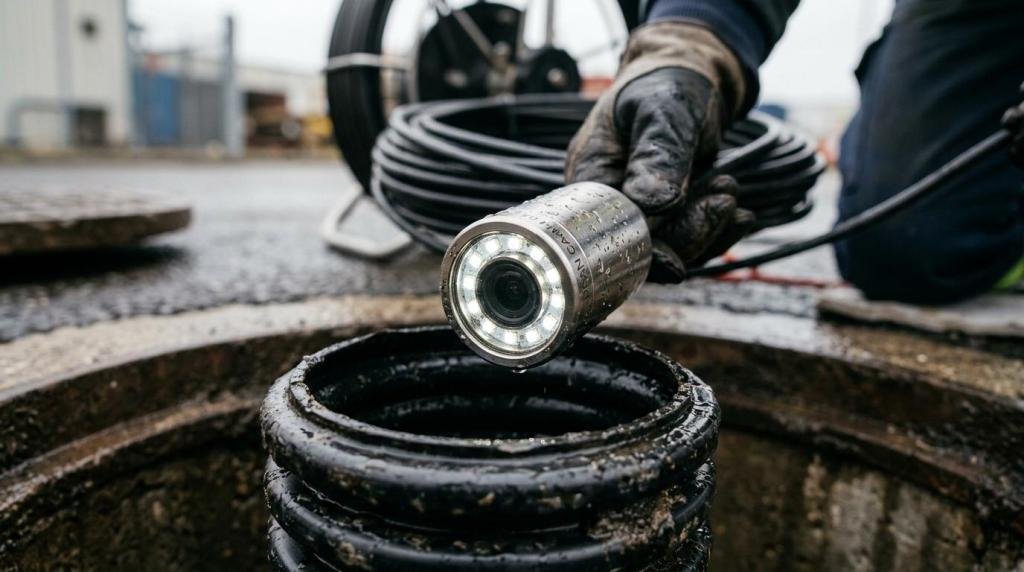
The first step is usually access to the nearest inspection chamber or rodding point. From there, an engineer can test flow, check for standing water, and inspect the line with CCTV if needed. A camera survey is especially useful when there are repeat blockages, suspected cracks, displaced joints, root intrusion, or a collapsed section. (camera survey)
Once the fault has been found, the repair method is chosen to match it. That may sound obvious, but it saves money. There is no point recommending excavation if jetting and relining will solve the problem safely.
A typical process looks like this:
- Initial checks: flow testing, manhole inspection, and locating the affected run
- CCTV survey: camera inspection to identify cracks, roots, collapses, or misaligned joints
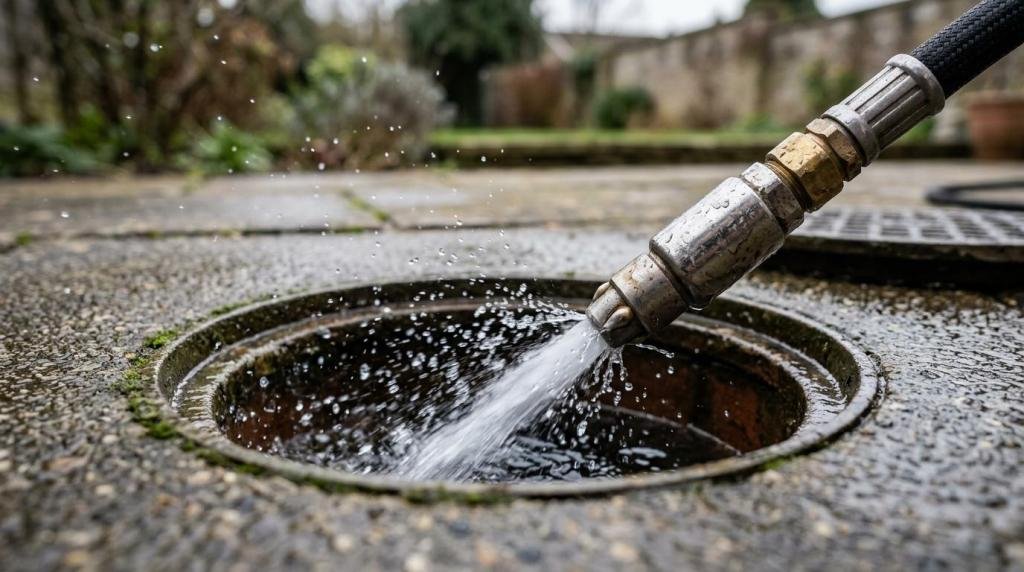
- Drain cleaning: high-pressure jetting to remove grease, silt, wipes, or scale
- Repair method: relining, patch repair, root cutting, or excavation where needed
- Final verification: a post-repair camera check to confirm the line is clear and sound
For many homeowners, the camera footage is the moment everything makes sense. You can see whether the problem is a simple blockage or a damaged pipe that needs real repair work.
Should you report a drain problem to Thames Water or the council?
Sometimes yes, and sometimes no.
If the issue is on your private drain within your boundary, you will normally arrange repair yourself. If the problem appears to involve a public sewer, a shared sewer, sewer flooding, a broken manhole cover, pollution, or a blockage outside your responsibility, reporting it is often the right next step.
Thames Water accepts online reports for:
- leaks
- blockages
- sewer flooding
- broken manhole covers
- pollution
Surrey County Council also has reporting routes for flooding on roads, pavements, or land. That is useful if the issue looks more like highway drainage or surface water drainage rather than a private foul drain. Guildford Borough Council’s flood guidance is also relevant during local flood events, especially where contaminated flood water is involved.
If you are not sure who owns the pipe, an experienced local drainage specialist can help identify it before you spend money in the wrong place.
How much do drain repairs cost in Guildford?
There is no single price because drain repairs vary a lot. A simple patch lining repair costs far less than digging up and replacing a collapsed run under a driveway.
The main things that affect price are the length of the damaged section, access, depth, whether the pipe needs cleaning first, and whether excavation is needed. Root removal, reinstating paving, or working around shared drainage can also change the figure.
What matters most is clear pricing before work starts. Homeowners are right to be cautious here. You want honest service, a proper explanation of the fault, and transparent pricing with no hidden extras. That is especially important in an urgent situation when stress levels are already high.
Can you fix a damaged drain yourself?
A minor blockage near a plughole can sometimes be cleared at home. A damaged underground drain is different.
Chemical cleaners rarely solve structural faults. They can also damage pipework and make later inspection harder. Lifting manhole covers without the right tools is risky, especially if the chamber is surcharged or flood water is present.
Call a professional if:
- The blockage keeps returning
- More than one fitting is affected
- Waste water is backing up outside
- You can smell sewage near the property
- The problem gets worse in heavy rain
A local, experienced professional will usually spot the pattern quickly. That means less trial and error, faster repairs, and a better chance of fixing the issue properly the first time.
Why CCTV drain surveys matter before repair work
Many homeowners in Guildford ask if a camera survey is really necessary. In repeat or unclear cases, yes, it often is.
A CCTV survey shows the exact condition of the drain. It can reveal cracks, displaced joints, root ingress, scale build-up, bellied pipework, and collapsed sections. It also helps pinpoint the location so repair work stays targeted rather than disruptive.
That matters if the pipe runs under a patio, extension, path, or planted area. Instead of digging up a wide area to hunt for the fault, the repair can be planned around the actual damaged point.
For landlords and property managers, a written report is useful too. It gives a record of the issue, what caused it, and what work is recommended.
Choosing a drain repair company for Guildford homes
When comparing drainage companies, look for practical things rather than sales talk.
You want engineers who regularly deal with blocked drains, collapsed pipes, root ingress, and sewer issues. You also want someone who explains whether the fault sits on a private drain or may need reporting to Thames Water.
A good company should offer:
- 24/7 help for urgent drainage problems
- Clear, honest advice
- Transparent pricing
- CCTV diagnostics
- Repairs for both homes and commercial sites
- Coverage across Guildford, London and surrounding areas
That mix matters because some problems need emergency attendance, while others need careful fault finding and a planned repair.
If you have a suspected drain problem in Guildford, do not wait for the next heavy rain to make it worse. Contact DH Drainage Power for a free inspection, clear advice, and transparent pricing from a local, experienced drainage specialist serving Guildford, London and surrounding areas.