Living in a block of flats means sharing more than entrances, hallways and communal spaces. In many buildings, multiple properties also rely on connected drainage pipes. This explains why drainage problems in ground floor flats can look very different from those affecting upper-floor homes.
Ground-floor flats can experience wastewater backing up through toilets, showers or other low-level outlets when a blockage develops further down a shared drainage system. Wastewater from upper floors continues to travel downwards, but a blocked pipe may prevent it from escaping. As the wastewater level rises, it can emerge through the lowest connected opening. Upper-floor flats, meanwhile, may experience slow-draining fixtures, gurgling sounds or isolated blockages, depending on where the obstruction is located.
These symptoms do not automatically prove that a communal drain is blocked. Individual waste pipes, incorrectly connected drainage or damaged pipework can produce similar problems.
DH Drainage Power helps homeowners, landlords and property managers investigate blocked drains and drainage faults across London and surrounding areas. Understanding which fixtures are affected, when symptoms occur and whether neighbouring flats have problems can help identify the appropriate next steps before sewage causes further damage.
How Do Shared Drainage Systems Work in Blocks of Flats?
Many blocks of flats have a connected drainage arrangement that carries wastewater from kitchens, bathrooms and toilets towards underground drains and the wider sewerage network.
Although layouts vary between buildings, the system commonly includes individual waste pipes, vertical soil stacks, horizontal drainage connections and underground pipework.
Vertical Soil Stacks and Shared Wastewater Pipes
A soil stack is a vertical pipe that carries wastewater, including toilet waste, from different floors towards the drainage system below.
Individual flats connect to this pipe through branch connections. The stack usually continues upwards for ventilation or connects to another suitable venting arrangement.
When wastewater flows normally, gravity helps it move down the stack and through the horizontal drainage pipes beneath or around the building.
However, a restriction below several connected flats can prevent this flow from continuing.
Wastewater from upper floors may then accumulate in the lower part of the system, increasing the likelihood of backing up through a low-level fixture.
Why the Lowest Connected Fixture Matters
The location of a flat within a building can influence where a drainage problem first becomes visible.
When wastewater cannot move past an obstruction, it may rise within the connected pipework. The lowest available outlet on that affected section can become a route for wastewater to escape.
This could be:
- A ground-floor toilet.
- A low-level shower tray.
- A bathroom floor drain.
- A kitchen sink connected to the affected branch.
- A basement drainage fixture located below ground-floor level.
A ground-floor flat is not necessarily the first property affected in every building. Basement fixtures, separate drainage branches and different pipe arrangements can change where backflow occurs.
This is why identifying the drainage layout matters more than relying on floor level alone.
To understand why a drainage fault may affect just one property rather than the entire building, read our guide on why only one flat has drainage problems.
Why Are Drainage Problems in Ground Floor Flats Different?
Ground floor flat drainage issues often become more noticeable when a blockage affects pipework serving several properties.
A toilet may appear to work correctly when nobody else is using water. Later, wastewater could rise unexpectedly while another resident is taking a shower or flushing a toilet upstairs.
This pattern can suggest that multiple flats are connected to a restricted drainage route.
1. Blockages Below Shared Pipe Connections
One possible cause of blocked drains in ground floor flats is an obstruction in the underground drain or horizontal pipe connected to a shared soil stack.
When water enters from upstairs, the blockage restricts its movement towards the sewer.
As the pipe fills, wastewater may rise towards lower-level fixtures.
A restriction in this location can create symptoms in the ground-floor property even when the blockage was not caused by its occupants.
2. Fat, Grease and Food Waste
Cooking fats and food residues can gradually collect inside kitchen waste pipes.
As grease cools, it can adhere to pipe surfaces and trap additional material.
In buildings where several flats discharge into connected pipework, accumulated debris can reduce the available space for wastewater to pass.
Thames Water identifies fats, oils and food scraps as common causes of sewer blockages.
See its guidance on what causes blocked drains and how to prevent them.
3. Wet Wipes and Unsuitable Flushed Materials
Wet wipes, sanitary products and other unsuitable materials can become trapped in pipe bends or existing deposits.
Even products marketed as flushable can contribute to blockages.
When these materials accumulate within shared drainage pipes, the effects may extend beyond the flat where they entered the system.
Residents should flush only human waste and ordinary toilet paper.
4. Damaged or Misaligned Drainage Pipes
Not every recurring blockage results from everyday waste.
Cracked pipes, displaced joints, root intrusion or partially collapsed drainage sections can interfere with wastewater movement.
These faults may trap debris repeatedly, causing symptoms to return after an initial clearance.
Where damaged drainage is suspected, professional drain repairs in London may be necessary after the affected section has been assessed.
5. Problems With Shared Drainage Connections
Some flats have separate waste connections that join a common drainage route farther downstream.
Others have more complicated arrangements because of building alterations or earlier plumbing changes.
A poorly configured connection can contribute to localised drainage problems, but it cannot be diagnosed from symptoms alone.
A proper inspection should establish which outlets share pipework and where wastewater encounters resistance.
What Drainage Symptoms Are Common on Upper Floors?
Upper-floor flats can develop drainage problems too, but the symptoms may be different.
An obstruction in an individual branch pipe might affect one sink or shower without disrupting the wider drainage system.
A partial restriction in a shared stack may cause gurgling, poor drainage or other symptoms in several flats.
The difference depends on where the fault occurs.
An upper-floor flat can also experience wastewater backflow when an obstruction is located below its branch connection and no lower connected outlet provides an escape route. Floor level influences the symptoms, but the drainage layout and blockage location determine which fixtures are affected.
Slow-Draining Sinks and Showers
A sink that empties slowly may have a local obstruction caused by grease, soap residue, hair or other debris.
When only one fixture is affected, the restriction may be close to that outlet.
However, multiple slow-draining fixtures can suggest a problem farther along the connected system.
Gurgling Sounds From Waste Pipes
Gurgling can occur when air and wastewater move unevenly through restricted or inadequately vented pipework.
The noise may be heard in a sink, bath or toilet.
Although a blockage is one possibility, gurgling alone does not establish the cause. The venting arrangement and affected connections may also need checking.
Isolated Toilet Blockages
A toilet in an upper-floor flat may become blocked because of materials lodged in its own outlet or branch connection.
This can happen without any wastewater appearing in the ground-floor property.
The key distinction is whether the obstruction is local to one flat or affects shared pipework.
Ground-Floor vs Upper-Floor Drainage Symptoms: Comparison Table
The following comparison can help residents and managing agents recognise patterns worth investigating.
| Drainage symptom | Ground-floor flat | Upper-floor flat | Possible explanation |
|---|---|---|---|
| Toilet wastewater rising | May occur during shared drain backflow | Can occur with local or shared restrictions | Blockage downstream of the affected fixture |
| Slow-draining sink | Possible | Possible | Local branch or shared drain restriction |
| Sewage appearing in shower | Possible through a low-level outlet | Possible depending on pipe connections | Wastewater backing up through connected drainage |
| Gurgling noises | Possible | Possible | Restricted flow or ventilation problem |
| Overflow when neighbours use water | Important warning sign | Can also occur | Shared drainage restriction |
| Repeated drain blockage | Possible | Possible | Persistent deposits or damaged pipework |
| Drainage trouble in several flats | Possible | Possible | Shared pipework or sewer problem |
Important: These are possible patterns, not definitive diagnoses. A professional assessment may be needed to identify the location and cause of the fault.
What Does Sewage Backing Up in a Ground Floor Flat Mean?
Sewage backing up in a ground floor flat should be treated as an urgent drainage concern, especially when contaminated wastewater enters living areas.
The problem may begin with an unusually high toilet water level, repeated bubbling or water appearing in the shower.
As wastewater continues entering the drainage system, the overflow may become worse.
Can Upstairs Neighbours Cause Sewage to Back Up Downstairs?
Wastewater discharged from an upstairs flat can contribute to a downstairs overflow when the shared drainage route is already blocked.
However, this does not necessarily mean an upstairs resident caused the obstruction.
A restriction may have developed gradually from accumulated deposits, unsuitable flushed items or damaged pipework.
The important distinction is between identifying where wastewater originates and determining who is responsible for the blockage.
Warning Signs That Need Prompt Attention
Residents and property managers should take the following signs seriously:
- Toilet water rising without being flushed.
- Dirty wastewater appearing through a shower or floor drain.
- Several drainage fixtures becoming slow at the same time.
- Sewage smells alongside poor drainage.
- Gurgling whenever neighbouring properties discharge water.
- Wastewater overflowing from an external inspection chamber.
- Blockages returning shortly after clearance.
Actual sewage entering a flat requires more urgent action than an isolated slow-draining basin.
What Should You Do When a Ground-Floor Flat Drain Backs Up?
The immediate priority is to reduce the risk of further overflow and avoid contact with contaminated wastewater.
Step 1: Stop Using Affected Drainage Fixtures
Avoid flushing toilets or running taps, showers and appliances connected to the suspected blocked system.
Where a shared obstruction is suspected, inform the building manager so affected residents can be asked to limit wastewater discharge until the situation has been assessed.
Stopping water use in just one flat may not prevent backflow when other properties continue discharging into the same pipe.
Step 2: Keep People Away From Sewage
Prevent children, pets and other occupants from entering contaminated areas.
Avoid direct contact with wastewater.
Do not attempt to enter an inspection chamber or remove a chamber cover yourself.
Where water is close to electrical equipment, avoid touching affected switches or appliances. Seek appropriate electrical safety advice.
Step 3: Contact the Landlord or Managing Agent
Tenants should inform their landlord or letting agent promptly.
Leaseholders should contact the managing agent or freeholder where communal drainage may be involved.
Provide clear details about:
- Which fixtures are affected.
- When the problem started.
- Whether wastewater is entering the property.
- Whether other flats have similar problems.
- Any known communal drainage access points.
Step 4: Record the Problem Safely
Photographs of affected areas can help document the extent of an overflow, provided they can be taken without entering contaminated water.
Keep a record of when the issue occurred and who was informed.
Contact the insurer where flooding has damaged the property or belongings.
For further guidance, read Thames Water’s steps to take during sewer flooding.
Step 5: Arrange Appropriate Drainage Assistance
Where the issue appears to involve private drainage, a drainage specialist can investigate the likely blockage location.
DH Drainage Power provides drain unblocking services in London for residential and commercial properties.
If a public sewer is suspected, contact the relevant sewerage undertaker instead. Responsibility should be established before arranging work on shared or public infrastructure.
Who Is Responsible for Blocked Drains in a Block of Flats?
Responsibility depends on the location, ownership and legal status of the affected pipework.
A pipe serving only one flat may fall under different arrangements from a communal drain serving multiple properties.
Individual Drainage Pipes
The landlord, leaseholder or property owner may be responsible for arrangements relating to private pipework, depending on the tenancy agreement, lease and applicable law.
For rented accommodation in England, landlords generally have repairing obligations covering sanitation and drainage installations.
Communal Drainage Systems
Managing agents and freeholders may need to organise investigations where drainage pipes serve several flats.
However, ownership and maintenance responsibilities should be checked before assuming that every shared pipe belongs to the building owner.
Lease terms and drainage records can help clarify responsibility.
Public Sewers and Shared Lateral Drains
In England, many shared sewers and lateral drains are the responsibility of the sewerage undertaker.
For properties within Thames Water’s sewerage area, its sewer pipe responsibility guidance explains the distinction between privately maintained drains and public drainage infrastructure.
Not every shared pipe inside a block is automatically a public sewer. The precise arrangements must be confirmed.
How Can CCTV Drain Surveys Help Identify Shared Drainage Problems?
When a blockage repeatedly affects the same flats, inspecting the drainage system may provide more useful information than repeatedly treating the visible symptom.
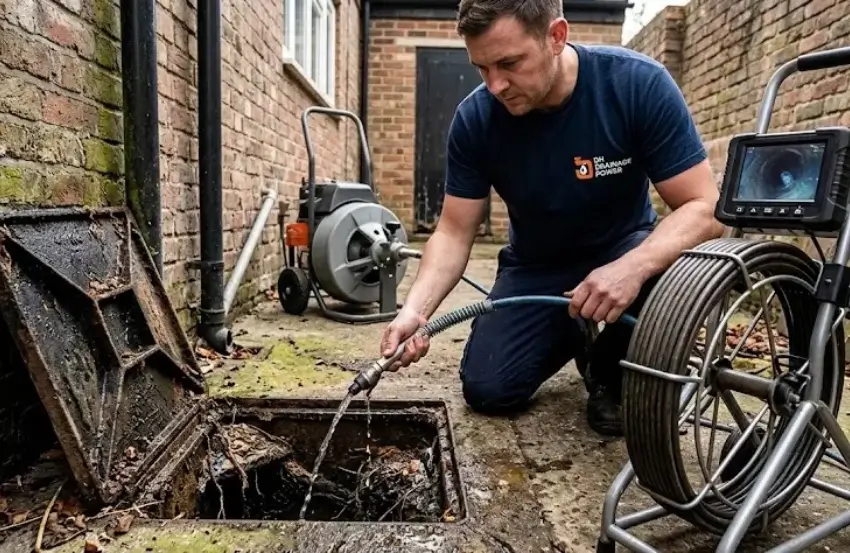
A CCTV drain survey uses specialist camera equipment to examine accessible drainage pipework.
Depending on the drainage layout, inspection conditions and available access, a survey may help identify:
- Accumulated grease or debris.
- Root intrusion.
- Cracked or displaced pipe sections.
- Restrictions within underground drains.
- Locations where debris repeatedly collects.
- Visible structural faults affecting wastewater flow.
For recurring or unexplained problems, DH Drainage Power provides CCTV drain inspections in London.
Does Every Blockage Require a CCTV Inspection?
No. Some localised obstructions can be identified and cleared without a camera inspection.
CCTV investigation is particularly useful when a problem returns, the cause remains uncertain or pipe damage is suspected.
A camera survey also has limitations. It may not establish the complete drainage layout where access is restricted or the pipe is too obstructed to inspect.
The appropriate approach depends on the symptoms and site conditions.
How Can Managing Agents Prevent Recurring Drainage Problems?
Communal drainage maintenance involves more than reacting when one resident reports an overflow.
Property managers can reduce avoidable problems by improving communication, documenting incidents and arranging investigations where warning signs recur.
Establish Clear Reporting Procedures
Residents should know who to contact when drainage problems occur outside normal office hours.
Reports should distinguish between a slow-draining fixture and sewage entering an occupied flat.
This allows urgent situations to be escalated appropriately.
Keep Drainage Information Accessible
Where available, maintain records of:
- Drainage drawings and previous inspection findings.
- Access locations for communal chambers.
- Reported blockages and affected flats.
- Previous repairs and recurring fault locations.
- Relevant lease or maintenance responsibilities.
These details can help reduce uncertainty when a new problem develops.
Encourage Sensible Waste Disposal
Residents should avoid putting cooking fats, wet wipes, sanitary products and food debris into drainage systems.
Shared drainage systems are particularly vulnerable when unsuitable materials accumulate over time.
Simple reminders in communal notices or resident communications can support prevention.
Investigate Recurring Faults
Repeatedly clearing the same section of pipe without identifying why it blocks may leave an underlying issue unresolved.
Where recurring problems suggest structural damage or persistent obstruction, an inspection can help inform the next action.
What Should London Flat Owners Know About Shared Drainage?
London has a mixture of converted houses, purpose-built apartment blocks and buildings that have undergone alterations over time.
These different property types may have different drainage arrangements.
For example, a converted house might have separate flats connected to older pipework, while a larger purpose-built building may use several soil stacks and underground drainage runs.
Neither arrangement should be assumed without inspection or reliable building records.
Across London, including areas such as Croydon, Wembley, Kingston upon Thames and Hounslow, flat owners and managers should pay particular attention to the distinction between individual drainage faults and shared wastewater problems.
For mixed-use buildings with ground-floor commercial premises and residential accommodation above, identifying which fixtures connect to each drainage route can be especially important.
A problem affecting a ground-floor business does not automatically mean the business caused it. Similarly, an upstairs residential discharge does not establish responsibility for a blockage.
The safest approach is to investigate the drainage configuration and actual fault before assigning responsibility.
Frequently Asked Questions
1. Why does my ground-floor toilet back up when upstairs neighbours flush?
A blockage in shared drainage pipework below the connected flats may prevent wastewater from flowing towards the sewer. When upstairs residents flush, additional wastewater enters the restricted pipe and may rise through a lower-level toilet. This pattern suggests a possible shared drainage issue, but the exact obstruction location must be established before deciding who should arrange repairs.
2. Are ground-floor flats more likely to experience sewage backups?
Ground-floor flats can be more exposed to wastewater backing up from downstream shared drainage restrictions because their fixtures may be among the lowest connected outlets. However, this depends on the building’s pipework. Basement fixtures, separate branches and other drainage arrangements can change which property experiences the problem first.
3. Can a blocked drain upstairs affect a ground-floor flat?
Yes, depending on where the blockage is located. A restriction in an individual upstairs waste pipe may affect only that flat. A blockage farther down a shared soil stack or underground drain can affect several connected properties. Observing whether the problem occurs when other residents use water can provide useful information for an inspection.
4. Who pays for a blocked communal drain in a London block of flats?
Responsibility depends on whether the affected pipe is private, communal or part of the public sewerage network. Lease agreements and building management arrangements may determine who organises work on private communal pipes. Public sewers and certain shared lateral drains are generally maintained by the relevant sewerage undertaker. Check ownership and maintenance obligations before assuming who must pay.
5. Is sewage backing up in a ground-floor flat an emergency?
Sewage entering a flat should be treated as urgent because it may create contamination hazards and cause damage to flooring, furniture and electrical equipment. Stop using affected fixtures, keep people and pets away from contaminated areas and notify the responsible building manager. Contact the sewerage undertaker if public sewer flooding is suspected, and seek professional drainage assistance where appropriate.
6. Can CCTV drain surveys identify the cause of repeated blockages?
CCTV drain surveys can help investigate recurring blockages by showing accessible internal pipe conditions, including debris, cracks, displaced joints and certain structural faults. However, inspection access and the condition of the drain affect what can be seen. A survey may need to be combined with other assessment methods before the precise cause and necessary remedial work are established.
7. How can residents prevent blocked drains in ground-floor flats?
Residents can help reduce avoidable blockages by disposing of cooking fat and food waste in the bin, keeping wet wipes and sanitary products out of toilets and reporting drainage problems early. Building managers should also maintain clear reporting procedures and investigate repeated faults. Preventative habits help, but they cannot eliminate problems caused by damaged or poorly configured pipework.
Conclusion: Understand the Drainage Layout Before Treating the Problem
Ground-floor and upper-floor flats can experience different drainage symptoms because wastewater travels through connected pipes at different levels.
A local blockage may affect one fixture, while an obstruction in shared drainage pipework can cause wastewater to back up into lower-level outlets.
Recognising these differences helps residents, landlords and managing agents respond appropriately, reduce avoidable damage and arrange the right investigation.
Need Help With Drainage Problems in a London Flat?
DH Drainage Power provides drain unblocking, CCTV drain inspections and drainage repair services for residential and commercial properties across London, Greater London and surrounding service areas.
For urgent drainage concerns, emergency assistance is available 24 hours a day, seven days a week.
Call: 07897041092
Website: https://dhdrainagepower.co.uk/
Contact: https://dhdrainagepower.co.uk/contact/
Contact DH Drainage Power to explain the symptoms, discuss the affected pipework and enquire about the appropriate drainage assistance.