A shower that drains slowly while the bathroom sink, toilet and other fixtures work normally usually indicates a restriction within the shower’s own waste outlet, trap or connecting pipe. Hair, soap residue and product build-up are common causes. Because the problem affects only one fixture, the main drainage system may still be operating normally. A slow draining shower can begin with a little water collecting around your feet before becoming a persistent drainage problem. The first practical step is to inspect the accessible drain cover and remove visible hair or debris without pushing it further into the pipe.
However, not every slow shower drain is caused by a simple blockage. A poorly positioned waste pipe, restricted trap or hidden plumbing fault can produce similar symptoms. For homeowners, landlords and property managers across London, understanding the difference can prevent unnecessary repairs and further damage. DH Drainage Power provides professional drain unblocking, inspections and drainage assistance across London and surrounding areas. This guide explains the causes of slow shower drainage, how to identify the likely problem, which checks are safe to carry out yourself and when professional support is appropriate.
Why Is Only Your Shower Draining Slowly?
When one bathroom fixture drains slowly but everything else works, the location of the problem provides an important clue.
Most homes have separate waste connections for showers, basins, baths and toilets. These pipes eventually connect to a wider drainage system, but they do not necessarily share the same immediate route.
If your basin empties normally while shower water collects around the waste outlet, the restriction may be somewhere between the shower opening and the point where its pipe joins another drainage line.
How does a shower drainage system work?
A typical shower drainage arrangement includes several components:
-
Drain cover: Prevents larger objects from entering the waste outlet.
-
Waste fitting: Collects water from the shower tray or floor.
-
Trap: Maintains a water seal that helps prevent sewer odours entering the bathroom.
-
Waste pipe: Carries wastewater towards the connected drainage system.
-
Connecting pipework: Joins the shower waste to other internal or external drainage pipes.
When water encounters a restriction in any of these components, drainage can become slower.
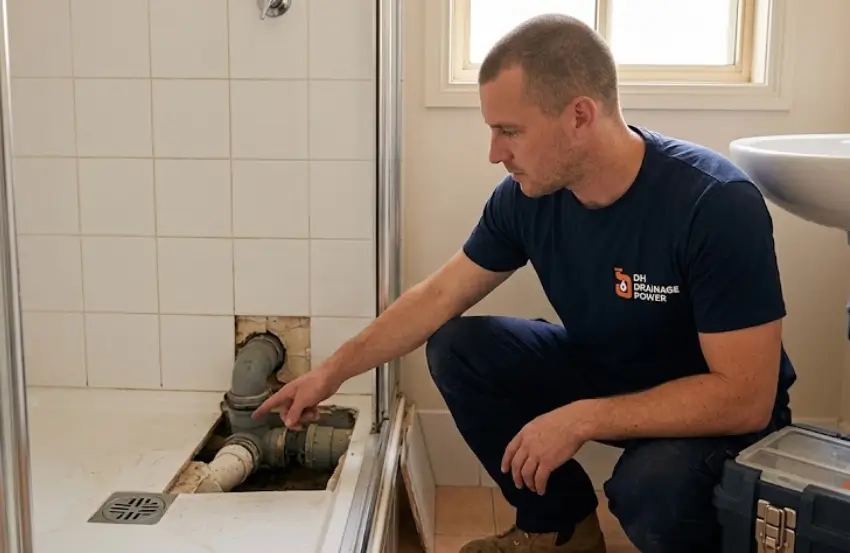
Shower installations differ, particularly between older bathrooms, modern walk-in showers and wet rooms. The trap may be accessible from above in one property but concealed beneath the shower tray in another.
This difference matters when deciding whether a blockage can be safely inspected without dismantling the installation.
Does normal sink drainage rule out a main drain blockage?
No. It makes a localised shower problem more likely, but it does not prove the main drainage system is clear.
Fixtures may join the shared drainage line at different locations. A partial obstruction can affect one branch before others show symptoms.
If the shower is the only affected fixture, begin by checking its accessible waste components. If other fixtures later begin gurgling, draining slowly or backing up, further drainage investigation may be necessary.
What Are the Common Causes of a Slow Draining Shower?
Several issues can reduce the flow of water through a shower waste pipe. Identifying the likely cause helps determine whether simple cleaning or professional assistance is appropriate.
1. Hair accumulating inside the drain
Hair is one of the most common contributors to shower waste blockages.
Loose strands can pass through the drain cover and collect around internal components. As more hair enters the waste, it can form a tangled mass that restricts water movement.
This may develop gradually, particularly in bathrooms used by several people.
Possible symptoms include water taking progressively longer to disappear and visible hair collecting beneath a removable drain cover.
2. Soap scum and personal care product residue
Shampoo, conditioner, body wash and soap can leave residue inside waste fittings.
When these deposits combine with hair, skin particles and other debris, they can create a sticky obstruction.
A drain may appear clean from the surface while material continues to accumulate further down.
The combination of hair and residue often explains why occasional surface cleaning does not completely restore drainage.
3. A restricted shower trap
The shower trap maintains a water seal, but its shape can also create places where debris accumulates.
Modern low-profile shower trays may have compact traps with limited internal space. Some designs include removable components intended for routine cleaning.
If these become heavily contaminated with hair or residue, water may pass through more slowly.
Only remove parts that the manufacturer’s maintenance instructions identify as user-serviceable. Incorrect reassembly can cause leaks or compromise the water seal.
4. A partial blockage in the shower waste pipe
Sometimes the visible outlet and accessible trap are clean, but drainage remains slow.
This may indicate a restriction further along the connecting waste pipe.
Accumulated residue, trapped debris or an existing problem at a pipe joint can reduce the effective opening.
A partial blockage allows some water through, so the shower may continue working without completely overflowing.
However, drainage performance often deteriorates when the restriction becomes more severe.
5. Incorrect pipe gradient or installation problems
Water generally needs an appropriate pipe gradient to flow efficiently away from the shower.
If the connecting waste pipe has an unsuitable fall, a sagging section or an installation defect, water may not move as intended.
This can be relevant when a shower has drained poorly since installation or renovation.
Repeated cleaning will not correct an underlying installation fault. A competent professional may need to inspect the accessible plumbing arrangement and determine whether repairs are required.
6. Venting or pressure-related plumbing problems
Drainage systems depend on suitable air movement to maintain effective wastewater flow and trap performance.
In some installations, inadequate venting or pressure changes may contribute to gurgling and drainage problems.
These symptoms are not enough to confirm a venting fault.
Because several different conditions can produce similar noises, professional assessment is preferable to attempting alterations to concealed plumbing or ventilation components.
What Are the Warning Signs of a Shower Drain Blockage?
A shower does not need to stop draining completely before there is a problem.
Small changes in drainage behaviour can indicate that a restriction is developing.
Watch for these signs:
-
Water remains around the shower outlet after use.
-
Drainage becomes progressively slower over several days or weeks.
-
The shower tray begins filling during normal use.
-
Unpleasant odours come from the waste opening.
-
Gurgling noises occur as water disappears.
-
Drainage improves briefly after cleaning but quickly becomes slow again.
-
Water appears near the base of the shower tray or adjacent flooring.
The final symptom deserves particular attention because it may indicate leakage rather than simply a blocked waste.
If water escapes onto flooring, into walls or through the ceiling below, stop using the shower until the cause has been assessed.
Slow shower drainage: symptoms and recommended actions
| Symptom | Possible cause | Recommended action |
|---|---|---|
| Water pools near the drain | Hair or debris in the outlet | Clean accessible components |
| Shower drains slowly after regular use | Soap residue or partial blockage | Inspect the trap and monitor drainage |
| Drainage remains poor after cleaning | Deeper waste pipe restriction | Arrange professional assessment |
| Shower gurgles while draining | Partial restriction or pressure issue | Check for other affected fixtures |
| Several fixtures drain slowly | Possible shared drainage problem | Seek drainage assistance |
| Water leaks around the shower | Seal, fitting or pipework problem | Stop using the shower and investigate |
These are diagnostic clues rather than definitive conclusions. Different plumbing arrangements can produce similar symptoms.
How to Fix a Slow Draining Shower Safely
There are several reasonable checks you can carry out before arranging professional assistance.
The aim is to identify accessible debris without damaging the waste fitting, disturbing waterproofing or exposing yourself to hazardous chemicals.
Step 1: Stop using the shower temporarily
If water is already collecting around the shower tray, avoid running more water through the drain.
Allow standing water to subside where possible.
Check nearby flooring and the ceiling below for visible signs of leakage, particularly when the shower is located upstairs.
Step 2: Inspect the drain cover
If the shower cover is designed to be lifted or removed by the user, inspect it for accumulated hair and residue.
Use gloves to remove visible debris and place it in the bin.
Avoid pushing material further into the drain opening.
Some covers are secured or integrated into the shower fitting. Do not force them open if their removal method is unclear.
Step 3: Clean accessible trap components
Certain shower wastes contain removable hair-catching inserts or trap cups.
Follow the manufacturer’s instructions when cleaning these components.
Rinse reusable parts with warm water, remove trapped debris and reinstall everything correctly.
Do not dismantle concealed or permanently sealed waste connections. If a component does not lift out easily as instructed, leave it in place.
Step 4: Test the drainage with a small amount of water
After reassembling the drain components, introduce a modest amount of water and observe how quickly it disappears.
Check for leakage around accessible fittings.
If the water flows normally again, continue monitoring the shower during ordinary use.
If the shower remains slow or starts backing up, stop testing repeatedly and investigate further.
Step 5: Avoid aggressive chemical treatments
Chemical drain cleaners are not a reliable answer to every shower blockage.
Some products can create hazards for people who later need to remove or inspect the waste fitting. Using incompatible cleaning chemicals can be particularly dangerous.
Never mix drain-cleaning products, and do not combine them with bleach or other household cleaners.
Avoid pouring boiling water into a shower waste, especially where plastic components, seals or tray materials may be affected.
If a chemical product has already been used and the drain remains blocked, tell the drainage professional before work begins.
Why Does Your Shower Still Drain Slowly After Cleaning?
Removing visible hair does not necessarily clear the entire waste pipe.
The obstruction may be located beyond the accessible trap, or the problem may not be caused by debris at all.
A hidden obstruction further along the waste pipe
A compact mass of hair and residue can remain inside a bend or horizontal pipe even when the drain opening appears clean.
Water may flow through the remaining space, but the restricted pipe struggles to handle the volume produced during showering.
This can explain why the shower drains reasonably during a short test but begins pooling during normal use.
A drainage fault unrelated to cleaning
When poor drainage starts immediately after bathroom refurbishment, consider whether the waste pipe installation may be contributing.
Potential issues include incorrect pipe falls, unsuitable connections or disturbed fittings.
For existing showers, physical damage, movement or deterioration can also affect drainage performance.
Repeatedly applying cleaning products will not resolve these underlying problems.
If the shower has always drained poorly, arrange a suitable plumbing assessment rather than treating it indefinitely as a routine blockage.
When Should You Call a Professional Drainage Specialist?
Basic cleaning may resolve an accessible hair blockage. Professional assistance becomes more appropriate when the symptoms indicate a deeper or recurring issue.
Consider contacting a specialist when:
-
Water continues pooling after accessible components have been cleaned.
-
The shower repeatedly blocks despite routine maintenance.
-
Other bathroom fixtures begin draining slowly.
-
Wastewater backs up or produces a persistent unpleasant smell.
-
There are signs of leakage or water damage.
-
A waste fitting cannot be safely accessed.
-
The problem may involve shared drainage pipework.
For London property owners, professional drain unblocking in London may be appropriate when the restriction cannot be cleared through basic maintenance.
Thames Water also identifies slow-emptying sinks and baths, bad smells and wastewater backing up as possible blockage symptoms. Its guidance on blocked drains provides further information about recognising drainage problems.
How do professionals investigate a persistent drainage issue?
The appropriate investigation depends on where the problem appears to be located.
A professional may begin by examining the accessible shower waste, checking connected pipework and determining whether the problem affects other fixtures.
When the issue extends into suitable drainage pipework, specialist clearance methods may be appropriate.
DH Drainage Power offers drain unblocking, drain inspections and CCTV drain surveys. However, a CCTV survey is not automatically necessary for a shower trap blockage, and larger drainage cameras may not be suitable for narrow internal shower waste pipes.
Where symptoms suggest a deeper drainage fault, a professional drain inspection can help determine whether further investigation is justified.
The important distinction is identifying the actual restriction before recommending extensive drainage work.
How Can You Prevent Your Shower Drain from Becoming Slow Again?
Preventative maintenance is easier when it focuses on keeping debris out of the waste rather than trying to dissolve accumulated material later.
Simple shower maintenance habits
-
Fit a compatible hair-catching drain cover where appropriate.
-
Remove trapped hair after showering or as frequently as needed.
-
Clean removable waste components according to the manufacturer’s guidance.
-
Keep cotton pads, wipes and other solid materials out of the shower waste.
-
Notice changes in drainage speed before water starts pooling.
-
Investigate recurring odours instead of covering them with cleaning products.
-
Check for leaks after any permitted trap maintenance.
A shower used by several people may need more frequent cleaning than one in a lightly used bathroom.
The condition of the fitting and the amount of hair entering the drain are more useful guides than a rigid cleaning schedule.
Common shower drain maintenance mistakes
One mistake is assuming that stronger chemicals will always achieve better results. They may fail to remove the underlying obstruction and create additional handling risks.
Another is repeatedly forcing tools into a waste opening without understanding the trap design. This can damage delicate components or dislodge connections.
A third mistake is ignoring slow drainage because the water eventually disappears.
A shower can remain partly functional for some time while the restriction gradually becomes more severe.
For additional prevention advice, read DH Drainage Power’s guide to preventing bathroom and kitchen sink blockages.
Are Slow Shower Drains Different in London Flats and Houses?
The basic causes of shower waste restrictions are similar across property types, but the plumbing layout and responsibility for repairs can differ.
Older properties and converted flats
Some London properties have undergone several bathroom alterations over time.
A shower may have been added in a space that originally contained a bath, or its waste may connect through concealed pipework.
In these circumstances, the route and accessibility of the pipe are important when investigating persistent problems.
Older pipework does not automatically mean defective drainage. The installation needs to be assessed on its actual condition.
Rented homes and managed buildings
Tenants should report recurring slow drainage, leaks or wastewater backing up to their landlord or managing agent.
Providing useful details can help the responsible person arrange an appropriate inspection.
These details might include when the problem began, which fixtures are affected and whether water escapes beyond the shower tray.
Landlords and property managers should distinguish between ordinary accessible cleaning and problems involving concealed plumbing or shared services.
Responsibility for remedial work depends on the circumstances, relevant agreements and applicable law.
Commercial bathrooms and shared facilities
Commercial premises, accommodation providers and buildings with shared shower facilities may experience more intensive bathroom use.
Regular inspection of accessible waste fittings can help identify restrictions before facilities become unusable.
Where several showers connect to shared pipework, simultaneous drainage problems may indicate an issue beyond an individual trap.
Documenting which showers are affected helps narrow down the likely location of the problem.
Could a Slow Shower Drain Become a Bigger Drainage Problem?
Yes, although not every slow shower drain develops into a major blockage.
A localised restriction can worsen if additional debris accumulates. Water may eventually stop flowing, making the shower unusable.
Repeated pooling can also increase the consequences of an existing problem with shower seals, waterproofing or waste connections.
If wastewater begins affecting multiple fixtures, the issue may be further along the drainage system.
In London, the distinction between private drains and public sewers can be important. Thames Water explains that individual property drains and shared or public sewers may have different maintenance responsibilities.
For an isolated shower restriction, the likely first step is checking the private internal plumbing rather than reporting a public sewer fault.
If several properties experience wastewater backing up or a shared sewer problem is suspected, the relevant water company or property manager may need to be involved.
Frequently Asked Questions About Slow Draining Showers
1. Why is my shower draining slowly when the sink and toilet work normally?
When only the shower drains slowly, the obstruction is often within its individual waste outlet, trap or connecting pipe. Hair and soap residue are common contributing factors. However, normal drainage elsewhere does not completely rule out a deeper restriction. Begin with the accessible shower components and seek advice if the symptoms persist.
2. Can hair cause a slow draining shower even if I cannot see a blockage?
Yes. Hair can accumulate below the visible drain cover or inside the trap, where it combines with soap residue and other debris. The obstruction may gradually restrict water movement without completely blocking the pipe. Cleaning an accessible hair-catching insert may help, but deeper restrictions may require professional attention.
3. How can I fix a slow draining shower without using chemicals?
Start by removing visible hair and debris from a drain cover designed for user removal. Clean any accessible trap insert according to the manufacturer’s instructions and reinstall it correctly. Test with a small amount of water. Avoid forcing tools into concealed fittings. If drainage remains slow, arrange an inspection instead of repeatedly applying chemicals.
4. Why does my shower drain slowly even after I clean the trap?
The restriction may be further along the waste pipe, beyond the components you can access. Alternatively, the pipe’s gradient, an installation problem or a damaged connection may be affecting drainage. Persistent symptoms after proper cleaning suggest that the problem needs further investigation rather than another round of surface cleaning.
5. Is a slow shower drain an emergency?
Mild slow drainage without leakage or wastewater backing up is not usually an immediate emergency. However, urgent assistance may be appropriate if water is overflowing, sewage is returning, multiple fixtures are affected or water is damaging the property. DH Drainage Power offers 24/7 emergency drainage support across London and surrounding areas.
6. Do I need a CCTV inspection for a slow shower drain?
Not necessarily. Many shower drainage problems involve accessible components or small waste pipes that can be checked without a full CCTV survey. Camera inspections may be useful when there is evidence of a problem further along suitable drainage pipework. The decision should follow an assessment of the affected drainage arrangement.
7. Can DH Drainage Power help with slow shower drainage in London?
DH Drainage Power provides drain unblocking and drainage fault-finding services across London, Greater London and surrounding areas. If your shower continues draining slowly after basic maintenance, the team can discuss the symptoms and appropriate next steps. Emergency drainage assistance is available 24/7 on 07897041092.
Conclusion: What Should You Do About a Slow Draining Shower?
A shower draining slowly while other fixtures work normally often points to a localised restriction caused by hair, soap residue or debris in the shower waste. Begin with safe cleaning of accessible components. If drainage remains slow, blockages repeatedly return or other fixtures become affected, professional investigation may be necessary. Ignoring the problem can allow a manageable restriction to become more disruptive.