A soil stack is a vertical drainage pipe that carries wastewater and sewage from toilets, and often other sanitary fixtures, down towards the underground drainage system. Understanding how a soil stack works helps homeowners, landlords and property managers recognise how wastewater leaves a building and why problems with one pipe can affect several bathrooms or appliances.
In many UK properties, the soil stack connects toilets, bathroom waste pipes and sometimes kitchen drainage into a shared vertical discharge route. Wastewater travels down the pipe under gravity before entering the building drain and eventually the appropriate sewerage system. The arrangement also needs suitable ventilation to manage air pressure and protect the water seals that prevent unpleasant drainage gases entering occupied rooms.
A blocked, damaged or poorly ventilated soil stack may contribute to gurgling toilets, slow drainage, wastewater backing up or persistent odours. However, these symptoms can also originate elsewhere in the drainage system.
DH Drainage Power provides drainage inspections, blocked drain clearance and fault finding across London and surrounding areas. Knowing how the soil stack connects to underground drains can help property owners describe symptoms accurately and seek appropriate assistance.
What Is a Soil Stack in a House?
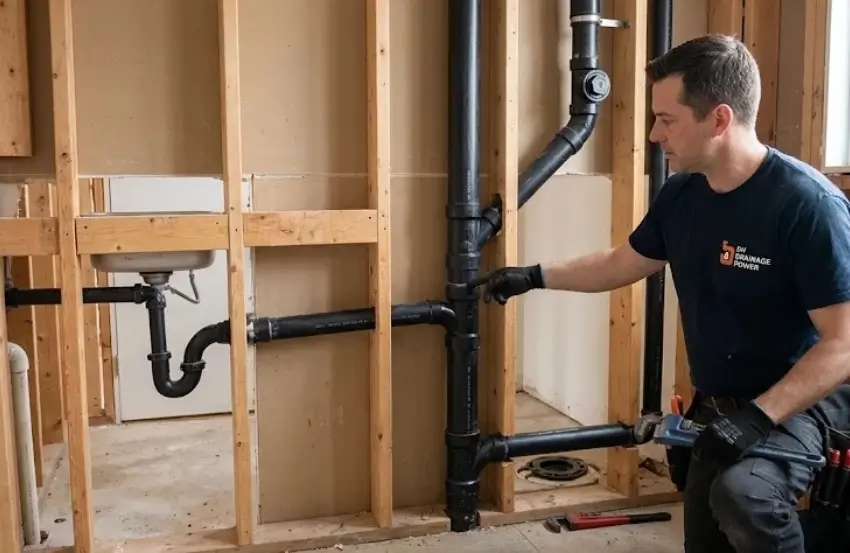
A soil stack, sometimes called a soil pipe or discharge stack, is part of a building’s foul water drainage system. Its primary function is to transport wastewater containing human waste from toilets towards the underground drains.
Unlike a small waste pipe serving an individual washbasin, a soil stack generally receives discharge from larger sanitary connections and may serve several fixtures on different floors.
In a typical two-storey house, the soil stack may connect an upstairs toilet to the drainage system below ground level. Additional bathroom fixtures may join through branch pipes, provided the drainage system has been designed for those connections.
Where Is the Soil Stack Usually Located?
The location varies according to the age, design and construction of the property.
Common arrangements include:
-
External soil stacks: Vertical pipes fixed to an outside wall, often near bathrooms or toilets.
-
Internal soil stacks: Pipes concealed within walls, service ducts or boxed-in areas.
-
Shared soil stacks: Vertical drainage pipes serving multiple flats or units within a building.
-
Combined soil and vent stacks: Discharge pipes that continue upwards to provide ventilation.
Some buildings use alternative venting arrangements, so a soil stack does not always extend visibly above the roof.
In older London terraced houses, external pipework may be relatively easy to identify. In modern apartment blocks, the stack may be hidden inside a communal service shaft.
How Does a Soil Stack Work?
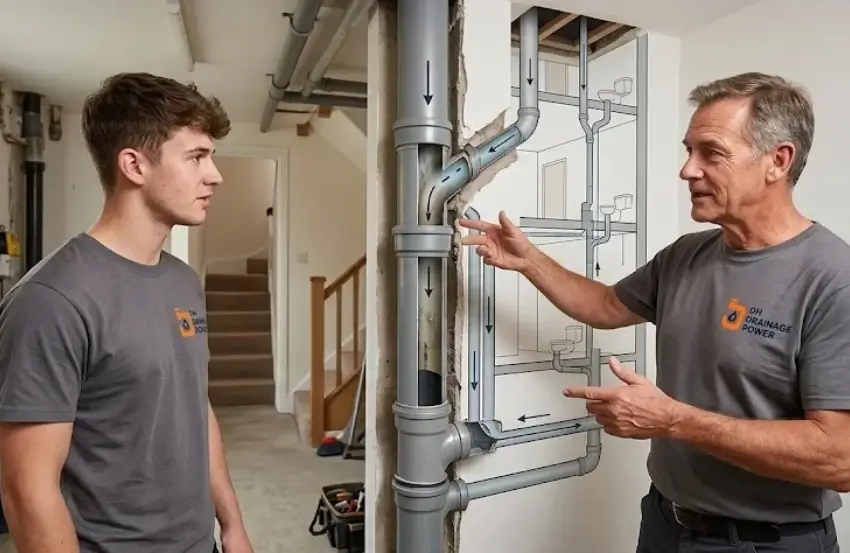
A soil stack relies primarily on gravity to move wastewater downwards. When someone flushes a toilet or empties a bath, the wastewater enters the connected pipework and travels towards the building’s underground drainage system.
The pipework must also manage changes in air pressure as water moves through the system.
Step 1: Wastewater Leaves the Toilet or Sanitary Fixture
When a toilet is flushed, wastewater enters the toilet’s discharge connection. This usually leads into a larger soil pipe or vertical stack.
Washbasins, baths and showers normally use smaller branch waste pipes before joining the appropriate drainage connection.
Each fixture’s trap contains a water seal designed to prevent drainage gases from entering the room.
Step 2: Wastewater Travels Down the Soil Stack
Gravity carries the wastewater through the vertical pipe.
The pipe must be appropriately sized, supported and connected to allow discharge without unnecessary obstruction.
Incorrect pipe connections, damaged fittings or accumulated debris can interfere with normal drainage.
Where several toilets connect to one stack, suitable system design becomes especially important because wastewater may enter from different floors.
Step 3: Air Moves Through the Drainage System
As wastewater flows down the stack, it can create changes in air pressure.
A correctly designed ventilation arrangement helps balance these pressures and protect the water seals in connected traps.
Without adequate pressure control, a trap may lose water through siphonage or other pressure effects, potentially allowing unpleasant smells into the building.
Step 4: Wastewater Enters the Underground Drain
At the base of the soil stack, the pipe connects to the building’s drainage system through an appropriate fitting or transition.
Wastewater then travels through underground pipework towards the relevant foul or combined sewer, or another permitted wastewater disposal arrangement.
The precise connection depends on the property’s drainage design.
For example, the point where a vertical stack joins an underground drain may be inside or outside the building.
The UK Government’s Approved Document H provides guidance on foul water drainage, sanitary pipework and underground drainage arrangements in England.
How Does a Soil Stack Connect to Underground Drains?
The connection between a soil stack and an underground drain forms an important part of the foul drainage route.
At ground level or below, the vertical pipe transitions into drainage pipework designed to carry wastewater away from the property.
Depending on the layout, that pipework may pass beneath a floor, through the ground outside the building or towards a nearby inspection chamber.
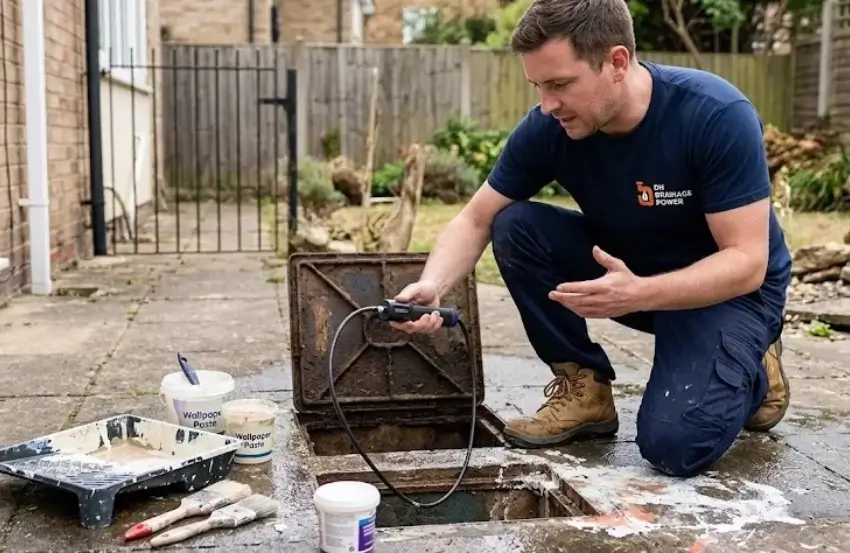
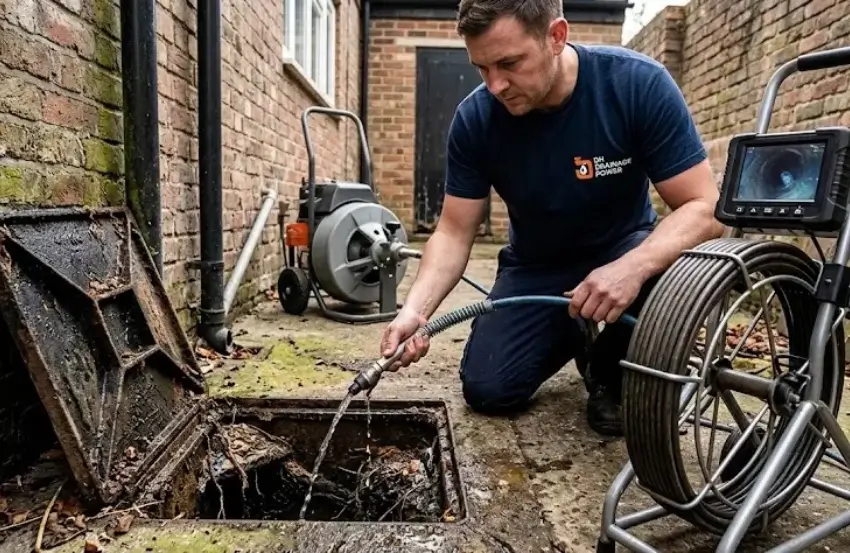
An inspection chamber provides access to particular sections of underground drainage for maintenance or investigation. It does not necessarily give direct access to every part of the vertical stack.
What Happens When the Underground Drain Is Blocked?
A blockage below the stack can prevent wastewater from leaving the building properly.
As additional wastewater enters the system, water may back up towards low-level fixtures or other connected openings.
For example, an obstruction in the drain serving several toilets may affect more than one fixture, even though the stack itself remains clear.
This distinction matters because removing a blockage from a toilet does not necessarily resolve an obstruction further downstream.
Where the location of a recurring problem is uncertain, a professional drain inspection in London can help investigate accessible underground drainage sections.
Soil Stack vs Waste Pipe: What Is the Difference?
A soil stack and a waste pipe both carry used water away from a property, but they perform different roles within the drainage system.
A soil pipe is designed to carry discharge from toilets, including sewage and toilet paper. A waste pipe generally carries wastewater from fixtures such as sinks, baths, showers and washing machines.
These pipes may connect to the same foul drainage system, but they differ in function, size and connection requirements.
| Feature | Soil stack | Waste pipe |
|---|---|---|
| Main purpose | Carries toilet discharge and other connected wastewater | Carries wastewater from sanitary fixtures and appliances |
| Typical fixtures | Toilets and connected bathroom facilities | Sinks, baths, showers and washing machines |
| Typical pipe size | Often around 110 mm in domestic systems | Commonly smaller, depending on the fixture and design |
| Installation | Usually a vertical discharge pipe | Often horizontal or sloping branch pipework |
| Ventilation | May form part of the ventilation arrangement | Relies on suitable trap protection and system ventilation |
| Connection | Leads towards the building’s drain | May join a stack or another suitable drainage connection |
| Possible problems | Blockages, leaking joints, pressure issues | Slow flow, trap blockages, leaking connections |
Pipe diameters are typical examples, not universal specifications. Actual requirements depend on the building layout and relevant drainage design guidance.
Why Does a Soil Stack Need Ventilation?
Ventilation helps manage air movement inside the drainage system.
When wastewater passes through pipes, it displaces air and can create pressure fluctuations. Without an appropriate ventilation arrangement, those changes may affect the water seals in connected traps.
Water seals are important because they form a barrier between the building’s occupied spaces and the drainage system.
What Is a Soil Vent Pipe?
A soil vent pipe is a section of the drainage ventilation arrangement that allows air movement and, where open to the atmosphere, provides a route for drainage gases to disperse safely.
In a conventional arrangement, the discharge stack may continue above the roof as a vent.
The termination must be positioned and designed appropriately to avoid creating nuisance or allowing gases to enter nearby openings.
What Is an Air Admittance Valve?
An air admittance valve, or AAV, is a one-way device that permits air to enter a drainage system under certain pressure conditions.
It is designed to help protect trap seals from negative pressure. However, it does not release positive pressure like an open vent and is not automatically suitable as a replacement for every open soil vent pipe.
Its location, installation and suitability must be assessed against the drainage design and applicable guidance.
Property owners should not remove, cap or modify existing ventilation pipework without appropriate professional assessment.
What Are the Warning Signs of a Soil Stack Problem?
Several drainage symptoms may suggest a problem involving the stack, its connected branches or the underground pipework.
However, no single symptom proves that the soil stack itself is defective.
1. Gurgling Sounds from Toilets or Drains
Gurgling may occur when air moves through trapped water or when pressure changes affect the connected drainage system.
Possible causes include partial blockages, restricted ventilation or unsuitable pipe connections.
2. Slow Drainage from Several Fixtures
A single slow-draining sink often points towards a local waste pipe problem.
When a toilet, bath and basin all drain poorly at the same time, the obstruction may be located in a shared section of pipework.
The pattern of affected fixtures can provide useful information when arranging an investigation.
3. Unpleasant Drainage Smells
Persistent sewage smells can result from damaged pipe joints, dry traps, disturbed water seals or other faults.
A smell near a boxed-in stack may suggest a possible leak or ventilation problem, but further assessment is needed to establish the source.
4. Water Leaking Around the Stack
Visible dampness, staining or wastewater around a soil pipe connection can indicate a leaking joint, damaged pipe or defective fitting.
Leaks within concealed service ducts may remain unnoticed until moisture damages adjacent surfaces.
5. Wastewater Backing Up
Wastewater appearing in a toilet, bath or floor-level opening may indicate a serious drainage restriction.
Stop using affected fixtures and arrange assistance rather than repeatedly flushing or adding more water.
What Commonly Causes Soil Stack Problems?
Problems can develop within the soil stack itself, its connecting branches or the underground drainage system.
Common contributing factors include:
-
Wet wipes, sanitary products and other unsuitable materials entering toilets.
-
Accumulation of debris around bends or connections.
-
Damaged or displaced pipe joints.
-
Inadequate ventilation or defective ventilation components.
-
Poorly arranged connections following building alterations.
-
An obstruction in the underground drain connected to the stack.
-
Deterioration of older pipe materials and fittings.
-
Inaccessible pipework that prevents straightforward maintenance.
An important distinction is that grease accumulation often begins within kitchen waste pipes, although deposits may contribute to problems further along a shared drainage route.
Thames Water’s guidance on blocked drains identifies fats, food scraps, wet wipes and sanitary items as common contributors to wastewater blockages.
What Happens When Soil Stack Problems Are Ignored?
An unresolved drainage fault may become more disruptive as additional wastewater passes through the system.
A partial obstruction can progress until flow becomes seriously restricted. A leaking joint may allow moisture to affect surrounding construction materials.
In shared buildings, a fault in communal pipework may affect several flats or business units.
Potential consequences include:
-
Recurring toilet or bathroom blockages.
-
Wastewater overflowing from low-level fixtures.
-
Damage to walls, floors or ceilings.
-
Persistent unpleasant smells.
-
Increased disruption for tenants or commercial occupants.
-
More complicated drainage investigations where early symptoms were not recorded.
Sewage-contaminated water also presents a hygiene risk. Occupants should avoid direct contact and keep people and pets away from affected areas until they have been made safe.
How Can Homeowners Maintain a Soil Stack Safely?
Routine prevention focuses on reducing unsuitable materials entering the drainage system and recognising problems early.
Many useful precautions do not involve dismantling pipes or using specialist equipment.
Everyday Maintenance Practices
-
Flush only appropriate materials. Toilets should normally receive human waste and toilet paper, not wet wipes, sanitary items or cleaning cloths.
-
Keep grease out of kitchen sinks. Dispose of cooled fats and oils appropriately rather than pouring them into waste pipes.
-
Monitor repeated drainage changes. Record which fixtures are affected and whether symptoms occur together.
-
Check visible pipework for leaks. Look for staining, dampness or unusual movement without removing fittings.
-
Protect access to drainage points. Avoid permanently covering accessible inspection chambers or essential service access panels.
-
Report problems in shared buildings. Notify the landlord or managing agent where a communal stack may be involved.
What Should You Avoid Doing?
Do not climb onto roofs to inspect an open soil vent pipe.
Avoid removing air admittance valves or opening soil pipe joints without suitable knowledge and precautions.
Do not mix drain cleaning chemicals, pour hazardous substances into affected fixtures or attempt to force tools into inaccessible pipework.
Repeated use of aggressive chemical cleaners may introduce additional hazards without addressing the underlying cause of a blockage.
When Should You Contact a Drainage Specialist?
Professional assistance is appropriate when symptoms indicate a restriction beyond an individual fixture, repeated blockages or possible drainage damage.
An especially important warning sign is wastewater backing up through toilets, baths or low-level drains.
What Can a Professional Drainage Investigation Involve?
The approach depends on the symptoms and accessible sections of the system.
An initial assessment may establish which fixtures are affected, when the problem began and whether a shared drain is involved.
Where an underground blockage or structural defect is suspected, a CCTV drain survey may help examine accessible pipework.
The camera can reveal visible obstructions, displaced joints, cracks or other faults along the inspected section. It cannot automatically examine every concealed or inaccessible part of an above-ground stack.
DH Drainage Power provides CCTV drain inspections and fault finding in London to help identify problems within accessible drainage systems.
Where damage is identified, the next step may involve an appropriate repair assessment rather than repeated attempts to clear the same obstruction.
How Do Soil Stacks Work in London Flats and Commercial Buildings?
Multi-storey buildings often have more complex drainage layouts than individual houses.
In a block of flats, several bathrooms may discharge into a shared vertical stack that passes through multiple floors.
Likewise, commercial premises may have pipework serving separate toilets, washrooms or staff facilities.
Who Is Responsible for a Shared Soil Stack?
Responsibility depends on ownership, lease terms, building management arrangements and the precise location of the defect.
For example, a communal stack inside a block of flats may fall under a freeholder’s or management company’s repair arrangements, while a fixture connection within an individual flat may be treated differently.
A shared internal soil stack should not automatically be treated as a public sewer.
For underground drainage, Thames Water’s sewer pipe responsibility guidance explains how responsibility can differ between private drains and public or shared sewers in its service area.
Why Is Access Important?
In managed buildings, affected pipework may be concealed within locked service cupboards, communal ducts or another occupant’s premises.
Before arranging an inspection, identify who can provide access and authorise work.
For landlords and commercial property managers, keeping records of recurring drainage symptoms can also help distinguish isolated fixture problems from wider drainage faults.
What Should You Do When a Soil Stack Appears Blocked?
The safest response depends on whether the problem is minor, recurring or causing wastewater to escape.
| Warning sign | Possible explanation | Recommended action |
|---|---|---|
| One sink drains slowly | Local waste pipe restriction | Check for accessible, visible debris without using hazardous chemicals |
| Multiple fixtures drain slowly | Shared branch, stack or underground blockage | Reduce wastewater use and arrange assessment |
| Toilet gurgles when another fixture empties | Pressure change or drainage restriction | Record when it occurs and seek advice if persistent |
| Sewage smell near a stack | Trap, joint or ventilation fault | Check for obvious safe-to-observe signs and arrange investigation |
| Wastewater backs up into a bath | Possible downstream obstruction | Stop using affected fixtures and seek urgent assistance |
| Damp patches appear around boxed-in pipework | Possible concealed leak | Notify the responsible property manager and arrange assessment |
| Several flats experience problems | Possible shared drainage fault | Contact building management and coordinate investigation |
The location of symptoms helps narrow down possibilities, but it does not replace a proper diagnosis.
For suspected underground drainage damage, DH Drainage Power’s drain repair services in London provide a relevant next step once the underlying fault has been identified.
Frequently Asked Questions About Soil Stacks
1. Does Every House Need a Soil Stack?
Properties with toilets need an appropriate means of carrying foul wastewater into the drainage system, but the precise arrangement varies. Many UK homes use a conventional vertical soil stack, while some layouts use different discharge and ventilation configurations. A visible external stack is therefore not a universal feature. The system must provide suitable wastewater discharge, ventilation and trap protection.
2. Can a Blocked Soil Stack Affect Both Toilets and Sinks?
Yes. When toilets and other fixtures connect to a shared section of drainage pipework, an obstruction may affect more than one fixture. However, a slow-draining sink and blocked toilet do not automatically prove a stack blockage. The location of each connection, the symptoms and the condition of the underground drain must also be considered.
3. What Is the Difference Between a Soil Stack and a Soil Vent Pipe?
A soil stack is the vertical pipe carrying wastewater towards the underground drainage system. A soil vent pipe provides ventilation, helping manage pressure changes and protect water seals. In many conventional systems, the same vertical pipe performs both functions because it continues above the roof as an open vent. Other buildings may use different ventilation arrangements.
4. Can a Soil Stack Cause Bad Smells Inside a House?
Yes. Damaged joints, leaking connections or pressure problems affecting water seals can allow unpleasant drainage smells to enter a building. However, dry traps, local waste pipe issues and other drainage faults can produce similar symptoms. Persistent smells should be investigated rather than assuming the visible stack is responsible.
5. Can a Soil Stack Be Inspected Using CCTV Equipment?
Some sections of connected drainage pipework can be investigated using specialist CCTV equipment where suitable access exists. CCTV surveys are particularly useful for assessing accessible underground drains and identifying visible blockages or damage. They do not guarantee inspection of every section of a vertical soil stack. Access, pipe geometry and the suspected fault determine the appropriate investigation method.
6. Who Is Responsible for Repairing a Soil Stack in a Flat?
Responsibility depends on the building’s ownership arrangements, the lease and whether the affected pipework serves one property or several flats. Communal stacks may fall under building management arrangements, while individual connections can have different responsibilities. Tenants should report suspected faults to their landlord or managing agent. The relevant documents should be checked before arranging alterations to shared pipework.
7. When Is a Soil Stack Problem an Emergency?
Urgent assistance is appropriate when sewage is overflowing, wastewater is backing up through sanitary fixtures or a leak is affecting occupied areas. Stop using the affected fixtures and avoid contact with contaminated water. In a shared building, notify management promptly because further discharge from other floors may continue even after one occupant stops using their facilities.
Conclusion: Understanding Your Soil Stack and Drainage System
A soil stack is an essential part of many UK drainage systems. It carries wastewater from toilets and other connected fixtures towards the underground drains while working alongside the building’s ventilation arrangement.
Understanding how it functions can help property owners identify unusual drainage behaviour, prevent avoidable blockages and recognise when professional investigation is appropriate.
Persistent gurgling, unpleasant smells, leaking joints or wastewater backing up should not be ignored, particularly in properties with shared drainage connections.
Need Help with Drainage Problems in London?
DH Drainage Power provides drain unblocking, CCTV drain inspections, drainage fault finding and drain repairs for residential and commercial properties across London, Greater London and surrounding service areas.
For suspected underground drainage blockages, recurring problems or urgent wastewater overflows, contact the team to discuss suitable assistance.
DH Drainage Power
-
Phone: 07897041092
-
Website: https://dhdrainagepower.co.uk/
-
Online enquiries: Contact DH Drainage Power
-
Emergency Drainage Support: Available 24/7