A decorating project can leave behind more than empty paint tins and used brushes. Pouring paint down drains can contribute to pipe blockages, leave stubborn residues and create a risk of water pollution. Whether the product is water-based emulsion, oil-based gloss or a specialist coating, leftover liquid paint should never be disposed of through a sink, toilet or outside drain.
Paint contains pigments, binders and other ingredients that may settle or adhere to internal pipe surfaces. As deposits accumulate, they can restrict wastewater flow and trap additional debris. Paint and decorating chemicals entering surface water drains may also reach rivers and other watercourses.
DH Drainage Power helps homeowners, landlords and businesses across London and surrounding areas investigate drainage problems, clear obstructions and identify damaged pipework. Understanding how decorating waste affects drainage systems can help property owners avoid preventable problems.
The safest approach is to collect paint residue, keep unused products in suitable containers and follow local council disposal guidance. When a drain begins flowing slowly after decorating, stop adding waste and investigate the cause rather than attempting to flush the material away.
Can You Pour Paint Down the Drain?
No. Neither leftover water-based paint nor solvent-based paint should be poured directly into household drainage systems.
Water-based paint may seem harmless because it can be diluted with water, but it still contains pigments, binders and suspended solids. When these materials settle, they may leave deposits inside pipework.
Solvent-based paints present additional concerns because their ingredients may be hazardous to human health and the environment.
Common disposal mistakes include:
- Pouring leftover emulsion into kitchen or bathroom sinks.
- Emptying paint trays into outside gullies.
- Washing large quantities of paint residue directly into a drain.
- Disposing of white spirit or paint thinners through toilets.
- Allowing plaster, filler or decorating slurry to enter wastewater pipes.
- Assuming that flushing the drain with hot water removes all contamination.
Even a drain that appears to flow normally immediately afterwards may contain residual material.
The correct disposal method depends on the product type, quantity and local waste collection arrangements.
What Happens If Paint Goes Down the Drain?
When paint enters a drainage system, its behaviour depends on the paint formulation, the volume discharged and the condition of the pipework.
1. Paint Residue Can Accumulate Inside Pipes
Paint contains solids and binding agents that help it form a coating after application.
Inside drainage pipes, some of these materials may settle, attach to existing deposits or collect around bends and joints.
This can become particularly troublesome where the pipe already contains grease, hair, soap residue or other debris.
The result may be a progressively narrower passage for wastewater.
2. Dried Paint Can Contribute to Stubborn Blockages
Some paint residues harden as they dry or cure.
Where paint combines with other decorating materials, such as plaster or filler, deposits may become difficult to remove using ordinary household cleaning methods.
A restricted pipe may eventually cause wastewater to drain slowly or back up into connected fixtures.
However, not every paint spill causes a blockage. The outcome depends on the amount, formulation and existing drainage conditions.
3. Decorating Chemicals May Create Pollution Risks
Outside drainage systems require particular care.
Some surface water drains carry rainwater towards rivers and streams without passing through the same treatment processes as domestic wastewater.
Paint, solvents and cleaning liquids entering these drains can therefore contaminate the environment.
The Western Riverside Waste Authority’s paint disposal guidance explains why paint must not be discharged into drains and provides information about responsible disposal.
4. Existing Drainage Defects Can Make Problems Worse
An already damaged pipe may collect solids more readily than a clean, unobstructed pipe.
Displaced joints, rough internal surfaces and pre-existing deposits can create areas where decorating residue becomes trapped.
Where drainage problems continue after a property renovation, a professional inspection may help distinguish paint build-up from unrelated pipe defects.
DH Drainage Power provides drain inspection services in London for investigating persistent drainage problems.
Which Decorating Materials Can Affect Drainage Systems?
Paint is not the only decorating product that should stay out of drainage pipes.
| Decorating material | Potential drainage concern | Safer approach |
|---|---|---|
| Water-based emulsion | Pigment and binder deposits may accumulate | Reuse or dispose of according to council guidance |
| Oil-based paint | Hazardous ingredients and persistent residues | Use an approved hazardous waste route |
| Paint thinners and white spirit | Chemical contamination and possible material compatibility concerns | Keep in labelled containers for specialist disposal |
| Plaster and filler residue | Solids may settle and harden | Collect solid debris before washing tools |
| Wallpaper paste | Thick residue may contribute to existing deposits | Remove excess material and follow product disposal instructions |
| Decorating wash water | May contain paint particles and other contaminants | Collect concentrated residue and check disposal requirements |
Different decorating products require different handling methods. Hazard labels and manufacturer instructions should always be checked before disposal.
In particular, solvent-based products should not be mixed with other waste liquids or transferred into unlabelled containers.
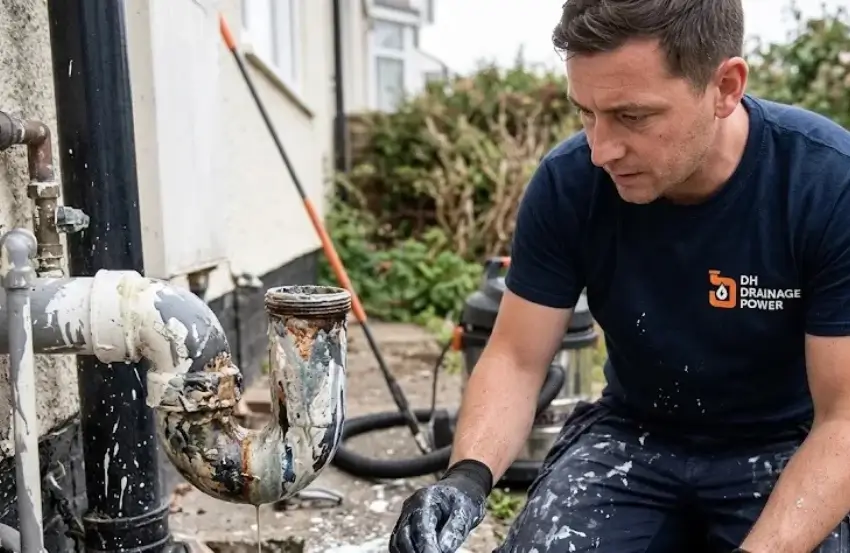
Can Water-Based Paint Damage Drain Pipes?
Water-based paint is easier to clean from decorating equipment than many solvent-based products, but that does not make it suitable for disposal through drains.
Emulsion and acrylic paints generally contain suspended pigments and polymer-based binders.
As the liquid travels through pipework, some of the suspended material may settle or become trapped in existing deposits.
Repeatedly rinsing substantial quantities of paint into the same sink increases the opportunity for residue to accumulate.
Is Washing Paintbrushes in the Sink Safe?
Small amounts of water-based paint remaining on brushes are different from tipping leftover liquid paint directly into a drain.
However, to minimise unnecessary wastewater contamination, remove as much paint as possible before washing equipment.
Scrape excess paint back into its original container where practical. Wipe remaining residue onto suitable waste material and collect the initial dirty rinse water separately.
Any subsequent disposal must follow the paint manufacturer’s instructions and applicable local requirements.
Do not use the kitchen sink or an outdoor gully as a convenient disposal point for concentrated paint wash water.
For solvent-based products, follow the manufacturer’s cleaning and waste-handling guidance rather than washing solvents into drainage systems.
How Should You Dispose of Leftover Paint Safely in the UK?
The safest disposal method depends on whether the paint can be reused, whether it is water-based or solvent-based, and what facilities your local authority provides.
Step 1: Keep Usable Paint for Future Projects
Paint that remains suitable for use can often be stored for later decorating work.
Keep the original container properly sealed and follow the manufacturer’s storage instructions.
An unopened or usable container may also be suitable for donation through an appropriate paint reuse scheme.
Step 2: Consider Donating Unwanted Paint
Community projects and paint redistribution schemes may accept suitable leftover paint.
The Community RePaint guidance explains how usable paint can be passed on rather than discarded.
Check the organisation’s acceptance requirements before making a donation.
Step 3: Check Local Council Disposal Rules
Household waste recycling centres may accept certain paint products, but facilities and restrictions differ between councils.
The GOV.UK household waste guide explains how residents can find local waste disposal arrangements.
In London, the correct facility may depend on the borough where the property is located.
Step 4: Handle Water-Based Paint Correctly
Some councils permit fully dried, solidified water-based paint to be placed in residual household waste. Others require paint to be taken to a designated recycling centre.
Never assume that liquid emulsion can be placed in an ordinary bin.
Check the local authority’s instructions before drying or disposing of unwanted paint. Follow the applicable procedure in a suitable, secure location away from children and animals.
Step 5: Arrange Appropriate Solvent-Based Paint Disposal
Oil-based paints, thinners and certain coatings require greater care.
Products carrying hazardous classifications may need a specialist collection or designated disposal facility.
Do not put hazardous liquid paint into ordinary household rubbish or pour it into drains.
Commercial decorating waste must also be managed through an appropriate business waste disposal route rather than relying on household recycling arrangements.
What Should You Do After Accidentally Pouring Paint Down a Drain?
An accidental spill does not automatically mean the drainage system is blocked.
However, the response should prevent further contamination and avoid making any developing obstruction worse.
Stop the Discharge
Stop pouring paint or decorating wash water into the drain immediately.
Secure any remaining material and prevent additional waste from entering the system.
Avoid attempting to wash the paint away with large volumes of water.
Do Not Add Drain-Cleaning Chemicals
Chemical drain cleaners are not a reliable solution for dried paint deposits.
They may introduce additional hazards, react with other substances or create difficulties for anyone later inspecting the drain.
Never mix drain-cleaning products, paint solvents or other chemicals.
Record What Entered the Drain
Useful information includes:
- The name and type of paint.
- Whether it was water-based or solvent-based.
- The approximate quantity involved.
- Which sink, toilet or outside drain was affected.
- When the discharge happened.
- Whether drainage problems appeared afterwards.
Keep the product container or label available where safe.
This information can help a drainage specialist assess the situation and may be useful when contacting the appropriate environmental authority about a pollution incident.
Monitor for Drainage Problems
Watch for slow drainage, unusual noises, pooling water or wastewater backing up.
Where a surface water drain has received paint or solvent, seek environmental reporting advice promptly rather than waiting for a blockage to develop.
Where paint or solvents may have polluted a river, stream or other watercourse in England, follow the GOV.UK guidance on reporting water pollution. The Environment Agency also operates a 24-hour incident hotline on 0800 80 70 60. A drainage blockage and an environmental pollution incident may require different organisations to investigate.
Where a household wastewater drain begins showing signs of obstruction, arrange an appropriate drainage assessment.
DH Drainage Power provides drain unblocking in London for residential and commercial drainage problems.
What Are the Warning Signs of Paint-Related Drain Blockages?
Paint deposits can produce symptoms similar to other drainage obstructions, so a professional assessment may be required to establish the actual cause.
Signs worth investigating include:
- Water draining noticeably more slowly after decorating.
- Repeated pooling in a sink or external gully.
- Unusual gurgling when connected fixtures discharge.
- Water backing up when another appliance empties.
- Visible solid residue around a drain opening.
- Recurring blockages despite ordinary cleaning.
- Wastewater overflowing from an inspection chamber.
These symptoms do not prove paint is responsible. Grease, damaged pipework, roots and other debris can produce similar problems.
When Is the Problem Urgent?
An overflowing drain, sewage backing up inside a property or wastewater escaping into an occupied area should be treated as urgent.
Stop using affected fixtures where safe, restrict access to contaminated areas and contact a drainage professional.
For urgent drainage problems, DH Drainage Power offers 24/7 emergency assistance across its service areas.
How Can Professional Drainage Services Help?
The appropriate response depends on the condition of the pipe, the material involved and the extent of the obstruction.
Initial Drainage Assessment
A drainage specialist may begin by identifying the affected fixtures and checking whether the problem is limited to one drain or involves a larger section of the system.
Information about recent decorating work can help narrow the possible causes.
CCTV Drain Inspection
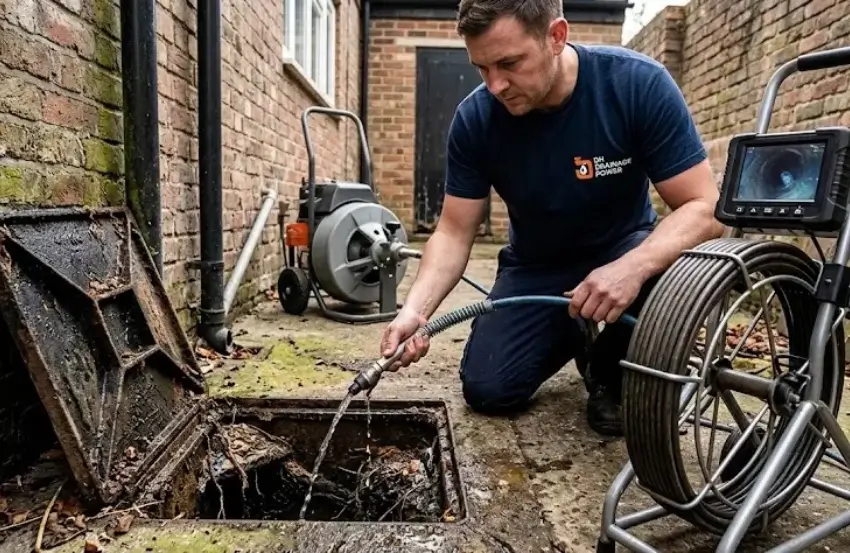
Where blockages recur or the cause remains uncertain, a CCTV survey may help reveal deposits, pipe defects or other obstructions.
A camera inspection can provide information about the internal condition of accessible drainage pipework.
However, a CCTV survey cannot necessarily identify the chemical composition of a visible deposit without further evidence.
Drain Clearance
Depending on the assessment, professional drain clearance may be suitable for removing certain obstructions.
The method must be selected with care because hardened materials, damaged pipes and chemical contamination can require different approaches.
A drainage specialist should assess whether the proposed technique is appropriate for the pipe material and its condition.
Drain Repairs Where Necessary
Occasionally, a drainage investigation identifies a damaged pipe rather than a simple obstruction.
In such cases, removing deposits alone may not address the underlying issue.
Professional advice can help determine whether further inspection or repair work is necessary.
How Can Homeowners and Businesses Prevent Decorating Waste Blockages?
Preventing paint-related drainage problems is generally easier than investigating residue after it has entered underground pipework.
Before Starting a Decorating Project
Plan where unused products and cleaning materials will be collected.
Keep suitable containers available for excess paint, brush-cleaning liquids and solid decorating debris.
Identify nearby sinks, outside gullies and surface water drains so that they can be protected from accidental spills without blocking essential drainage.
During Painting and Decorating
Avoid allowing paint to enter sinks, toilets, gullies or inspection chambers.
Remove excess paint from tools before cleaning them.
Keep plaster dust, filler, paint flakes and other solid waste separate from wastewater.
Do not sweep decorating debris into outside drains.
After Completing the Work
Check that drain openings and nearby gullies are free from visible decorating debris.
Store reusable products properly and arrange safe disposal of unwanted material.
Do not attempt to clear a suspected obstruction by pouring solvents or strong chemical cleaners into the pipe.
Where drainage has become noticeably slower, investigate the issue before further material accumulates.
Why Is Decorating Waste Management Important for London Properties?
London contains a wide range of residential and commercial buildings, including terraced houses, converted flats, managed apartment blocks, offices and retail properties.
During refurbishment, access to drainage systems may be shared or restricted.
This makes correct waste handling especially important because a blockage in one part of a drainage system may affect other occupants.
Shared Drainage in Flats and Converted Buildings
A paint discharge from one flat may enter pipework shared with neighbouring properties.
Landlords and property managers should establish whether a suspected obstruction affects an individual fixture, a communal drainage run or another part of the system.
Residents should report recurring blockages and avoid attempting unauthorised work on shared drainage.
Commercial Decorating and Refurbishment
Businesses arranging decorating work should ensure contractors manage their waste appropriately.
This includes separating hazardous liquids from ordinary site rubbish and preventing spills into drainage systems.
Commercial waste should be handled through suitable authorised arrangements.
Different London Borough Disposal Requirements
A household in Croydon may have different local disposal arrangements from a property in Hounslow or Kingston upon Thames.
Checking the relevant council’s published guidance is more reliable than assuming all London recycling centres accept the same materials.
DH Drainage Power serves London, Greater London and surrounding areas, providing drainage assistance for residential and commercial properties.
Frequently Asked Questions
1. Can You Pour Paint Down the Drain if It Is Water-Based?
No. Water-based paint should not be poured directly into drains, even though water is used during cleaning. Emulsion and acrylic paints contain pigments and binders that may leave residues inside pipes. Concentrated paint waste can also create environmental concerns. Collect leftover paint and follow local council disposal instructions rather than using a sink, toilet or outside drain.
2. What Happens if a Small Amount of Paint Goes Down the Sink?
A small accidental discharge does not necessarily cause an immediate blockage. The outcome depends on the paint type, quantity and existing pipe condition. Stop further disposal and avoid adding drain-cleaning chemicals. Monitor for slow drainage, unusual noises or backups. Where hazardous material or a significant quantity has entered the system, seek appropriate professional or environmental advice.
3. Can Dried Paint Be Removed From Drainage Pipes?
Some deposits may be removable using suitable professional drainage methods, but the correct approach depends on their composition, thickness and location. Hardened paint mixed with plaster or other materials may be more difficult to clear. A drainage assessment can help determine whether clearance is practical or whether the pipe has additional defects requiring attention.
4. Where Can I Dispose of Leftover Paint in London?
Start by checking your local council’s waste disposal guidance. Some London recycling centres accept suitable water-based paint or provide paint reuse facilities. Oil-based and hazardous products may require a separate collection service. Acceptance rules differ between boroughs and may exclude commercial waste. Keep paint in suitable labelled containers until the correct disposal route has been confirmed.
5. Can Paintbrush Cleaning Water Cause Drain Blockages?
Paintbrush cleaning water can contain pigments, binders and other particles that may contribute to drainage deposits, particularly when concentrated residues are repeatedly discharged. Remove as much paint as possible before washing tools and collect the first dirty rinse separately. Follow the manufacturer’s instructions and local disposal requirements. Solvent-based cleaning liquids should not be washed into household drainage systems.
6. Can a CCTV Drain Survey Identify Paint Build-Up?
A CCTV drain survey may reveal visible deposits, restricted sections and defects inside accessible drainage pipes. However, camera footage does not always establish whether a deposit consists of paint, grease, plaster or another material. Details about recent decorating work and the symptoms observed can help with the investigation. Further assessment may be needed before selecting a clearance method.
7. Should I Call a Drainage Specialist After Pouring Paint Down an Outside Drain?
Seek advice promptly when a significant amount of paint has entered an outside drain, particularly where it may connect to a surface water system. A drainage specialist can assess associated blockages, while suspected pollution should be reported to the appropriate environmental authority. Do not flush the material through with water or add solvents. Serious overflows and wastewater backups also require urgent attention.
Conclusion: Protect Your Drains During Decorating Work
Paint and decorating waste can contribute to blocked drains, create persistent residues and increase the risk of environmental pollution.
Never use household or outside drains to dispose of leftover paint, solvents, plaster slurry or concentrated decorating wash water. Reuse suitable materials wherever possible and follow local council instructions for safe waste disposal.
Where a drainage problem appears after decorating, identifying the cause is more sensible than attempting repeated chemical treatments.
Need Professional Drainage Assistance in London?
DH Drainage Power provides drain unblocking, CCTV drain inspections, drain repairs and emergency drainage services for homes and businesses across London and surrounding areas.
Emergency drainage support is available 24/7.
- Call: 07897041092
- Website: https://dhdrainagepower.co.uk/
- Contact: https://dhdrainagepower.co.uk/contact/
Contact DH Drainage Power to explain the drainage problem and arrange appropriate assistance.