Fat, oil and grease build up in drains is usually caused by everyday kitchen habits, not a single mistake. Small amounts of oil, butter, gravy and food scraps washed down the sink gradually stick to the inside of pipes, eventually leading to blockages.
Hot water and washing up liquid rarely solve the problem, as they often just move the grease further along. Preventing build up is much easier than clearing a blockage, so it’s important to keep food waste and grease out of the sink and have drains checked if you notice slow drainage or backups.
What actually causes fat and grease build up in drains over time?
The main cause is simple. Warm fats, oils and greasy waste go down the sink as liquid, then cool and start sticking to the pipe walls. Once that first layer forms, it starts catching more grease and bits of food, and the blockage gradually builds from there.
A lot of people think it only happens when someone pours a full pan of oil down the sink. In reality, most of the bad blockages I come across are caused by repeated small amounts. It might be bacon fat, roasting tray residue, creamy sauces, curry oil, butter from a frying pan, or just greasy water from washing plates.
Over time, every little bit leaves a coating inside the pipe. Then the next bit sticks to that, and before long the bore of the pipe starts narrowing. Once the flow slows down, food debris and soap residue collect even faster.
I also see people overlook the hidden causes. Things like gravy, mayonnaise, dairy residue and even starchy water from pasta or potatoes can all make the problem worse. On their own they might not seem serious, but mixed with grease they create a thick, sticky blockage that is much harder to clear.
“DH Drainage Power offers 24/7 emergency drain clearance across London and nearby areas, with CCTV inspections and clear, honest pricing.”
How does grease turn from liquid waste into a blockage step by step?
It usually happens in four stages. The grease goes in warm, cools on the inside of the pipe, starts catching debris, then builds up enough to slow the flow.
At first, the waste looks harmless because it disappears down the sink normally. That is where a lot of people get caught out. Just because it has drained away does not mean it has left the system cleanly.
Once the grease meets cooler pipework, it begins to congeal. I often find the worst build up around bends, joints and slightly rough sections of pipe, because that is where residue gets a chance to cling first.
After that, food scraps, soap residue and other waste start sticking to the greasy layer. If the drain already has a poor fall, scale, or a rough internal surface, the blockage gets worse much faster.
Finally, the symptoms show up. The sink starts draining slowly. You may hear gurgling. Smells often develop. Then you start getting intermittent backing up, especially after washing up or using the dishwasher. If left long enough, the problem can spread further down the run and affect other fixtures as well.
Who can remove grease build up from drains in London?
A proper drainage specialist is usually the best option, especially if the blockage keeps returning. In London, both local drainage firms and larger national companies can deal with grease build up, but the key thing is whether they can actually diagnose the cause, not just push a temporary hole through it.
For a straightforward internal kitchen blockage, a local engineer with the right kit may be all you need. But if it is a repeat problem, I would always want to know whether the issue is just grease, or grease combined with scale, root ingress, damaged pipework or a poor connection.
A sensible shortlist usually includes local drainage specialists, national drainage firms, and for commercial kitchens, contractors who deal specifically with grease management and interceptors. The difference comes down to response time, equipment and whether they can provide CCTV evidence if needed.
If someone clears the sink and the same problem comes back a week or two later, that is your sign the blockage has not really been dealt with properly.
Which kitchen waste creates the worst FOG build up?
The worst culprits are cooking oil, meat fat, butter, gravy and dairy based residues. In practice, anything greasy that cools and clings to the pipe can contribute.
The biggest offenders I usually see are:
- cooking oils and frying fats
- meat drippings and roasting tray waste
- gravy, sauces, dressings and mayonnaise
- butter, cream and cheese residue
- greasy plate scrapings and food bits
- starchy water mixed with greasy waste
A point worth knowing is that starchy water often makes the blockage worse than people expect. Pasta, rice and potato water can combine with fats to create a heavy, sticky mass. That is why some kitchen blockages feel more like paste or sludge than pure grease when they are cleared.
Is grease build up different from soap scum, scale, or wet wipes?
It is, and that matters because the right fix depends on what is actually in the pipe. Grease behaves differently from scale, soap residue and wipes, even if the symptoms can look similar at first.
Grease build up is usually a sticky coating caused by fats, oils, food waste and kitchen residue. Soap scum is more common in bathrooms. Scale is a mineral deposit and is usually much harder. Wet wipes are a different problem again, because they snag and bind together, often catching grease and turning into a much larger blockage.
One of the easiest ways to narrow it down is by looking at where the problem is happening. If it is the kitchen sink after cooking and washing up, grease is usually the first thing I would suspect. If it is a shower or bathroom basin, you are more likely dealing with hair, soap and scale. If several fixtures are involved, the issue may be further downstream.
Is boiling water and detergent better than professional grease build up removal?
In most cases, no. Hot water and washing up liquid might seem to help for a short while, but they usually do not solve the actual problem. More often, they just move the grease further down the pipe, where it cools again and causes another blockage.
That is why I often hear, “it was fine for a day or two, then it blocked again.” The grease has not been removed. It has just shifted position.
Chemical drain cleaners can do something similar. They may burn a narrow channel through part of the blockage, but they rarely clean the full wall of the pipe properly. On older systems, repeated use can also create avoidable maintenance issues.
“DH Drainage Power uses specialist equipment for fast call-outs, drain fault finding and CCTV surveys on both residential and commercial drainage.”
Professional grease build up removal is different because the goal is to restore the full flow of the pipe, not just create a temporary gap through the middle of the blockage. If the grease lining is heavy or keeps coming back, proper mechanical cleaning or jetting is usually the better answer.
How can you clear early stage grease build up safely step by step?
If the build up is only mild and local, you may be able to deal with the trap and short waste run safely yourself. But there is a big difference between a simple trap blockage and a grease lined drain further down the system.
Start by preventing any more grease going in. Scrape plates into the bin, wipe greasy pans with paper, and put used cooking oil into a separate container rather than down the sink.
Next, if the trap is easy to access and you are comfortable doing it safely, remove and clean it properly. I have seen plenty of cases where the trap itself was holding the worst of the waste.
Once that is done, flush carefully with hot water, but only as a follow up to physical cleaning, not as the main solution. If the sink then drains freely and keeps doing so, the blockage was probably local.
If it still drains slowly, or if smells and backing up return shortly after, I would stop there. Repeating the same DIY flushes can just push softened grease deeper into the system, which makes the real job worse.
“DH Drainage Power provides free consultations and inspections, with emergency drain unblocking available 24/7 across London and surrounding areas.”
A simple rule I use is this. If one kitchen fixture is slow, think local waste pipe first. If the kitchen and another fixture are both affected, think shared line and get it checked properly.
When does grease build up need a CCTV survey or professional jetting?
If the blockage keeps returning, affects more than one fixture, or clearly sits beyond the trap, that is when I would look at CCTV or jetting.
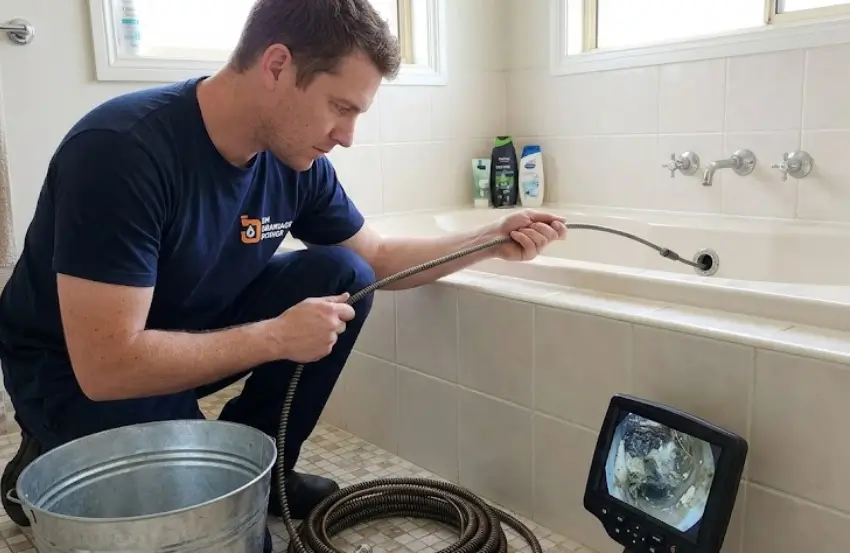
A CCTV drain survey is useful because it shows exactly what is going on inside the line. You can see whether it is grease alone, grease mixed with scale, standing water from a bad fall, root ingress, or a damaged section of pipe. That matters, because if you do not know the cause, you are only guessing at the fix.
Jetting is often the right option when the pipe wall needs properly cleaning rather than just opening up. Done correctly, it removes the lining of grease much more thoroughly than a plunger or bottle product ever will.
A lot of people assume CCTV is only needed for major sewer problems. In reality, it is one of the quickest ways to stop repeat call outs because it shows why the same blockage keeps happening.
How should restaurants, landlords, and property managers prevent repeat FOG problems step by step?
The best prevention is routine. Whether it is a home kitchen, rental property or commercial site, the key is controlling what goes into the drain and checking the system before it becomes an emergency.
First, keep greasy waste out of the drain wherever possible. Food should be scraped into the bin, oil collected separately, and staff or occupants made aware that even small regular amounts create problems over time.
Second, if the kitchen produces a high volume of greasy waste, fit the right protection. In commercial kitchens especially, grease traps or interceptors are often essential. They are not a replacement for good habits, but they are an important part of the setup.
Third, do not wait until there is a blockage. Planned inspection and cleaning is nearly always cheaper than emergency response, call out disruption and property damage.
For landlords and facilities managers, keeping simple records also helps. If you know when the last clean, survey or service was done, it becomes much easier to spot patterns and act before the same issue causes more downtime.
What warning signs suggest grease is already affecting the sewer line?
When grease has moved beyond the local kitchen waste pipe, the warning signs usually become more obvious. You may see repeated slow drainage, foul smells, gurgling, or water backing up at more than one point.
The most common warning signs are:
- slow drainage after cooking or washing up
- gurgling from the sink waste
- recurring bad smells from the kitchen drain
- water backing up into another fixture
- repeated blockages after DIY clearing
- overflow at an outside gully or inspection chamber
From experience, if only one sink is slow, the issue may still be local. If the sink, dishwasher and outside gully all start reacting together, the blockage is usually further along the line.
That is the stage where it is best to stop guessing and get the drain assessed properly. Grease build up does not usually improve on its own, and the longer it is left, the more chance it has to affect the wider drainage run.