A blocked sink rarely happens all at once. Most of the time, it builds slowly as grease, food scraps, hair, soap residue, and other debris cling to the inside of the pipe. Days or weeks later, the water starts draining more slowly, smells begin to linger, and a small problem turns into a messy one.
The good news is that prevention is usually simple. A few steady habits in the kitchen and bathroom can cut the risk of a blocked sink and help you avoid bigger drainage trouble later. If you live in London and surrounding areas, these steps are especially worth sticking to in older properties where pipework may already be narrower, worn, or more prone to build-up.
Why blocked sinks happen in kitchens and bathrooms
Kitchen sinks and bathroom sinks block for different reasons, even though the result looks the same. In kitchens, the biggest causes are usually fats, oils and grease, along with food waste that should have gone into the bin. In bathrooms, hair and soap residue are the usual culprits.
Water company guidance in the UK has been clear on this for years. Thames Water warns that fats, oils and grease can cool, harden, and build up inside pipes. That build-up can lead to slow-draining sinks, bad smells, and even flooding. Water UK also warns that hot water and washing-up liquid do not reliably stop grease from setting further down the pipe once it reaches cooler sections.
A simple way to think about it is this: what goes down the plughole does not just disappear. Some materials stick, some tangle, and some harden.
| Sink area | Most common blockage cause | Early warning sign | Best prevention step |
|---|---|---|---|
| Kitchen sink | Grease and food scraps | Slow drainage after washing up | Scrape plates and use a sink strainer |
| Bathroom basin | Hair and soap scum | Water pooling around the plug | Fit a drain cover and remove hair often |
| Utility sink | Dirt, lint, cleaning residue | Gurgling or unpleasant smells | Avoid rinsing heavy debris into the drain |
How to prevent kitchen sink blockages every day
The kitchen sink does a lot of work, so small changes here make the biggest difference. The main rule is simple: keep grease and food out of the drain.
That means letting cooking fat cool first, then scraping it into the bin rather than rinsing it away. Pans, trays, and plates should be wiped with kitchen roll before washing. This matters even if you use hot water. Grease may look liquid in the bowl, but once it moves into cooler pipework, it can cling to the sides and start narrowing the passage.
A sink strainer is one of the cheapest and most useful things you can fit. It catches food particles before they enter the waste pipe, and it takes seconds to empty into the bin. For many households, that one step prevents a lot of future trouble.
Good kitchen habits include:
- Wipe greasy pans before washing
- Scrape plates into the bin
- Empty the sink strainer daily
- Bin coffee grounds
- Keep rice and pasta out of the plughole
Why hot water does not stop grease in sink pipes
This catches a lot of people out.
It is easy to assume that a blast of boiling or very hot water will wash grease away for good. In reality, it may only move the grease a little further along before it cools and sticks inside the pipe. Water UK has warned about this point directly, and it matches what drainage engineers see in real homes.
Washing-up liquid can also give a false sense of security. It may break grease up at the sink for a short time, but it does not guarantee that the fats stay dissolved all the way through the system. Once the temperature drops, the residue can still harden.
If your kitchen sink is already draining slowly, repeated hot water flushes are not likely to solve the root issue. They may delay it. They may also make you miss the early signs of a blockage that is building out of sight.
How to prevent bathroom sink blockages from hair and soap
Bathroom sinks usually block more slowly than kitchen sinks, but the pattern is very common. Hair slips past the plug, wraps around the waste fitting, then soap, toothpaste and grime stick to it. Over time, that turns into a thick mass that catches even more debris.
A small drain cover or hair catcher is the easiest first step. It stops the bulk of the hair before it enters the pipe, and that is much easier than trying to pull a clog back out later. Regular cleaning around the plug and waste fitting also helps, especially in busy family bathrooms.
You should also be careful about what gets rinsed into the basin. Cotton pads, wipes, dental floss, and thick cleaning residue should never be pushed into the waste. Even if they seem small, they can combine with hair and soap to create a stubborn blockage.
Bathroom sink prevention works best when it becomes part of a weekly routine rather than a once-a-year clean-up.
What should never go down a sink drain
Many sink blockages start with things people think are harmless. Some are obvious, some are not. The pipe does not care whether the material came from cooking, cleaning, or getting ready for work. If it sticks or tangles, it can block.
The most trouble comes from a short list of repeat offenders.
- Fats, oils and grease: These cool, harden, and cling to pipe walls
- Food scraps: Even small bits collect and trap other debris
- Coffee grounds: They settle heavily and form dense sludge
- Hair: It binds into clumps and catches soap residue
- Wipes and cotton products: They do not break down properly in drains
- Paint, plaster or building dust: These materials can set hard inside waste pipes
That list matters in houses, flats, rental properties, cafés, offices, and shops alike. A sink may still empty for a while after these materials go down, but build-up often starts long before the owner notices a problem.
A simple sink maintenance routine that actually helps
You do not need harsh chemicals or a long cleaning schedule to keep sink waste pipes in better shape. What helps most is a short routine done regularly.
Once or twice a week, clear out the strainer or drain cover, remove visible debris around the plughole, and run warm water to rinse everyday residue through. In the kitchen, check the trap area for smells or early signs of build-up. In the bathroom, remove trapped hair before it gets pushed deeper into the pipe.
A monthly check is also a good idea. If one sink starts draining more slowly than usual, do not ignore it. Slow drainage is often the first warning that a larger blockage is forming.
A practical routine can be as simple as this:
- Daily: empty the sink strainer and bin food waste
- Weekly: clean the plug area and remove hair or sludge
- Monthly: check for slow drainage, smells, or gurgling sounds
How do I know if a sink blockage is starting?
Most sinks give warning signs before they block fully. Catching those signs early often means easier action and less mess.
Watch out for water sitting in the bowl longer than normal, bubbling sounds after the water drains, unpleasant odours from the plughole, or a sink that backs up when the washing machine or dishwasher runs. In bathroom basins, residue around the plug can also suggest that hair and soap are collecting below.
If you notice one or more of those signs, stop putting problem materials down the sink straight away. Clean the strainer, remove visible debris, and monitor whether the flow improves. If it does not, the blockage may already be deeper in the waste pipe.
Can I fix a blocked sink myself?
Sometimes, yes.
If the blockage is close to the plughole, a simple clean of the strainer, plug assembly, or trap may sort it out. A basic plunger can also help with light clogs. What you want to avoid is forcing the obstruction further down or damaging the pipe with aggressive DIY methods.
Chemical drain cleaners are often overused. They may not clear the full blockage, and they can be unpleasant to handle. In some cases, repeated use can affect pipe joints or create a hazard for anyone who has to take the waste apart later.
Try the safe basics first, but if the sink keeps blocking, smells keep returning, or more than one fixture is draining slowly, it is time to call an experienced local professional.
When to call a drainage engineer for a blocked sink
A repeated sink blockage usually points to a deeper issue than a bit of debris near the plughole. There may be heavy grease build-up in the kitchen line, compacted hair and soap in the bathroom waste, or a problem further along the drainage run.
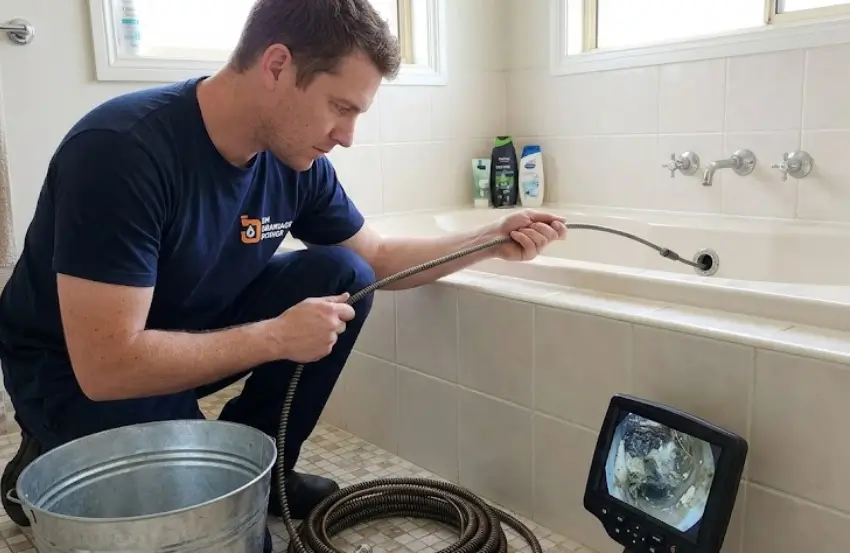
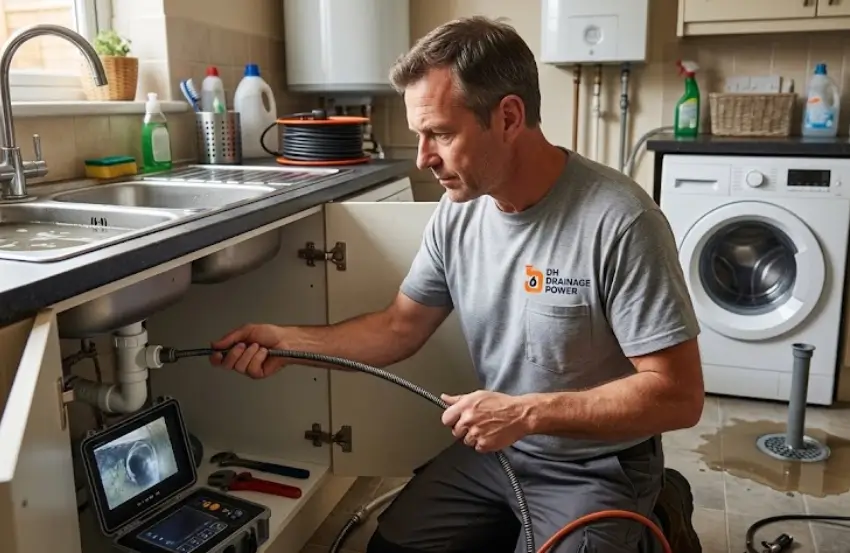
That is where proper equipment helps. A local drainage engineer can inspect the line, clear the blockage safely, and check whether the issue is likely to return. In tougher cases, a CCTV drain inspection can show exactly what is going on inside the pipe without guesswork. If there is a damaged section, trapped scale, or an outside drain problem adding to the sink backup, that can be identified quickly.
For homes and businesses in London and surrounding areas, using an experienced local team matters. Fast attendance, honest service, and transparent pricing make a stressful problem easier to deal with, especially if the sink has already stopped draining or started backing up.
DH Drainage Power provides 24/7 help for blocked sinks, drain unblocking, repairs, and CCTV inspections across London and surrounding areas. If your kitchen or bathroom sink is draining slowly, smells bad, or keeps blocking, contact us for a free inspection or call our team today for clear, honest pricing and fast local support.