If dirty water appears in your kitchen sink whenever the dishwasher empties, the most likely explanation is a restriction in the shared wastewater pipework. The dishwasher pumps used water into a drainage connection, but if grease, food particles or other debris obstruct the route, some of that water may return through the sink plughole instead of flowing away.
A sink backing up when dishwasher drains is therefore often a warning of restricted drainage rather than proof that the dishwasher itself is faulty. A blocked sink trap, obstructed waste connection, unsuitable drain hose arrangement or deeper blockage may be responsible.
At DH Drainage Power, we provide kitchen drain clearance, drainage fault finding and inspection services across London and Greater London. Identifying whether the problem originates within the dishwasher, its waste hose or the connected drainage system helps determine the appropriate next step.
If your kitchen sink begins filling during a dishwasher cycle, stop using the appliance and avoid discharging additional water into the affected drain. This guide explains what causes dishwasher-related sink backflow, how to recognise important warning signs and when professional drainage assistance may be necessary.
How Does Dishwasher Water End Up in Your Kitchen Sink?
Most dishwashers remove used water through a built-in drain pump. The pump sends wastewater along a flexible discharge hose, which normally connects to an appropriate fitting on the kitchen sink waste pipe or another suitable wastewater connection.
When everything works correctly, the discharged water travels through the drainage system without appearing in the sink.
However, a restricted downstream pipe may not accept the volume of wastewater being pumped out. Water can then collect within the connected pipework and rise through another opening, including the kitchen sink plughole.
Why does the problem happen during the dishwasher drain cycle?
Unlike a kitchen tap, which produces a continuous flow while open, a dishwasher discharges stored wastewater during specific stages of its washing programme.
This concentrated release can expose a drainage restriction that is not immediately noticeable during ordinary sink use.
For example, a kitchen sink may empty reasonably well when rinsing a cup. Yet the same pipe might struggle when the dishwasher pumps out several litres of wastewater.
The exact volume and discharge rate depend on the dishwasher model.
If the drainage connection cannot accommodate that flow, temporary backflow may occur.
Does this always mean the dishwasher is broken?
No. A dishwasher causing sink to back up does not automatically indicate a mechanical appliance fault.
The dishwasher may be pumping water out correctly while the connected kitchen waste pipe is partially obstructed.
Conversely, if the appliance retains water inside its own tub without any backflow into the sink, a blocked filter, restricted dishwasher hose or appliance fault may be more relevant.
Understanding where the water collects is an important diagnostic clue.
What Causes a Sink to Back Up When a Dishwasher Drains?
Several different issues can interfere with the movement of dishwasher wastewater. Some involve the appliance’s immediate connections, while others occur further along the property drainage system.
1. Grease and food waste restricting the kitchen drain
Kitchen drainage pipes regularly carry washing-up water, detergent residue and small amounts of food waste.
When fats, oils and grease enter these pipes, they can cool and accumulate along the internal surfaces.
Over time, deposits reduce the space available for wastewater to travel.
Food particles and other residue may stick to existing grease deposits, making the restriction worse.
When dishwasher water enters a partially blocked pipe, the additional flow may force wastewater back into the sink.
Thames Water’s guidance on cooking fats, oils and grease explains why these materials contribute to blocked kitchen drainage systems.
For a detailed explanation of the build-up process, read our guide to fat and grease accumulation in drains.
2. A blocked sink trap or shared waste connection
The sink trap is the curved or specially shaped fitting beneath the kitchen sink that retains a water seal to help prevent drainage odours entering the property.
Depending on the installation, the dishwasher discharge hose may connect to a branch fitting close to this trap.
Food residue, grease and accumulated debris can restrict the connected pipework.
If the blockage is downstream of the dishwasher connection, discharged water may have nowhere to escape quickly enough.
The result can be dishwasher drain water backing up into sink bowls.
Other symptoms may include slow sink drainage, bubbling noises or water remaining in the bowl after the appliance stops.
3. A restricted or incorrectly arranged dishwasher drain hose
The dishwasher drain hose carries wastewater from the appliance to the waste connection.
Potential problems include:
- A hose that has become kinked or crushed behind the appliance.
- Debris collecting inside the hose.
- An unsuitable connection to the sink waste fitting.
- An incorrect hose routing arrangement.
- A loose or damaged connection causing leakage.
Dishwasher manufacturers specify how discharge hoses should be installed.
Some installations require the hose to rise to a specified height before entering the waste connection. Where applicable, this arrangement helps reduce unwanted backflow.
An air-gap fitting may be required or recommended for particular appliances and installations, although it is not a universal feature of UK domestic kitchens.
Always follow the manufacturer’s instructions rather than assuming every dishwasher requires the same arrangement.
A recently installed dishwasher that begins causing backflow should have its waste connection checked by a competent appliance installer or plumber.
4. An obstructed dishwasher filter
Dishwashers generally contain a filter assembly designed to capture food particles and prevent larger debris entering sensitive components.
If the filter becomes heavily contaminated, drainage performance may deteriorate.
However, a blocked dishwasher filter typically causes water to remain inside the dishwasher rather than directly explaining water rising through the kitchen sink.
This distinction matters.
If the dishwasher contains standing water after a programme, inspect and clean the accessible filter according to the manufacturer’s instructions.
If the dishwasher empties but wastewater appears in the sink, the problem is more likely to involve the discharge route or downstream connection.
Both issues can occasionally occur together.
5. A deeper drainage obstruction
Sometimes the immediate sink fittings and appliance connections are not the main problem.
Wastewater from the kitchen may enter a larger underground drainage system shared with other fixtures.
If this downstream route becomes restricted, dishwasher discharge can contribute to backflow elsewhere.
Possible causes include accumulated deposits, foreign objects, damaged pipe joints or root intrusion in suitable external drainage sections.
A deeper obstruction becomes more likely when several fixtures are affected or when the problem returns after local cleaning.
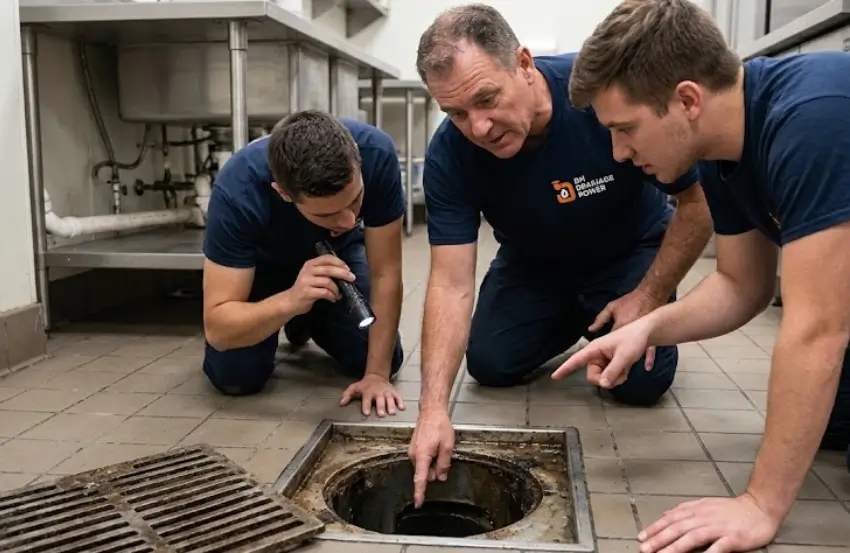
For suspected wider drainage problems, DH Drainage Power offers drain inspection services in London to investigate accessible drainage pipework.
How Can You Identify the Cause of Dishwasher Drain Backflow?
The symptoms you observe can help distinguish between a dishwasher-specific issue and a wider drainage problem.
| Warning sign | Possible explanation | Recommended action |
|---|---|---|
| Sink fills only when the dishwasher empties | Restricted shared waste connection | Stop the dishwasher and investigate the drainage route |
| Water remains inside the dishwasher | Blocked filter, hose restriction or appliance fault | Follow the manufacturer’s safe maintenance guidance |
| Sink drains slowly even when dishwasher is off | Grease or debris in the sink waste pipe | Clean accessible debris and seek clearance if it persists |
| Water leaks from beneath the sink | Loose, damaged or unsuitable waste connection | Stop water use and arrange a suitable repair assessment |
| Sink gurgles during dishwasher discharge | Restricted water flow or air movement issue | Check for additional drainage symptoms |
| Multiple fixtures back up | Possible shared downstream obstruction | Arrange professional drainage investigation |
| Backflow repeatedly returns | Persistent obstruction or installation defect | Seek targeted fault finding rather than repeated temporary clearing |
These symptoms are indicators, not conclusive diagnoses. The exact cause depends on the property’s pipework and appliance installation.
What Should You Do When Dishwasher Water Backs Up Into the Sink?
When the kitchen sink begins filling with wastewater, the immediate priority is preventing further discharge and avoiding unnecessary damage.
Step 1: Stop the dishwasher safely
Pause or cancel the dishwasher programme using the appliance’s normal controls.
Be aware that some cancellation programmes automatically operate the drain pump. Consult the appliance instructions if necessary.
Do not repeatedly restart the appliance to test whether the problem has disappeared.
If water is approaching electrical sockets or equipment, do not touch affected electrical items or enter a potentially electrified wet area. Seek appropriate assistance.
Step 2: Avoid using the connected kitchen sink
Running more water into a restricted waste pipe can increase the risk of overflowing.
Avoid operating the dishwasher, kitchen sink and any other appliance connected to the affected waste route until the immediate problem has been assessed.
If several drains appear affected, limit wastewater discharge elsewhere in the property.
Step 3: Check accessible sink openings
Once the situation is safe, visually inspect the sink strainer and plughole for food scraps or obvious debris.
Remove accessible material without forcing anything deeper into the pipe.
Avoid dismantling concealed pipework or disconnecting dishwasher hoses if you are unfamiliar with the installation.
Step 4: Inspect the dishwasher filter
If the dishwasher has also retained water, consult the manufacturer’s instructions for accessing its filter.
Allow the appliance to cool and follow any isolation precautions described in the manual.
Remove accessible debris and clean the filter as directed.
Filter cleaning can help with appliance drainage problems, but it will not remove a blockage further along the kitchen waste pipe.
Step 5: Check for visible leaks
Look for signs of water escaping beneath the sink or around the dishwasher.
Do not pull out a connected appliance or disturb electrical and water connections to investigate hidden leaks.
If leaking continues, stop using the affected equipment and arrange suitable professional assistance.
Step 6: Contact a drainage specialist if the problem persists
If the sink repeatedly fills whenever the dishwasher drains, the wastewater route may require professional investigation.
DH Drainage Power provides kitchen drain clearance services in London for kitchen drainage blockages.
When making an enquiry, explain when the backflow happens, whether the sink drains normally at other times and whether any other fixtures are affected.
Can You Fix Dishwasher Water Backing Up Yourself?
Some minor problems can be addressed through routine cleaning and observation, but deeper drainage restrictions require greater care.
Safe maintenance tasks can include:
- Removing food waste from an accessible sink strainer.
- Cleaning the dishwasher filter according to its manual.
- Checking for an obvious kink in a visible, accessible hose without moving the appliance.
- Inspecting accessible areas for leaks.
- Recording whether the issue occurs during washing, rinsing or final draining.
- Checking whether the sink is slow when the dishwasher is not operating.
These actions may help identify simple maintenance issues or provide useful information for a professional.
What should you avoid?
Do not mix chemical drain cleaners, bleach or other cleaning products.
Avoid repeatedly pouring boiling water into a blocked waste connection, particularly where plastic pipes or seals could be affected.
Do not force unsuitable tools into dishwasher hoses or inaccessible pipework.
Avoid disconnecting drain hoses while wastewater remains inside the appliance unless you are competent to manage the associated risks.
Chemical cleaners may also create hazards for anyone subsequently investigating the drainage system.
Where wastewater appears contaminated, keep children and pets away and avoid direct contact.
For broader advice, see our article on preventing blocked kitchen and bathroom sinks.
What Happens If You Ignore Dishwasher Drainage Backflow?
Occasional water rising into the sink can seem relatively minor, especially if it eventually disappears.
However, repeated backflow deserves attention because it suggests that the wastewater route may not be operating as intended.
Possible water damage
A restricted drain may eventually cause the sink to overflow during a discharge cycle.
Water can damage kitchen cupboards, flooring, skirting boards and materials beneath fitted units.
If wastewater escapes unnoticed, damp conditions may persist after the visible water disappears.
Unpleasant drainage smells
Food deposits and stagnant wastewater can produce unpleasant odours.
A persistent smell combined with slow drainage may indicate material accumulating inside the waste pipe.
Odours alone do not confirm the location of a blockage, but they provide another reason to investigate.
Disruption to everyday kitchen use
A dishwasher that cannot discharge wastewater properly may interrupt household routines or business activities.
Continued operation with a known drainage restriction can increase the likelihood of another backflow incident.
Problems spreading to other fixtures
If an obstruction develops further downstream, additional connected fixtures may begin draining slowly or backing up.
Thames Water’s blocked-drain guidance identifies wastewater returning through sinks and toilets as a potential sign of a drainage blockage.
Investigating persistent problems early helps prevent an apparently local issue from being ignored until more of the drainage system is affected.
When Should You Call a Professional Drainage Specialist?
Not every dishwasher drainage fault requires a drainage contractor.
A dishwasher that fails to pump out water because of an electrical fault or damaged appliance component may need an appliance repair specialist.
An incorrectly fitted waste hose may require a plumber or appliance installer.
However, professional drain clearance or fault finding becomes appropriate when the evidence points towards restricted drainage pipework.
Signs you may need drainage assistance
Contact a suitable drainage specialist when:
- The sink repeatedly fills during dishwasher discharge.
- Several connected fixtures drain slowly.
- Water backs up despite accessible filter cleaning.
- Foul-smelling wastewater returns through the sink.
- An external gully also shows signs of overflowing.
- The blockage returns after earlier clearance.
- You suspect a fault in underground or shared drainage pipework.
How is a dishwasher-related drain blockage investigated?
An initial investigation normally starts with the symptoms and the wastewater route.
A drainage professional may assess whether the restriction is near the kitchen waste connection or further downstream.
Where a blockage is confirmed, the appropriate clearance method depends on pipe size, condition, access and obstruction type.
The aim is to restore suitable wastewater flow while avoiding unnecessary disturbance.
When might CCTV drain inspection be needed?
A CCTV inspection is not generally necessary for a simple blocked dishwasher filter or small appliance discharge hose.
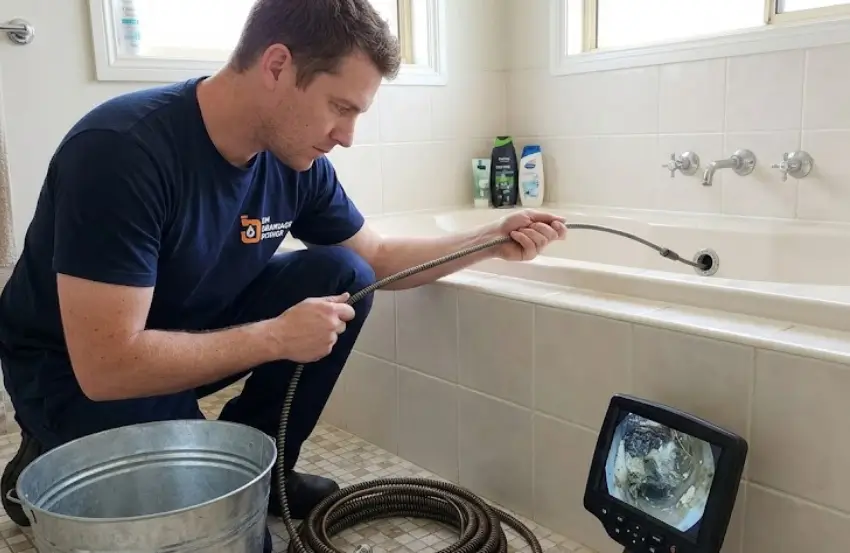
However, when recurring symptoms suggest a deeper drainage obstruction, camera inspection of suitable accessible drain sections can help identify problems.
These may include damaged joints, root ingress or persistent deposits.
DH Drainage Power provides CCTV drain inspections where the condition and location of the drainage system make this type of investigation appropriate.
How Can You Prevent Dishwasher Water Backing Up Into Your Sink?
Preventative maintenance focuses on reducing material entering the drainage system and responding promptly to early symptoms.
Keep food scraps out of the sink
Scrape leftover food into an appropriate waste container before washing dishes.
Use a sink strainer to catch larger particles.
Do not treat the sink waste pipe as a means of disposing of food waste.
Dispose of cooking fats properly
Never pour cooking oil, grease or fat directly into the kitchen sink.
Allow cooking fats to cool and dispose of them using suitable household or local recycling arrangements.
For liquid oils, use a suitable container and follow local waste disposal guidance.
Water UK highlights the role of fats, oils and grease in causing drainage blockages.
See its advice about preventing fatbergs for further background.
Maintain the dishwasher filter
Follow the manufacturer’s recommendations for checking and cleaning the filter.
Remove trapped food particles and ensure the filter is correctly refitted.
Dishwasher models vary, so use the maintenance guidance for your particular appliance.
Avoid ignoring slow sink drainage
A sink that takes longer than usual to empty may already contain a partial restriction.
Investigate persistent slow drainage before continuing to rely on the same waste pipe for regular dishwasher discharge.
Ensure the dishwasher connection is suitable
When replacing or moving a dishwasher, make sure the installer follows the appliance manufacturer’s wastewater connection requirements.
Correct hose routing and appropriate waste fittings can help reduce preventable installation-related problems.
Keep maintenance records
Landlords and property managers can benefit from recording recurring drainage complaints.
The information can reveal whether problems relate to a particular appliance, one kitchen or a shared drainage system.
What Should London Landlords and Commercial Property Owners Know?
Dishwasher-related drainage problems are not limited to individual houses.
Rental properties, converted buildings, shared kitchens, offices and hospitality premises may have more complex wastewater arrangements.
Residential and rental properties
In a rented flat, a dishwasher may discharge through pipework shared with the kitchen sink and other appliances.
A landlord or managing agent should investigate recurring backflow rather than assuming the dishwasher is the only cause.
Where communal drainage is involved, coordination with building management may be necessary.
Responsibility for repairs depends on the affected pipework, ownership and applicable tenancy arrangements.
Commercial kitchens and workplaces
Commercial kitchens and staff facilities often experience frequent wastewater discharge.
Regular washing, food preparation and cleaning can increase the amount of residue entering kitchen drainage systems.
Business owners should pay attention to slow drainage, recurring odours and wastewater returning through sinks.
Where the property handles significant quantities of cooking fats, appropriate grease management is especially important.
Thames Water provides wastewater network guidance that addresses the importance of preventing fats and other inappropriate waste entering drains.
Drainage considerations across London
Properties in London and Greater London have varied layouts, from individual houses to converted buildings containing several flats.
Some kitchens may have been altered during renovations, with additional appliances connected to existing waste systems.
These changes can make understanding the wastewater route particularly important when backflow occurs.
DH Drainage Power provides drainage assistance across London and surrounding service areas, including Wembley, Croydon, Hounslow and Watford.
The correct investigation depends on the individual property rather than its location alone.
Frequently Asked Questions
1. Why does my kitchen sink fill up when my dishwasher drains?
Your sink may fill because the dishwasher is pumping wastewater into a partially blocked or unsuitable shared waste connection. When the pipe cannot carry the discharge away quickly enough, water may rise through the sink plughole. Grease deposits, food debris or a downstream obstruction are possible causes. The timing of the backflow can help identify the affected drainage route.
2. Can a blocked kitchen sink stop a dishwasher from draining?
Yes. If the dishwasher discharges through pipework connected to a blocked sink waste system, wastewater may be unable to escape normally. Depending on the arrangement, water may remain in the dishwasher or return through the sink. However, standing water inside the appliance can also result from a clogged filter, restricted hose or appliance fault.
3. Why does my sink gurgle when the dishwasher runs?
Gurgling can occur when the dishwasher pumps wastewater through a connection where water and air are not moving normally. A partial blockage may contribute, although pipe venting or connection arrangements can produce similar symptoms. If gurgling occurs alongside slow drainage, backflow or bad smells, arrange an appropriate assessment rather than relying on the noise alone.
4. Is dishwasher water backing up into the sink an emergency?
Not every case is an emergency, but active overflow, contaminated wastewater, widespread drainage failure or water near electrical equipment requires urgent attention. Stop the dishwasher safely and avoid using connected fixtures. DH Drainage Power provides 24/7 emergency drainage support across London and its surrounding service areas. Availability does not mean a guaranteed attendance time.
5. Will cleaning the dishwasher filter stop water returning into the sink?
Filter cleaning may help if the dishwasher itself is struggling to remove wastewater. However, it will not normally resolve an obstruction further along the connected sink waste pipe. If the dishwasher pumps out successfully but wastewater rises into the kitchen sink, attention should shift towards the discharge hose, waste connection and downstream drainage route.
6. Do I need a plumber or drainage specialist for dishwasher backflow?
The right professional depends on the fault. A damaged dishwasher pump or internal appliance component may require an appliance repair technician. An incorrectly installed waste hose may need a plumber. If the problem involves blocked kitchen drains, repeated wastewater backflow or suspected downstream drainage damage, a drainage specialist can investigate the relevant pipework.
7. Can dishwasher wastewater back up into sinks in London flats?
Yes. Dishwasher wastewater can back up in flats when there is a restriction in the relevant kitchen waste connection or a connected downstream drainage pipe. Converted properties and buildings with communal services may have more complicated drainage routes. If several flats or fixtures are affected, notify the managing agent and establish which pipework requires investigation.
Conclusion: Prevent Dishwasher Drain Backflow Before It Worsens
A kitchen sink filling with wastewater during dishwasher discharge usually indicates that water is struggling to move through the connected drainage system. Grease deposits, food debris, blocked waste fittings, unsuitable hose connections and deeper drainage obstructions are all possible explanations.
Start by stopping the affected appliance, avoiding additional wastewater discharge and checking accessible areas safely.
If backflow continues or other drains are affected, professional drainage investigation may be necessary.