Understanding where wastewater and rainwater go after leaving a property is essential for preventing drainage problems and avoiding incorrect pipe connections. The main difference between foul water vs surface water drains is the type of water they carry and how that water should be managed.
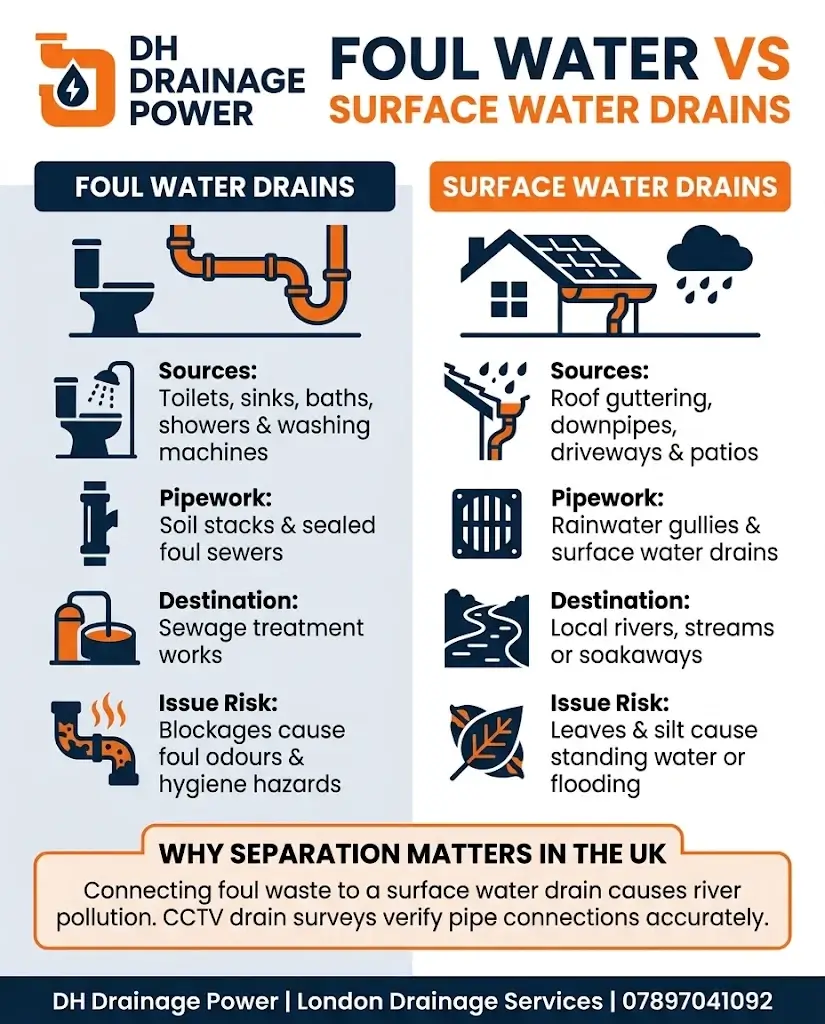
Foul water drains collect wastewater from toilets, sinks, showers, baths, washing machines and other plumbing fixtures. This water contains waste or contaminants and normally travels through a foul sewer to a wastewater treatment facility.
Surface water drains collect rainwater from roofs, driveways, paved areas and other outdoor surfaces. Depending on the property and drainage arrangements, this water may flow into a soakaway, suitable watercourse, surface water sewer or an authorised combined sewer.
In London, some older properties use combined sewer systems that carry both types of water. Other properties have separate foul and surface water drainage networks.
DH Drainage Power helps residential and commercial property owners across London and Greater London investigate drainage faults, blocked pipes and drainage concerns. Knowing which system is affected helps property owners describe problems accurately and understand when further investigation may be necessary.
What Is a Foul Water Drainage System?
A foul water drainage system carries used water and sewage away from a building for appropriate treatment or disposal.
In most properties connected to the public sewer network, wastewater travels from plumbing appliances through internal waste pipes, underground drainage pipes and eventually into the sewerage system.
The primary purpose of foul drainage is to remove wastewater safely while reducing the risk of contamination, unpleasant smells and sewage exposure.
Which Fixtures Connect to Foul Water Drains?
Typical sources of foul water include:
-
Toilets and urinals.
-
Kitchen sinks and dishwashers.
-
Bathroom basins, baths and showers.
-
Washing machines and utility sinks.
-
Other sanitary appliances that discharge wastewater.
Even apparently clean water from a bathroom basin is generally considered foul wastewater once used. Soap, detergent, food particles, grease and other substances can make it unsuitable for discharge into a rainwater-only drainage system.
Where Does Foul Water Go?
For most properties connected to public sewerage, foul water enters the sewer network and is conveyed to a wastewater treatment works.
At the treatment facility, wastewater undergoes processes designed to remove pollutants before treated water is returned to the environment under applicable controls.
Properties not connected to the public sewer network may use other approved wastewater systems, but the appropriate arrangement depends on the building, location and applicable regulations.
The UK Government’s Approved Document H drainage guidance explains drainage requirements for buildings in England.
What Is a Surface Water Drainage System?
Surface water drainage collects and manages rainwater that falls onto roofs, roads, gardens, driveways and other surfaces.
Unlike foul drainage, a properly functioning surface water system is not intended to receive domestic sewage or used water from household plumbing fixtures.
Its purpose is to prevent uncontrolled accumulation of rainwater and direct runoff towards an appropriate drainage destination.
What Usually Enters Surface Water Drains?
Surface water drainage may collect:
-
Rainwater flowing from roof gutters and downpipes.
-
Runoff from driveways and paved courtyards.
-
Water entering suitable outdoor gullies.
-
Rainwater collected by designed drainage channels.
-
Runoff from commercial yards and parking areas.
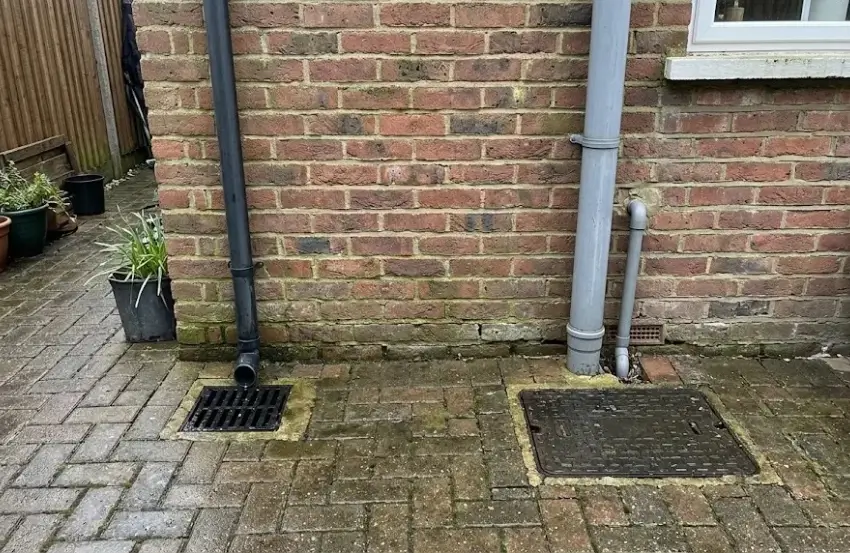
Not every outdoor drain is a surface water drain. For example, an outside gully receiving wastewater from a kitchen sink may form part of the foul drainage system.
This distinction is important because the position of a drain does not reliably identify its purpose.
Where Does Surface Water Go?
Surface water can be managed through several arrangements, depending on the property’s drainage design, ground conditions and available infrastructure.
These may include infiltration systems such as soakaways, approved surface water sewers, suitable watercourses or other authorised drainage arrangements.
Some properties discharge rainwater into combined sewers, particularly in older urban areas.
The most suitable method should be established from the site’s circumstances rather than assumed from the presence of an outside drain.
The Government’s sustainable drainage standards explain approaches to controlling surface water runoff.
Foul Water vs Surface Water Drains: Key Differences
Although both drainage systems transport water away from a property, they perform different functions.
| Feature | Foul water drainage | Surface water drainage |
|---|---|---|
| Main purpose | Remove used water and sewage | Manage rainwater runoff |
| Typical sources | Toilets, baths, sinks and washing machines | Roofs, patios, driveways and paved areas |
| Water quality | Contains domestic wastewater and contaminants | Primarily rainwater, although runoff may contain pollutants |
| Typical destination | Wastewater treatment system | Soakaway, watercourse or surface water sewer |
| Common problems | Sewage blockages, grease build-up, pipe defects | Leaves, silt, debris, flooding and restricted outlets |
| Incorrect connections | Can contaminate rainwater systems | Can overload foul-only sewers |
| Inspection considerations | Wastewater flow, blockages and pipe condition | Rainwater collection, flow routes and discharge points |
The difference between foul water and surface water drainage is therefore not simply about whether a pipe sits inside or outside a building. It concerns the source of the water, the pipe connections and the intended destination.
What Is a Combined Sewer System?
A combined sewer carries both foul wastewater and rainwater within the same sewer network.
These systems exist in parts of London and other established UK towns where drainage infrastructure developed before separate systems became more common.
Combined sewers can function normally under suitable operating conditions. However, heavy rainfall adds a substantial volume of water to the same network that carries domestic wastewater.
If rainfall exceeds available capacity, the sewer may become surcharged, increasing the risk of flooding or contributing to storm overflow operation.
Are Combined Sewers the Same as Incorrect Connections?
No. An authorised combined sewer is specifically intended to carry both foul water and surface water.
An incorrect connection, or misconnection, occurs when a pipe discharges into an unsuitable drainage system.
For example, a washing machine connected to a separate surface water sewer can send detergent-contaminated wastewater towards a watercourse.
Likewise, an unauthorised roof downpipe connection to a foul-only sewer can add unnecessary rainwater to that system.
Ofwat explains how combined sewer networks operate and why reducing excess surface water entering sewers can improve drainage resilience.
Why Must Foul Water and Surface Water Connections Be Correct?
Where separate sewer systems are provided, foul wastewater must not be discharged into a public sewer intended only for surface water. Section 106 of the Water Industry Act 1991 restricts such connections. Rainwater connections to foul-only sewers must also be checked with the relevant sewerage undertaker before alterations are made.
A connection that appears to carry water away without overflowing may still be incorrect.
Environmental Risks of Drainage Misconnections
An incorrect wastewater connection may allow sewage, cleaning products, detergents and other contaminants to enter a drainage route that does not lead to wastewater treatment.
Consequences can include pollution of streams and rivers, unpleasant smells around outfalls and harm to aquatic environments.
Property alterations can introduce misconnections if an installer assumes that the nearest underground pipe is suitable for a new appliance.
This can happen when kitchens are relocated, utility rooms are created or external drainage routes are altered.
For further guidance, see Thames Water’s advice on misconnected pipes.
How Can You Tell Whether a Drain Is Foul Water or Surface Water?
The most reliable way to identify a drainage system is to understand where its pipes originate, how they connect and where the water eventually discharges.
A visible drain cover, external gully or underground chamber does not always reveal the system’s function.
Check Existing Drainage Plans
Property drainage drawings, building control information and previous survey reports may show which pipes carry foul water and which collect rainwater.
These records can provide useful starting information, although alterations may have changed the original pipe layout.
For older London properties, drawings may be incomplete or unavailable. A professional inspection may be necessary where the actual pipe routes are uncertain.
Look at Guttering and Downpipes
Roof gutters normally collect rainwater and direct it towards the property’s surface water arrangements.
However, the final destination cannot always be determined simply by following a downpipe to ground level.
A downpipe may enter an underground system whose route is hidden, or discharge to a combined sewer.
Investigate Uncertain Pipe Connections
Where the drainage layout cannot be established visually, an appropriately planned professional inspection can help identify pipe routes, accessible connections and possible defects.
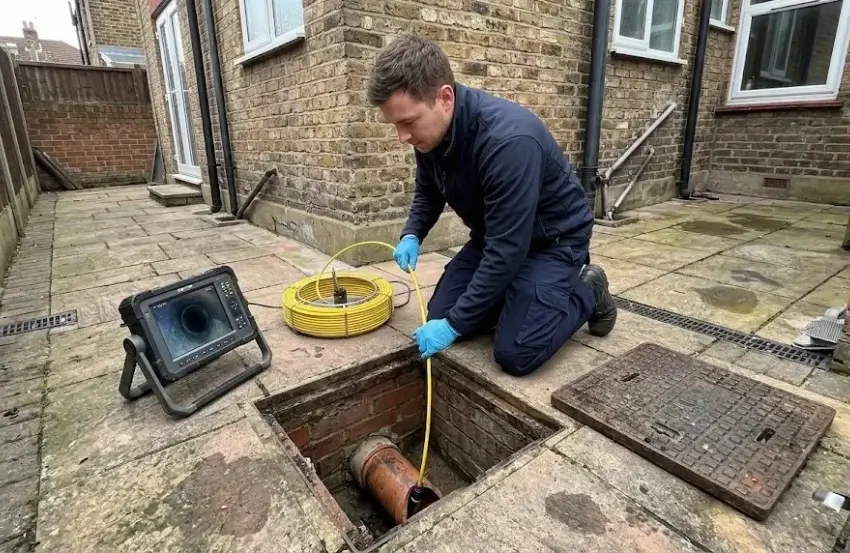
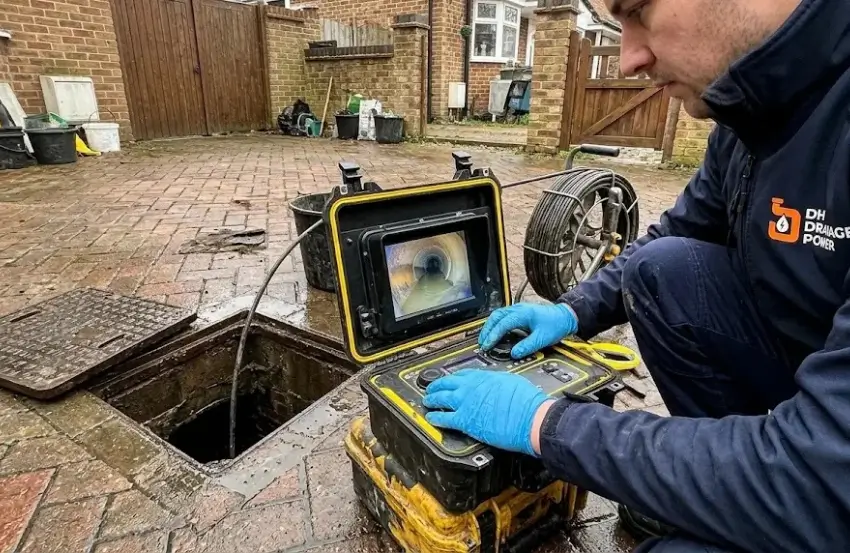
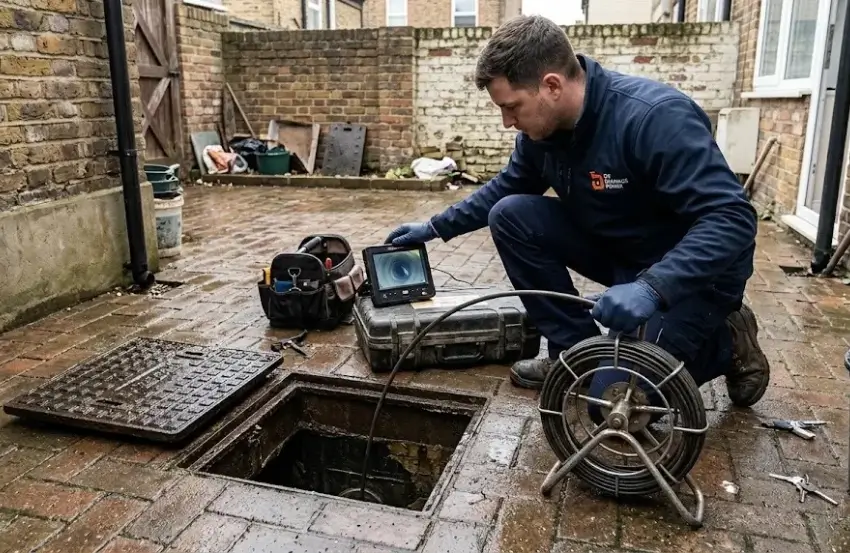
A CCTV drain survey can examine accessible pipe interiors and help locate obstructions, damaged sections or junctions.
However, CCTV footage alone may not prove whether every connected appliance discharges into the correct sewer. Connection tracing, suitable testing or further records may be required.
DH Drainage Power provides drain inspection services in London for properties requiring further investigation.
What Warning Signs Suggest a Drainage Problem?
Foul drainage faults and surface water drainage faults can produce different symptoms, although some warning signs overlap.
A surface water drain may operate normally during dry weather but struggle during heavy rainfall.
A foul drain can develop problems whenever wastewater is discharged, regardless of the weather.
Signs of Possible Foul Drainage Problems
Common warning signs include:
-
Sewage backing up through a toilet or floor drain.
-
Persistent foul odours near sanitary drainage.
-
Multiple plumbing fixtures draining slowly.
-
Gurgling noises after flushing a toilet.
-
Wastewater overflowing from an inspection chamber.
-
Repeated blockages affecting the same drainage run.
These symptoms can indicate an obstruction, damaged pipe, restricted connection or other drainage fault.
For additional information, DH Drainage Power explains how a blocked drain differs from a sewer blockage.
Signs of Possible Surface Water Drainage Problems
Surface water drainage concerns may include standing water around gullies after rainfall, water collecting near a building, overflowing rainwater channels or repeated pooling on a driveway.
Leaves, silt, debris, restricted pipework and inadequate drainage capacity can all contribute.
However, flooding during intense rain does not automatically mean that a pipe is blocked. The volume of runoff may exceed the capacity of an otherwise functioning drainage arrangement.
What Causes Foul and Surface Water Drains to Become Blocked?
Because these systems handle different materials, blockage patterns often differ.
Common Foul Drain Blockages
Foul water pipes can accumulate cooking fats, grease, food debris and unsuitable items flushed through toilets.
These materials may collect around bends, joints or existing pipe defects.
Tree root intrusion, displaced joints and damaged pipe sections can also restrict wastewater flow.
A recurring blockage should not automatically be treated as a simple maintenance issue. The underlying pipe condition may need investigation.
Common Surface Water Blockages
Surface water systems can collect sediment, leaves, soil and other material washed into gullies during rainfall.
Debris may accumulate in gullies, channels, underground bends and outlet points.
Tree roots or structural damage can also affect buried rainwater drainage pipes.
For related guidance, see DH Drainage Power’s external drain services in London.
What Should You Do if You Suspect a Drainage Fault?
The safest response depends on whether the problem involves sewage, rainwater, standing water or an unknown drainage connection.
Safe Initial Steps
-
Observe when the problem occurs. Record whether water accumulates during rainfall, when plumbing fixtures are used or under both conditions.
-
Reduce wastewater use if sewage is backing up. Avoid repeatedly flushing toilets or running appliances into a suspected blocked foul drain.
-
Check visible drainage covers and grates. Remove loose leaves from an accessible surface grate only when this can be done safely.
-
Keep away from contaminated water. Sewage may contain harmful microorganisms, so prevent unnecessary contact.
-
Document recurring symptoms. Photographs and notes can help explain the location and timing of a drainage problem.
-
Arrange professional help when necessary. Overflowing sewage, repeated blockages, unexplained drainage connections and persistent standing water may require investigation.
Do not enter an inspection chamber or confined drainage space, open unsafe covers, or attempt to clear underground pipework using unsuitable equipment.
Avoid mixing chemical drain cleaners or introducing additional chemicals into an already blocked system.
How Can Professional Drainage Inspections Help?
Professional assessment can distinguish between an ordinary obstruction, structural damage and a possible drainage connection problem.
The investigation should reflect the symptoms and the accessible parts of the system.
CCTV Drain Surveys
CCTV inspection uses a specialist camera to view the interior of suitable drainage pipes.
It can help identify cracks, displaced joints, root intrusion, accumulated material and other visible defects.
Survey findings can support decisions about clearance or further repairs.
A camera survey does not automatically establish pipe ownership, confirm every connection or demonstrate that a complete drainage system meets regulations.
Additional evidence may be needed.
Drain Clearance and Repairs
Where a blockage is confirmed, the appropriate clearance method depends on the material involved, the pipe condition and the location of the obstruction.
If inspection reveals structural damage, further repair assessment may be needed rather than repeated cleaning.
DH Drainage Power provides residential and commercial drainage assistance, including drain clearance, CCTV inspections and fault finding. Its drainage services overview explains the available services.
Why Are Drainage Arrangements Important for London Properties?
London contains a mixture of older buildings, modern developments, converted properties and commercial premises.
Different building ages and layouts can create different drainage arrangements, so the age or appearance of a property should never be used as the sole basis for identifying its pipe connections.
Older Terraced Houses and Converted Flats
Older properties may connect to combined sewers or have drainage systems altered during extensions and internal conversions.
A single building can also contain pipework installed at different times.
When a house has been divided into flats, some drains may serve more than one dwelling, affecting access and responsibility for maintenance.
Landlords and managing agents should establish who can authorise inspections and repairs before arranging work on shared drainage infrastructure.
Commercial Buildings and Managed Properties
Restaurants, offices, retail premises and managed residential buildings may have several drainage connections serving different areas.
Commercial kitchen wastewater must be managed through an appropriate drainage arrangement, rather than being discharged into a surface water-only system.
Property managers should maintain available drainage records and investigate unexpected changes in drainage performance.
How Can You Prevent Foul and Surface Water Drainage Problems?
Preventative maintenance helps reduce avoidable blockages, although it cannot eliminate every drainage risk.
For foul drainage, keep cooking fats and oils out of sinks, dispose of wipes and sanitary products in bins, and investigate repeated slow drainage rather than relying on chemical treatments.
For surface water systems, regularly remove loose debris from safely accessible grates and gutters, particularly before periods of heavy rainfall.
After building alterations, confirm that new plumbing appliances and rainwater connections discharge into the intended system.
Owners of larger properties should keep drainage drawings and past inspection records where available.
A clear maintenance history can make future investigations more efficient and reduce uncertainty about recurring issues.
Who Is Responsible for Foul and Surface Water Drains?
Responsibility depends on the type of drain, its ownership, whether it serves one or several properties, and the applicable drainage arrangements.
A private drain serving only one property is often the property owner’s responsibility, while public sewers and certain shared or lateral drains are generally maintained by the relevant sewerage undertaker.
However, surface water drainage may involve private soakaways, site drainage infrastructure, highway drainage or public sewers, each with different responsibility arrangements.
A drain running outside a building is not necessarily a public drain.
Before authorising work, check property documentation and seek clarification from the relevant water company or responsible authority when ownership is uncertain.
Frequently Asked Questions
1. Can foul water go into a surface water drain?
Where separate foul and surface water sewers are provided, foul wastewater must not be discharged into the surface water sewer. Doing so can release untreated wastewater into the environment. If you suspect a toilet, washing machine or other appliance is incorrectly connected, arrange an appropriate investigation rather than attempting to change underground connections yourself.
2. Do surface water drains always lead to rivers?
No. Surface water drainage can discharge into soakaways, infiltration systems, surface water sewers, suitable watercourses or authorised combined sewers. The destination depends on the property’s design and local drainage infrastructure. A drain receiving rainwater should not automatically be assumed to connect directly to a river.
3. How do I know if my London property has a combined sewer?
You may be able to identify a combined sewer connection through drainage drawings, water company records or an appropriate drainage investigation. Older London properties may use combined systems, but building age alone is not conclusive. A professional survey can help establish accessible pipe routes, while other records or tests may be needed to confirm the complete arrangement.
4. Can rainwater from a roof enter a foul sewer?
Rainwater may enter a sewer designed and authorised to carry both foul water and surface water. However, connecting roof drainage to a separate foul-only sewer generally requires the relevant sewerage undertaker’s approval. Unauthorised connections can increase flows and contribute to sewer flooding, so existing arrangements should be checked before making changes.
5. Is surface water drainage the same as a soakaway?
No. Surface water drainage is the overall system used to collect and manage rainfall runoff. A soakaway is one possible destination or component of that system, allowing suitable water to infiltrate into the ground. Some properties use surface water sewers or other approved arrangements instead, depending on ground conditions and drainage design.
6. Can a CCTV drain survey identify both drainage systems?
A CCTV drain survey can inspect accessible foul or surface water pipes and identify visible problems such as blockages, fractures or root intrusion. However, it may not conclusively identify every pipe connection or discharge destination. Where correct separation is in doubt, survey information may need to be combined with drainage plans, connection tracing or other appropriate investigations.
7. When should I call a drainage specialist about foul or surface water drains?
Contact a drainage specialist if sewage is overflowing, drains repeatedly block, outside gullies remain obstructed, or water regularly accumulates around your property. Professional advice is also sensible when pipe connections appear incorrect or drainage routes are unknown. DH Drainage Power offers emergency drainage assistance across London and surrounding service areas.
Conclusion: Understand Your Drainage System Before Problems Escalate
The main difference between foul water and surface water drains is their purpose: foul drainage carries wastewater for treatment, while surface water drainage manages rainfall runoff.
Some London properties use combined sewers, but separate drainage systems require appropriate connections to avoid pollution and unnecessary pressure on sewer networks.
Understanding the type of drain involved can help you recognise warning signs, take sensible preventative action and seek the right support.
Need professional drainage assistance in London?
DH Drainage Power supports residential and commercial properties with drain unblocking, inspections, fault finding and related drainage services.
07897041092
Emergency drainage assistance available 6am to 10pm, 7 days