Finding a blocked drain in a rented home can quickly lead to an uncomfortable question: who should arrange the repairs, and who should pay? In England, the answer usually depends on what caused the blockage, the condition of the drainage system and whether the affected pipe is privately maintained or part of the public sewer network.
If you are searching for who is responsible for blocked drains landlord or tenant UK, the general rule is that landlords must maintain drainage installations covered by their legal repair obligations, while tenants may be liable for blockages caused by misuse or avoidable damage.
For example, a collapsed underground pipe would generally fall within the landlord’s repair responsibilities. However, a toilet blocked by unsuitable items flushed by an occupant could lead to the tenant being charged.
DH Drainage Power provides drain unblocking, CCTV drain inspections and drainage repairs across London and surrounding areas. Understanding the cause of a blockage before deciding who pays can help landlords, tenants and letting agents resolve problems fairly and avoid unnecessary disputes.
Is a Blocked Drain the Landlord’s or Tenant’s Responsibility?
In England, landlords are generally responsible for maintaining and repairing the drainage and sanitation installations covered by their statutory obligations. Tenants are expected to use those facilities reasonably, report problems and avoid causing damage.
However, responsibility for arranging a repair is not always identical to responsibility for paying its cost.
A landlord might need to organise drainage work even when there is evidence that a tenant caused the blockage. Depending on the circumstances, the landlord may then seek to recover reasonable costs.
Conversely, if a drain becomes blocked because of deteriorating pipes, tree roots or an existing structural defect, the tenant would not normally be expected to pay simply because the problem occurred during their tenancy.
The key considerations are:
- What caused the blockage?
- Was the affected drainage system already damaged?
- Did the tenant use the drainage facilities reasonably?
- Is the blockage inside a private drain or a public sewer?
- What does the tenancy agreement say, and which legal obligations apply?
Establishing these facts is usually more useful than assuming either party must automatically pay.
What Does UK Law Say About Landlord Drainage Responsibilities?
Landlord and Tenant Act 1985: Section 11
For most relevant residential tenancies in England, Section 11 of the Landlord and Tenant Act 1985 establishes essential landlord repairing obligations.
These include keeping the property’s structure and exterior, including drains and external pipes, in repair. Landlords must also keep relevant sanitation installations, including sinks, baths and toilets, in proper working order.
The law therefore places significant responsibility on landlords to maintain the property’s drainage infrastructure.
The legislation does not mean, however, that a landlord must automatically absorb the cost of every blockage, regardless of its cause.
You can review the relevant obligations in Section 11 of the Landlord and Tenant Act 1985.
Can a Tenancy Agreement Transfer Drain Repair Costs to a Tenant?
A tenancy agreement may explain the tenant’s duties, including reporting damage, keeping facilities reasonably clean and avoiding misuse.
However, tenancy terms generally cannot override mandatory statutory repairing responsibilities.
For example, a clause saying that tenants must pay for every blocked drain would not automatically make them liable for a damaged underground pipe that the landlord is legally required to repair.
The exact position depends on the agreement, the applicable law and the circumstances of the blockage.
For additional guidance, see GOV.UK’s private renting repairs guidance.
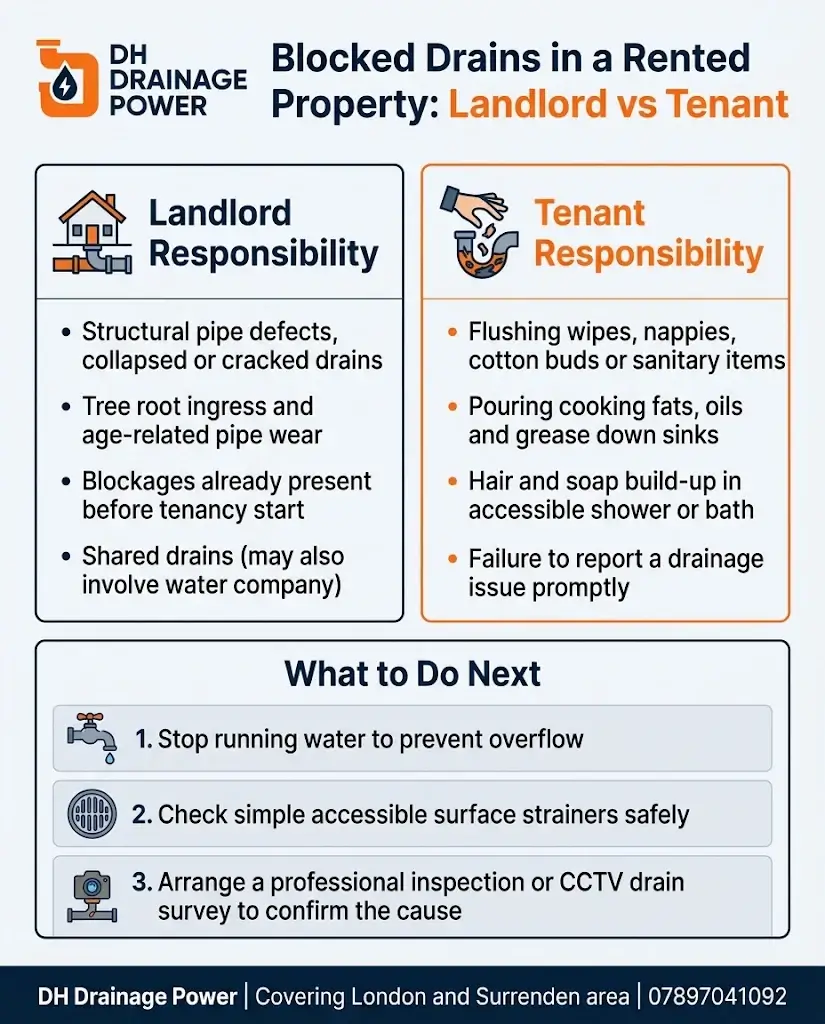
When Is the Landlord Responsible for Blocked Drains?
A landlord will generally be responsible for arranging repairs where the blockage results from problems with drainage installations they are legally required to maintain.
1. Damaged or Collapsed Drain Pipes
Underground drainage pipes can deteriorate because of age, ground movement, joint displacement or structural damage.
A damaged pipe may restrict wastewater flow, allowing debris to collect until a blockage develops.
When the underlying issue is structural deterioration rather than tenant misuse, the problem would generally fall within the landlord’s repair obligations.
Professional drain repairs in London can help address identified defects after the cause has been assessed.
2. Tree Root Intrusion
Tree roots can enter underground pipes through cracks, damaged joints or other openings.
Once inside, they can create obstructions and trap waste, contributing to recurring blockages.
Where root intrusion affects a landlord-maintained private drain, arranging appropriate investigation and repair will usually be the landlord’s responsibility.
A tenant would not ordinarily be liable for underground root growth simply because it occurred while they occupied the property.
3. Pre-Existing Drainage Problems
Sometimes tenants discover slow drainage or recurring blockages shortly after moving into a rented home.
These symptoms may indicate that the issue existed before the tenancy started.
Previous maintenance records, check-in inventories, earlier complaints and drainage inspection findings may help establish the history of the problem.
Where a defect predates the tenancy, the landlord would generally be responsible for addressing it unless another party, such as the water company, maintains the affected pipe.
4. Defective Drainage Installations
Poorly aligned pipes, damaged connections and deteriorating drainage fittings can interfere with wastewater flow.
Repeatedly clearing a blockage without addressing the underlying fault may provide only temporary relief.
In these situations, the landlord may need to arrange a more detailed investigation to determine whether repairs are required.
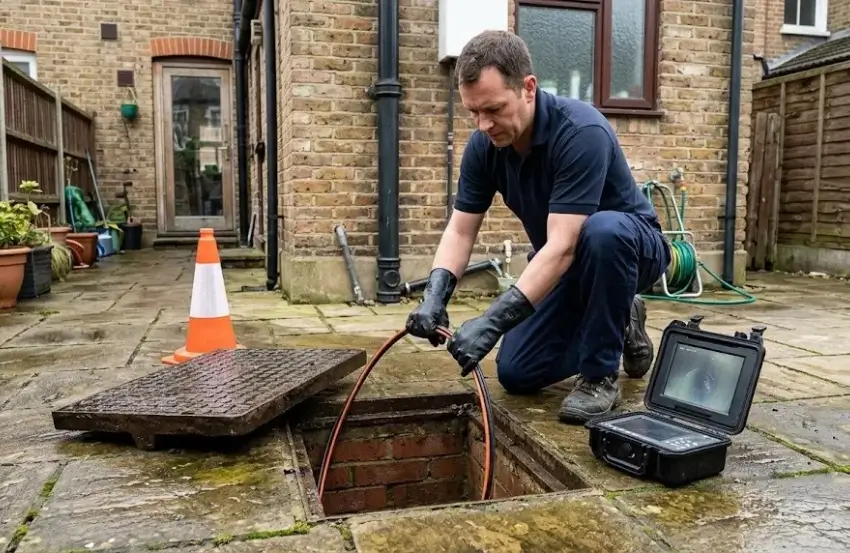
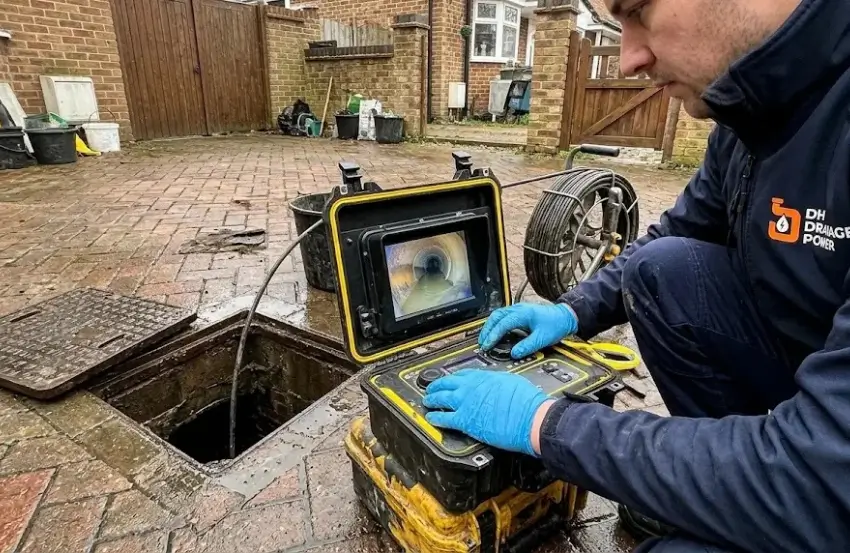
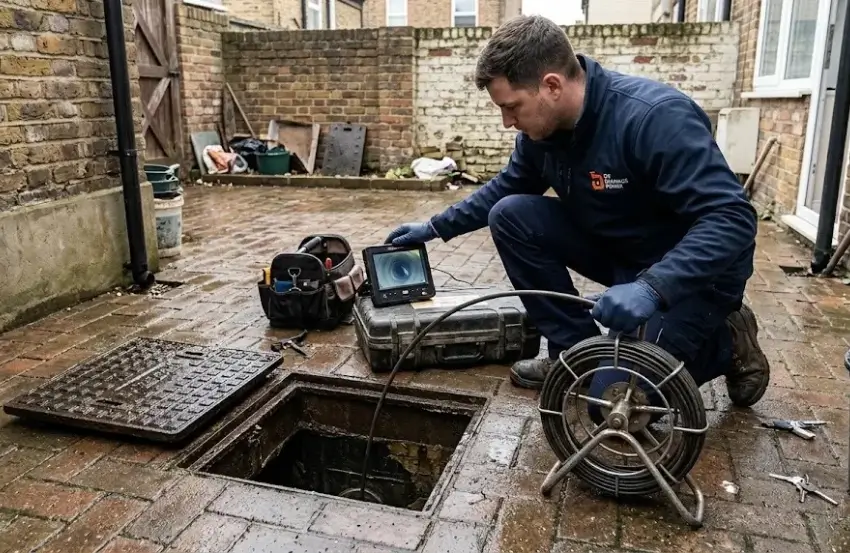
A CCTV drain inspection in London can help identify structural defects and possible obstruction points.
When Is the Tenant Responsible for Blocked Drains?
Tenant responsibility for blocked drains in the UK depends partly on whether the blockage resulted from avoidable misuse, negligence or damage caused by the tenant or their visitors.
Tenants are expected to look after the property in a reasonable, tenant-like manner.
1. Flushing Unsuitable Items
Toilets are designed to carry human waste and toilet paper, not general household rubbish.
Items that can contribute to blockages include:
- Wet wipes, including products marketed as flushable
- Nappies and sanitary products
- Cotton buds and cotton wool
- Paper towels and cleaning cloths
- Other foreign objects
If a drainage investigation reasonably establishes that unsuitable items caused the obstruction, the tenant may be liable for the resulting clearance costs.
Shelter England’s guidance on landlord and tenant repair responsibilities explains that tenants may be charged for blockages they cause, such as flushing nappies down a toilet.
2. Pouring Cooking Fat and Grease Down the Sink
Cooking oils, fats and grease can accumulate inside drainage pipes.
As deposits build up, they may restrict water flow and trap food waste.
In rented kitchens, repeatedly disposing of significant amounts of grease through the sink can contribute to a preventable blockage.
However, discovering grease inside a drain does not automatically prove that the current tenant caused the problem. Existing deposits, earlier occupants and drainage defects may also need consideration.
3. Neglecting Simple Preventative Care
Tenants should take reasonable steps to avoid preventable drainage problems.
This includes removing visible hair from accessible shower strainers, keeping food scraps out of plugholes and reporting drainage problems before they become more serious.
Tenants are not generally expected to dismantle complex drainage systems or carry out specialist underground repairs.
The distinction is between reasonable everyday care and work that legally belongs to the landlord.
Who Pays for Blocked Drains in a Rented Property?
The following table provides a practical guide to common situations in rented homes in England.
| Drainage problem | Likely responsible party | Important consideration |
|---|---|---|
| Collapsed underground drain | Landlord | Usually a structural repair obligation |
| Toilet blocked by flushed nappies | Tenant may be liable | Cause and circumstances must be established |
| Tree roots entering a private drain | Usually landlord | Subject to pipe ownership and maintenance responsibility |
| Kitchen drain blocked by grease | Depends on cause | Current or historic misuse may be relevant |
| Shared public sewer blockage | Water company | Confirm the sewer’s ownership |
| Blockage caused by an existing defect | Usually landlord | Inspection evidence may help |
| Drain obstruction from an unknown cause | Not yet established | Investigation may be necessary |
| Blockage caused by a tenant’s visitor | Tenant may be liable | Depends on evidence and circumstances |
Important: This table is general guidance, not a final legal determination. Tenancy terms, evidence, statutory duties and responsibility for the affected pipe may change the outcome.
Who Is Responsible for Shared Drains in Rented Flats?
Drainage responsibility becomes more complicated in apartment buildings and converted properties.
Several flats may connect to the same soil stack or underground drainage system. If the shared pipe becomes blocked, wastewater can affect multiple households.
The first step is to identify whether the obstruction is inside an individual flat’s plumbing, a communal private drainage installation or a public sewer.
Private Communal Drainage
Some shared pipes remain the responsibility of the freeholder, building owner or management company.
Tenants should report suspected communal drainage problems to their landlord or managing agent rather than independently authorising work to shared facilities.
The landlord can then contact the party responsible for maintaining the building.
Public Sewers and Shared Drainage
In England and Wales, many shared sewers and lateral drains are maintained by the relevant sewerage company.
For properties within Thames Water’s wastewater service area, the company explains that it is responsible for public sewers and qualifying shared sewer sections, including some located beneath private gardens or driveways.
See Thames Water’s sewer pipe responsibility guidance.
Not every communal pipe is automatically a public sewer. Ownership and maintenance responsibility should be checked before arranging private clearance work.
How Can Landlords and Tenants Identify Who Caused a Blockage?
A blocked drain does not always reveal its cause immediately.
Slow drainage might result from grease accumulation, hair, foreign objects, root intrusion or a damaged pipe.
When the cause is unclear, the parties should avoid assigning liability before sufficient evidence is available.
What Can a CCTV Drain Survey Show?
A CCTV drain survey uses a specialist camera to examine the internal condition of accessible drainage pipes.
Depending on access and visibility, it can help identify:
- Pipe cracks and displaced joints
- Tree root intrusion
- Accumulated debris
- Structural restrictions
- Potential causes of recurring blockages
The findings may help distinguish a maintenance problem from a possible misuse-related obstruction.
However, CCTV footage does not always establish who caused a blockage or when it began. A drainage assessment provides technical evidence; it does not automatically determine legal liability.
What Evidence Should Be Kept?
Where responsibility is disputed, landlords and tenants may benefit from keeping:
- Photographs of visible drainage problems.
- Written reports of when symptoms first appeared.
- Records of previous drainage complaints.
- Relevant inspection findings and contractor invoices.
- Copies of emails or messages about the problem.
- Tenancy check-in information and maintenance records.
This documentation can help clarify the circumstances and reduce disagreements about reasonable repair costs.
What Should Tenants Do When a Drain Becomes Blocked?
If a drain blocks in a rented property, the priority is to prevent further damage and notify the landlord or managing agent.
Step 1: Stop Using Affected Fixtures
Avoid running taps, flushing toilets or operating appliances connected to a drain that is backing up.
Continuing to send wastewater into a blocked system can increase the risk of overflow.
Step 2: Report the Problem Promptly
Contact the landlord or letting agent and explain:
- Which fixture or drain is affected
- Whether wastewater is overflowing
- When the problem started
- Whether other drains have similar symptoms
- Whether there is an unpleasant smell or visible sewage
Send the details in writing where possible so there is a clear record.
Step 3: Avoid Unsafe Drain-Clearing Methods
Do not mix chemical drain cleaners or attempt to open underground drainage chambers without appropriate training and safety precautions.
Chemical products can present risks to occupants and anyone subsequently working on the pipes.
If the cause is unclear or the blockage is recurring, professional investigation may be more appropriate than repeated DIY attempts.
Step 4: Agree on the Next Action
The landlord or managing agent should identify who will arrange the necessary assessment or repair.
If the blockage is urgent, explain the immediate risk of sewage overflow or property damage.
Unless urgent circumstances justify another course of action, tenants should avoid authorising significant chargeable work without understanding the tenancy arrangements and obtaining appropriate agreement.
What Happens if a Landlord Refuses to Fix Blocked Drains?
A landlord’s failure to deal with serious drainage problems can create sanitation, health and property-damage concerns.
If the landlord is responsible and does not respond, tenants should first communicate the problem clearly in writing.
Keep photographs, correspondence and details of how the drainage problem affects normal use of the property.
If the problem remains unresolved, tenants can seek advice from an independent housing organisation or their local council.
For private rented homes in England, local authority environmental health teams may be able to investigate serious housing hazards.
Tenants should not automatically stop paying rent or deduct repair costs without appropriate advice.
The GOV.UK guidance on repairs in privately rented homes explains the general responsibilities and options where repairs are not completed.
How Can Landlords Prevent Drainage Disputes?
Preventative maintenance and clear communication can reduce both drainage problems and disagreements about responsibility.
Before a New Tenancy
Landlords and property managers should consider:
- Recording any known drainage defects.
- Investigating unexplained slow drainage.
- Keeping relevant maintenance and repair records.
- Explaining how drainage problems should be reported.
- Confirming who manages communal drainage facilities.
Where a property has experienced repeated blockages, a professional inspection may help identify issues before new occupants move in.
During the Tenancy
Landlords should respond appropriately to reported drainage defects and arrange work for which they are responsible.
Tenants should use sinks, baths and toilets reasonably, avoid disposing of unsuitable materials and report emerging problems promptly.
For managed properties, maintaining a clear record of reports and repairs can help establish whether drainage problems are isolated incidents or recurring system faults.
Between Tenancies
Where previous occupants reported blockages, landlords should consider whether additional investigation is necessary before reletting.
A drain that has been cleared several times may still have an underlying defect.
Identifying structural problems early may help avoid disruption for future occupants.
When Should You Arrange Professional Drain Unblocking?
Some drainage problems involve simple surface debris, while others require specialist equipment and investigation.
Professional drainage assistance is particularly relevant when:
- Wastewater is backing up into sinks, baths or toilets.
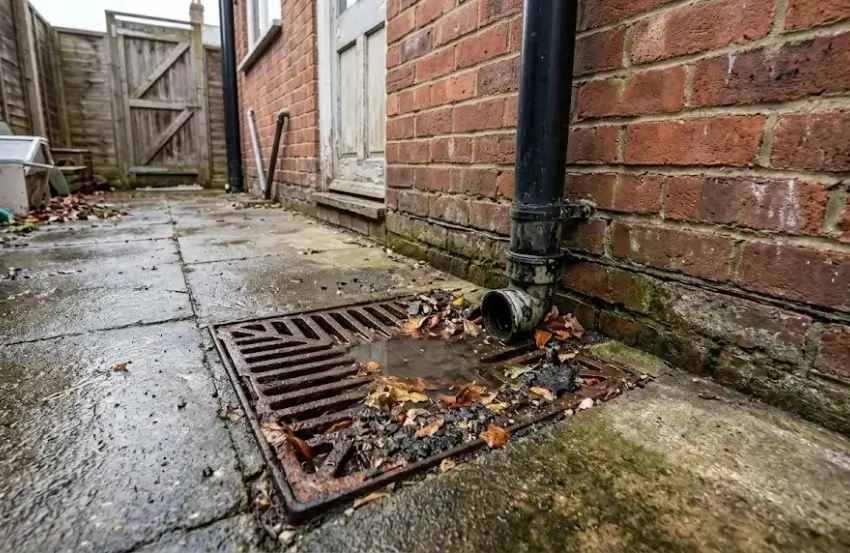
- Sewage is overflowing from an outside drain.
- Several fixtures are affected simultaneously.
- Blockages return after previous clearance.
- There are signs of an underground pipe defect.
- The source of the blockage cannot be identified safely.
DH Drainage Power offers professional drain unblocking in London for residential and commercial properties.
For recurring problems or disputed causes, a drainage inspection may help identify the obstruction and assess whether additional repairs are required.
The property owner, landlord or managing agent should also confirm whether the affected pipe is privately maintained before authorising work.
Frequently Asked Questions
1. Is a blocked toilet the landlord’s responsibility in the UK?
In England, a landlord is generally responsible for maintaining toilet installations covered by their repairing obligations. However, a tenant may be required to pay reasonable costs where evidence establishes that misuse caused the blockage. A toilet blocked because of defective pipework would usually be treated differently from one obstructed by unsuitable items flushed during the tenancy.
2. Can a landlord charge a tenant for unblocking drains?
A landlord may seek to recover reasonable drainage costs where the tenant is legally responsible for causing the obstruction. However, the landlord should have sufficient evidence supporting the charge. The existence of a blockage alone does not establish tenant liability, particularly where ageing pipes, previous occupants or structural defects may have contributed.
3. Who pays for an outside drain blockage in a rented property?
An outside drain serving only the rented property is generally a private drainage installation. The landlord will usually be responsible for repairs that fall within their legal obligations. However, if the blockage was caused by proven tenant misuse, cost recovery may be possible. Shared public sewers may instead be maintained by the relevant water company.
4. Can a landlord deduct blocked drain repair costs from a deposit?
A landlord may propose a deposit deduction for drainage damage or clearance costs that the tenant is properly responsible for. However, deductions must be justified and supported by relevant evidence. Tenants can challenge disputed deductions through the applicable tenancy deposit protection scheme. Ordinary deterioration and pre-existing structural defects should not automatically be charged to the tenant.
5. Who is responsible for blocked drains in a rented flat?
Responsibility depends on where the blockage occurs and who maintains the affected pipe. Plumbing serving an individual flat may fall within the landlord’s responsibilities, while communal pipework could involve the freeholder or management company. Public sewers are generally handled by the relevant sewerage company. Tenants should report the issue to their landlord or managing agent.
6. What if a blocked drain keeps returning after it has been cleared?
Repeated blockages may indicate an underlying problem such as damaged pipework, root intrusion or persistent deposits. The landlord should consider investigating the cause where the drainage system is covered by their repair obligations. A CCTV inspection may provide useful evidence, although identifying a restriction does not always establish who caused it.
7. How quickly must a landlord fix a blocked drain?
There is no single universal deadline for every blocked drain in an English rented property. The appropriate response depends on the severity of the problem, the applicable legal duties and the risk to occupants. Sewage backing up into living areas requires more urgent attention than a minor drainage inconvenience. Tenants should report serious sanitation problems immediately and keep records.
Conclusion: Who Should Pay for Blocked Drains?
Responsibility for blocked drains in rented properties generally depends on the cause of the obstruction, the condition of the drainage system and who is legally responsible for maintaining it.
Landlords usually have responsibility for repairing relevant drainage installations and structural defects. Tenants may be liable for avoidable blockages caused by misuse, while public sewer problems may need to be referred to the water company.
The most practical approach is to establish the cause before deciding who should pay.
Need Help With Blocked Drains in London?
DH Drainage Power provides residential and commercial drain clearance, CCTV drain inspections and drain repairs across London and surrounding areas.
Whether you are a landlord investigating a recurring drainage problem, a tenant experiencing an overflowing drain or a letting agent arranging maintenance, contact the team to discuss the situation.
DH Drainage Power
Phone: 07897041092
Website: https://dhdrainagepower.co.uk/
Contact: https://dhdrainagepower.co.uk/contact/
Opening hours: 6am–10pm, 7 days a week.
Call to discuss your drainage problem or submit an enquiry through the contact page.