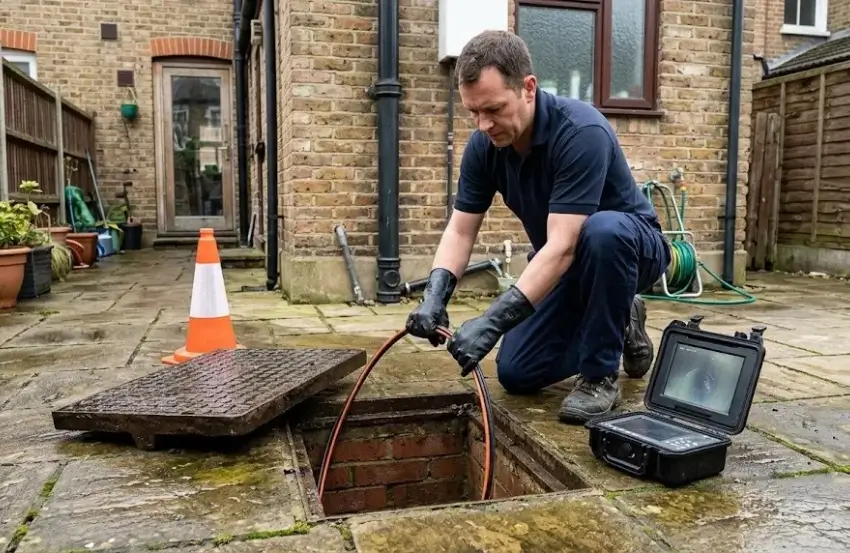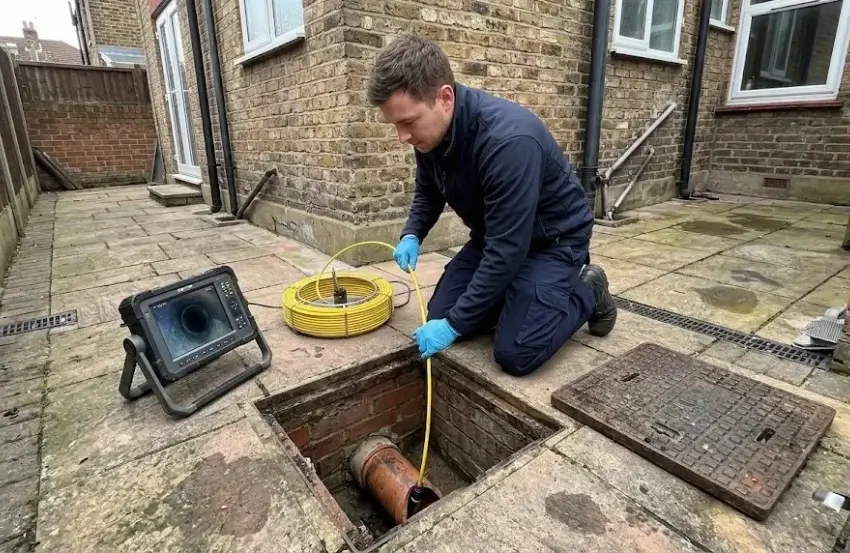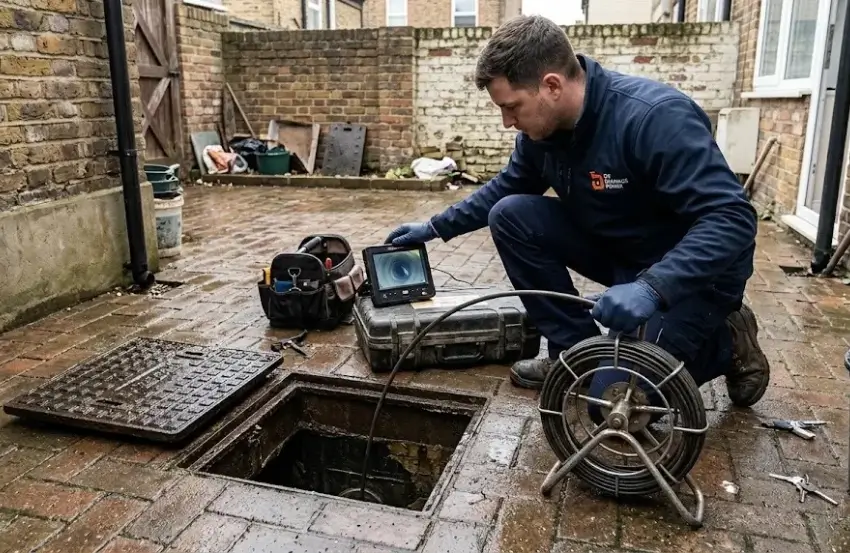
Yes, a CCTV drain survey can miss a problem, even when the inspection is carried out correctly. Drain cameras provide valuable information about the visible inside surfaces of accessible pipes, but they cannot see through standing water, thick deposits, solid blockages or the surrounding ground. As a result, certain faults may remain hidden until the drainage system is cleared or investigated further.
Understanding CCTV drain survey limitations is important because a clear camera image does not necessarily confirm that every underground pipe is free from defects. Small leaks, inaccessible connections and intermittent drainage problems may require additional assessment.
DH Drainage Power provides CCTV drain surveys, drainage fault finding and drain repairs for residential and commercial properties across London and Greater London. Knowing what an inspection can and cannot establish helps property owners interpret findings and make informed maintenance decisions.
If a drain continues to block, overflow or produce unpleasant odours despite an apparently satisfactory inspection, the next step is to establish which sections were examined, whether anything obstructed the camera and whether the symptoms justify further investigation.
What Can a CCTV Drain Survey Actually Detect?
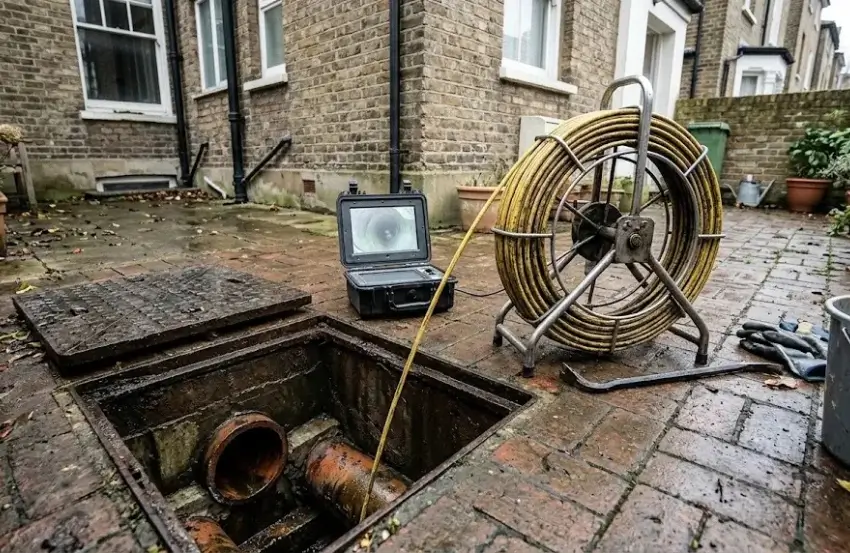
A CCTV drain survey uses a specialist camera to examine the internal condition of accessible underground drainage pipes. The camera travels along the pipe, allowing the operator to observe visible defects, restrictions and changes in the drainage system.
When visibility and access are suitable, CCTV inspections can help identify:
- Cracked, fractured or displaced drainage pipes.
- Tree roots entering through damaged joints.
- Grease, debris and other visible obstructions.
- Collapsed or significantly deformed pipe sections.
- Joint misalignment and changes in pipe condition.
- Standing water and sediment accumulation.
- Evidence of deterioration or previous repairs.
However, identifying a visible defect is not always the same as establishing its underlying cause.
For example, a camera may reveal standing water inside a drainage pipe. This could suggest restricted flow, an uneven pipe gradient or another issue, but the footage alone may not establish which explanation is correct.
For further information about the inspection process, see DH Drainage Power’s drain inspection services in London.
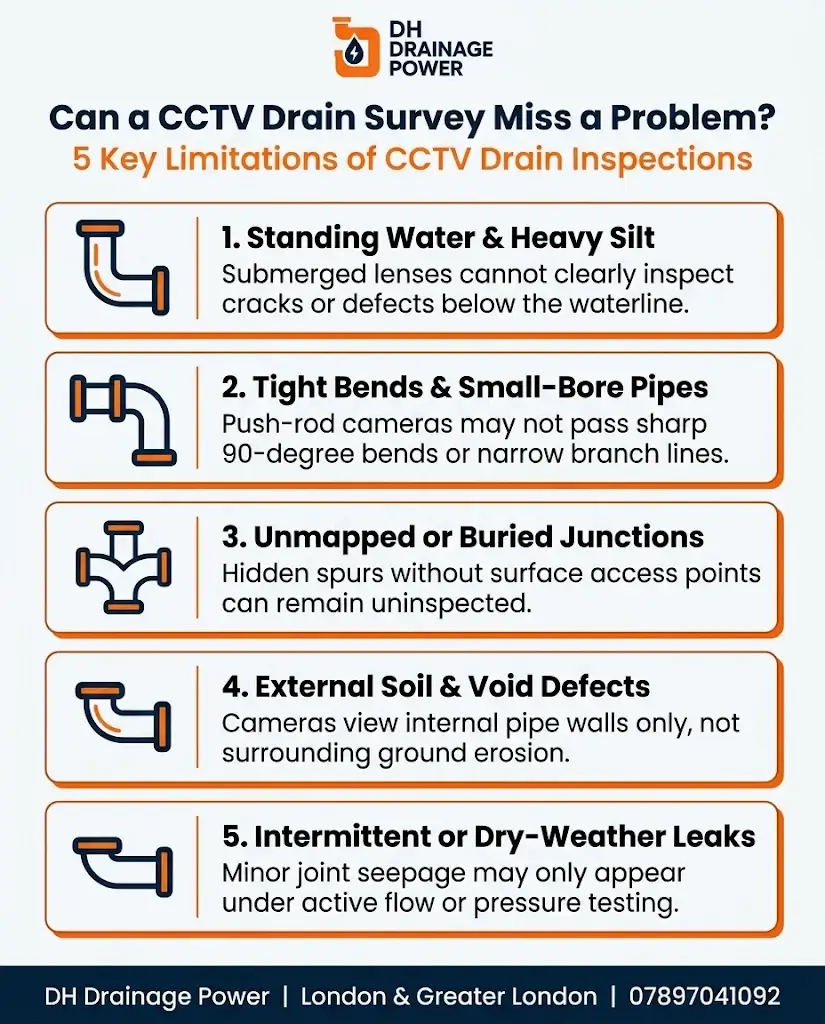
What Are the Main CCTV Drain Survey Limitations?
The limitations of CCTV drain inspections generally relate to visibility, accessibility, the condition of the pipe and the type of problem being investigated.
1. Standing Water Can Hide Pipe Defects
When water collects inside a drain, part of the internal pipe surface may be submerged.
The camera might clearly show the upper section of the pipe while providing little or no useful view of the submerged lower section, sometimes called the invert.
This matters because cracks, displaced joints, deposits and other defects can occur below the waterline.
Standing water may also interfere with the camera’s movement and make the footage more difficult to interpret.
A survey report should distinguish the sections that were clearly inspected from those where visibility was restricted.
2. Grease, Silt and Debris Can Conceal Damage
Deposits can cover internal pipe surfaces, preventing the camera from examining the material underneath.
Common examples include:
- Hardened grease along kitchen drainage pipes.
- Silt collecting inside external drains.
- Soap and detergent residue.
- Accumulated organic material.
- Debris trapped around damaged connections.
A camera may show the deposit without revealing a crack or damaged joint beneath it.
In suitable circumstances, professional drain clearance followed by another inspection can provide a clearer picture of the pipe’s actual condition.
However, the appropriate cleaning method should depend on the pipe material, structural condition and nature of the obstruction.
3. A Camera Cannot Inspect Beyond a Solid Obstruction
A collapsed pipe, substantial blockage or severe deformation can prevent the inspection camera from moving further along the drain.
The visible section may appear satisfactory, but the condition of the remaining pipework is still unknown.
For example, imagine a camera travels several metres along a drain before encountering a blockage it cannot pass.
The operator can assess the accessible section, but cannot reliably confirm the condition of the pipe beyond that obstruction.
A useful survey report should record where the camera stopped and why the remaining section could not be examined.
4. CCTV Cameras Cannot See Outside the Pipe
One of the most important CCTV drain survey limitations is that cameras examine the inside of pipes, not the surrounding soil or external pipe structure.
A camera may reveal an opening, fracture or displaced joint, but it cannot directly show:
- How much water has escaped into the surrounding ground.
- Whether soil has been washed away beneath a driveway.
- The full extent of damage outside the pipe wall.
- The condition of surrounding foundations.
- Whether external pressure is contributing to pipe movement.
Where structural movement, ground instability or suspected leakage is involved, a wider investigation may be necessary.
A CCTV survey provides useful evidence, but it should not automatically be treated as a complete assessment of surrounding ground conditions.
5. Small or Intermittent Leaks May Not Be Visible
A drain can appear reasonably sound during a camera inspection while still experiencing a problem under particular operating conditions.
Some defects may only become apparent when water flows through the drainage system at a higher rate or when external conditions change.
For instance, a small opening at a joint may be difficult to identify if deposits conceal it or the camera angle does not reveal the affected surface.
CCTV footage alone does not prove that a drainage system is watertight.
Where leakage is suspected but no clear defect is visible, an appropriate additional test or investigation may be needed.
6. Inaccessible Branches May Remain Unchecked
Domestic and commercial drainage systems often contain multiple connections.
A camera entering through one inspection chamber may not reach every branch pipe, internal connection or separate drainage run.
This is particularly relevant in properties with extensions, converted accommodation, shared drainage arrangements or alterations made over several years.
A survey of one accessible pipe should not be mistaken for an inspection of the entire drainage network.
The inspection scope should identify which pipe runs were examined and which were excluded.
CCTV Drain Survey Limitations: What Can Be Missed?
The following table explains common inspection restrictions and what property owners should consider.
| Drainage issue | Why CCTV may miss it | Recommended next step |
|---|---|---|
| Small crack beneath standing water | Water obscures the lower pipe surface | Assess the cause of standing water and whether another inspection is needed |
| Defect covered by grease or silt | Deposits conceal the pipe wall | Consider suitable professional clearance and reinspection |
| Damage beyond a blockage | Camera cannot pass the obstruction | Investigate or clear the obstruction before extending the survey |
| Underground leakage | The camera cannot see surrounding soil | Consider appropriate leak investigation or testing |
| Inaccessible branch pipe | No suitable camera access | Review drainage layout and available access points |
| Intermittent drainage fault | Problem may not occur during inspection | Compare survey findings with symptoms and operating conditions |
| Poor pipe gradient | Visual evidence may be inconclusive | Investigate alignment, drainage levels and flow conditions |
The most reliable interpretation combines visible findings with the property’s drainage history, symptoms and inspection coverage.
How Accurate and Reliable Is a CCTV Drain Survey?
CCTV drain survey accuracy and reliability depend on several factors, including camera access, visibility, pipe condition and the quality of the operator’s observations.
When an accessible pipe is reasonably clear and the footage is suitable, a camera survey can provide strong visual evidence of internal defects.
However, accuracy should not be reduced to a single percentage. A camera’s ability to identify an obvious collapsed section is different from its ability to establish whether a concealed joint is leaking.
A reliable inspection should explain:
- Which drainage sections were surveyed.
- Whether the camera completed each intended pipe run.
- What defects were visible.
- Where visibility was restricted.
- Which conclusions remain uncertain.
- Whether further checks are justified.
The aim is not simply to obtain footage but to interpret it correctly.
Does a Clear CCTV Survey Mean the Drains Are Healthy?
Not necessarily.
A clear survey may provide reassurance about the sections successfully inspected, but it does not establish that inaccessible or obscured pipework is defect-free.
The wording in the report matters.
There is a difference between stating that no significant visible defects were identified in the inspected section and stating that the whole drainage system is in perfect condition.
The first describes an observation within a defined inspection scope. The second may go beyond what the evidence supports.
What Warning Signs Suggest a Problem Was Missed?
A CCTV survey should be considered alongside the actual drainage symptoms.
If the survey appears clear but the problems continue, further investigation may be appropriate.
Signs That Deserve Further Attention
- Recurring blockages: The same drain repeatedly blocks after clearance.
- Persistent foul odours: Unpleasant smells continue despite routine cleaning.
- Multiple slow-draining fixtures: Several sinks, toilets or baths drain poorly.
- Gurgling sounds: Air and wastewater movement may indicate a restriction or another drainage fault.
- Repeated wastewater backups: Water returns through a toilet, shower or external gully.
- Unexplained dampness: Moisture appears near a suspected drainage route without a confirmed cause.
- Standing water in inspection chambers: Water remains where it would normally be expected to drain away.
These symptoms do not automatically prove that the survey missed a structural defect.
For example, an unpleasant smell may originate from an internal trap or ventilation-related issue rather than a damaged underground pipe.
The important step is to compare the symptoms with the inspected drainage sections and identify any unanswered questions.
What Should You Do If a CCTV Drain Survey Finds Nothing?
If a camera inspection does not identify a clear cause, avoid assuming that extensive repairs are required.
Instead, review the findings systematically.
Step 1: Confirm Which Pipes Were Inspected
Ask whether the survey included the drainage runs connected to the affected fixtures.
A kitchen blockage and an external chamber problem may involve different parts of the system.
Step 2: Check the Report for Inspection Restrictions
Look for references to standing water, grease deposits, camera access restrictions or sections that could not be surveyed.
These details help establish whether the inspection was complete.
Step 3: Explain When the Problem Occurs
Tell the drainage specialist whether the issue occurs after heavy rain, during frequent appliance use or when several fixtures discharge simultaneously.
The timing may provide information that was not evident during the survey.
Step 4: Consider Whether Clearance Is Needed
If deposits or obstructions prevented a useful inspection, professional clearance may improve visibility.
However, the pipe should be assessed before using a cleaning method that could worsen existing damage.
Step 5: Agree on the Next Investigation
Depending on the circumstances, further action may involve examining another accessible drainage section, repeating the inspection or considering an appropriate specialist test.
The next step should address a specific unanswered question rather than simply repeating the original work without a clear purpose.
Can Professional Drain Cleaning Improve CCTV Survey Results?
Yes. Removing deposits or obstructions can improve camera visibility when the pipe is suitable for cleaning.
An inspection performed through heavy grease or silt may show relatively little of the actual pipe wall.
After suitable cleaning, cracks, defective joints or other previously concealed conditions may become easier to identify.
However, cleaning does not eliminate every CCTV drain inspection limitation.
Even a clean drainage pipe may contain inaccessible connections, submerged sections or defects that cannot be established through visual inspection alone.
If deposits or blockages are affecting camera visibility, read our guide on why a drain may need clearing before a CCTV camera survey to understand when cleaning should come before inspection.
DH Drainage Power provides drainage services in London, including blocked drain clearance and CCTV inspections.
Where a drainage fault is suspected, the appropriate work should be based on the condition of the pipe and the information available.
Why Do CCTV Survey Limitations Matter for London Properties?
London and Greater London contain many different property types, from older terraced houses and converted flats to modern developments, offices and commercial premises.
Drainage layouts can vary considerably, especially where buildings have been extended, subdivided or altered.
Older Homes and Converted Flats
Older properties may contain different pipe materials and drainage connections introduced during separate building projects.
A camera entering one accessible section may not reach every branch serving an altered kitchen or bathroom.
When drainage problems affect several flats, it may also be necessary to establish which connections are shared and who can authorise access.
Commercial Buildings and Managed Premises
Restaurants, hospitality businesses and other commercial properties may experience drainage restrictions caused by grease, waste deposits or high wastewater demand.
A survey carried out when the system is under relatively light use may not reproduce a problem that occurs during busy operating periods.
Commercial property managers should keep records of previous blockages, affected fixtures, maintenance work and inspection findings.
These details help make subsequent investigations more targeted.
Shared Drains and Responsibility
Before arranging extensive repairs, property owners should check whether the affected section is private drainage or part of a public or shared sewer.
Thames Water’s guidance on sewer pipe responsibility explains how responsibility is allocated within its network.
Ownership matters because the party responsible for maintaining a drainage section may differ from the person experiencing the symptoms.
Can a CCTV Survey Confirm Compliance With Drainage Regulations?
A CCTV survey can provide evidence about visible drainage condition, but it is not automatically a full regulatory compliance assessment.
For example, a camera may identify a pipe connection or visible defect without establishing whether the entire installation meets applicable design and construction requirements.
In England, GOV.UK’s Approved Document H provides guidance relating to drainage and waste disposal, including below-ground drainage, access chambers and associated arrangements.
Where drainage compliance is relevant to building work, property alterations or a formal assessment, the inspection scope should be agreed with the appropriate professional.
How Can You Reduce the Risk of Missed Drainage Problems?
Property owners cannot eliminate every inspection limitation, but they can take practical steps to improve the quality of an investigation.
Before the Survey
- Describe all recurring drainage symptoms.
- Identify the affected fixtures and external drainage points.
- Provide previous drainage reports where available.
- Explain whether blockages occur during particular activities or weather conditions.
- Confirm which drainage areas need investigating.
- Arrange authorised access to relevant chambers and shared areas.
After the Survey
- Review which sections were successfully inspected.
- Check whether the report records camera obstructions.
- Ask what any standing water or deposits might mean.
- Keep the findings alongside previous maintenance records.
- Seek clarification before approving significant repairs.
- Monitor symptoms if the findings do not establish a definite cause.
Avoid inserting makeshift tools into underground pipes, entering inspection chambers or mixing chemical drain cleaners.
Where sewage is overflowing, avoid contact with wastewater and seek appropriate professional assistance.
When Should You Contact a Drainage Specialist?
Professional help is appropriate when a problem keeps returning, wastewater is backing up or there is uncertainty about the condition of underground drainage pipes.
A specialist can assess the symptoms, consider the previous CCTV findings and determine whether further inspection, clearance or repair assessment is justified.
DH Drainage Power provides drain repairs in London alongside CCTV surveys and drainage fault finding.
For urgent blockages or wastewater overflow, DH Drainage Power offers emergency drainage help 7 days a week, 6am to 10pm.
Frequently Asked Questions
1. Can a CCTV drain survey miss a cracked pipe?
Yes. A cracked pipe may be missed if the affected section is submerged, covered by deposits, inaccessible or outside the camera’s useful field of view. A clearly visible crack in an accessible pipe is generally easier to identify. If recurring symptoms suggest damage despite inconclusive footage, a drainage specialist may recommend further investigation.
2. Can a CCTV drain survey detect every underground leak?
No. CCTV inspections can identify some visible openings, fractures and damaged joints, but they do not directly measure water escaping into surrounding soil. Small or intermittent leaks may not be obvious during inspection. Where leakage is suspected, further testing or assessment may be necessary to establish whether water is escaping and where.
3. Can standing water affect CCTV drain survey accuracy?
Yes. Standing water can obscure the lower internal surface of a drainage pipe and prevent the camera from identifying defects beneath the waterline. It may also indicate restricted flow or another drainage condition requiring assessment. The report should record the reduced visibility rather than assuming that the submerged section has no defects.
4. Should a drain be cleaned before a CCTV inspection?
Not every drain requires cleaning before inspection. If the camera has sufficient access and the internal surfaces are clearly visible, an initial survey may provide useful findings. However, heavy grease, silt or debris can conceal defects. Where cleaning is appropriate and safe for the pipe, another camera inspection may reveal previously hidden problems.
5. Can a CCTV survey detect a collapsed drain?
A CCTV survey can often identify a collapsed or severely deformed section when the camera reaches the affected area. However, the camera may be unable to pass the collapse, leaving the pipe beyond it uninspected. Further investigation may be required to establish the extent of damage and the appropriate repair approach.
6. What if my drains keep blocking after a clear CCTV survey?
Repeated blockages after an apparently clear survey should prompt a review of the inspection scope and drainage symptoms. Some branches may not have been examined, while deposits, water or intermittent conditions may have affected the findings. A drainage specialist can assess whether further inspection, suitable clearance or another investigation is needed.
7. Is a CCTV drain survey reliable for buying a house in London?
A CCTV drain survey can provide valuable evidence about accessible underground pipework before a property purchase. However, the buyer should check which sections were inspected and whether the report identifies any limitations. A clear result should not be interpreted as proof that all drainage components are defect-free, particularly where access was restricted.
Conclusion: Understand the Limits Before Making Repair Decisions
CCTV drain surveys are valuable tools for investigating underground drainage problems, but they cannot reveal every hidden defect.
Standing water, thick deposits, inaccessible pipes and problems outside the camera’s view can affect the completeness of an inspection.
The best approach is to consider the survey findings alongside drainage symptoms, inspection restrictions and any previous maintenance history.
If you are experiencing recurring blockages, unexplained drainage problems or uncertainty about CCTV findings, DH Drainage Power can help you discuss suitable drainage assistance across London and surrounding areas.
Call: 07897041092
Website: DH Drainage Power
Enquiries: Contact DH Drainage Power
Emergency drainage support: Open 6am to 10pm, 7 days
Call to discuss your drainage problem or submit an enquiry through our contact page.