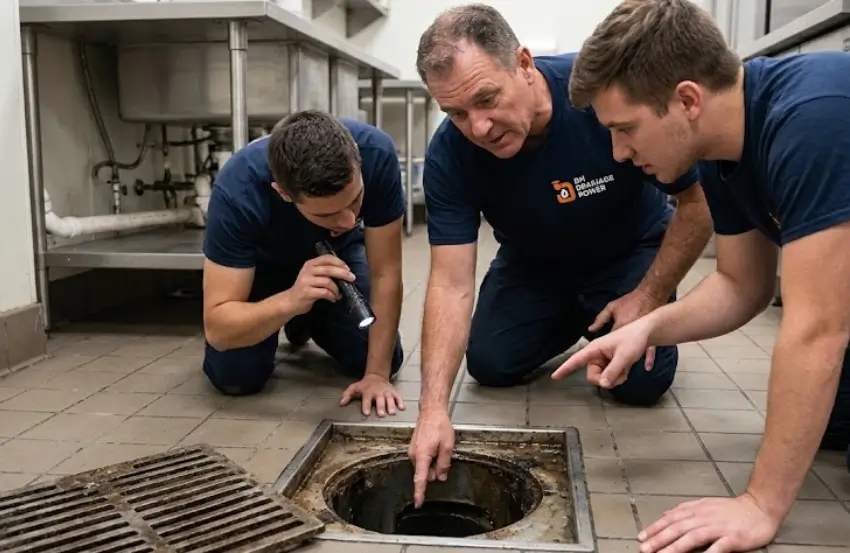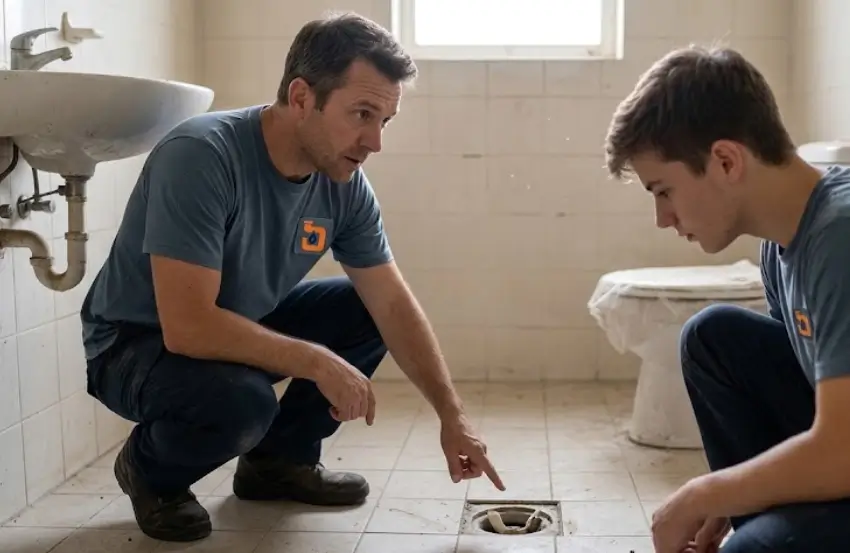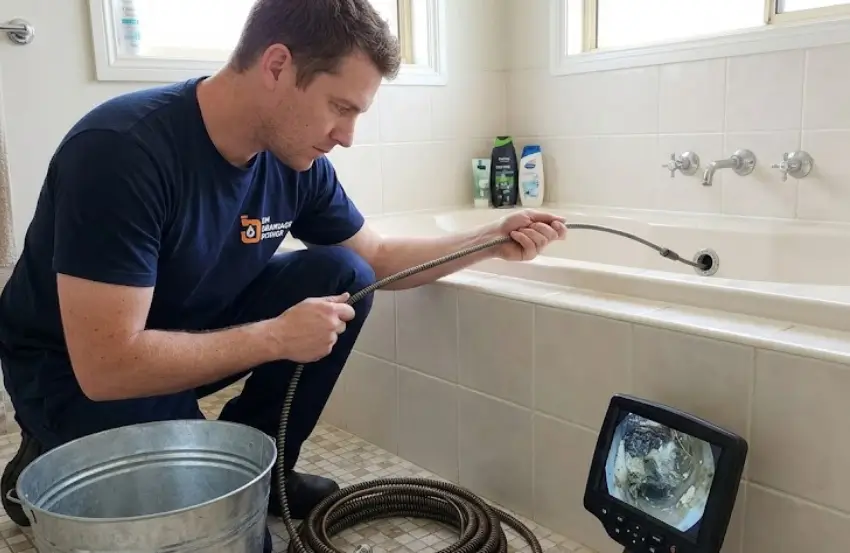
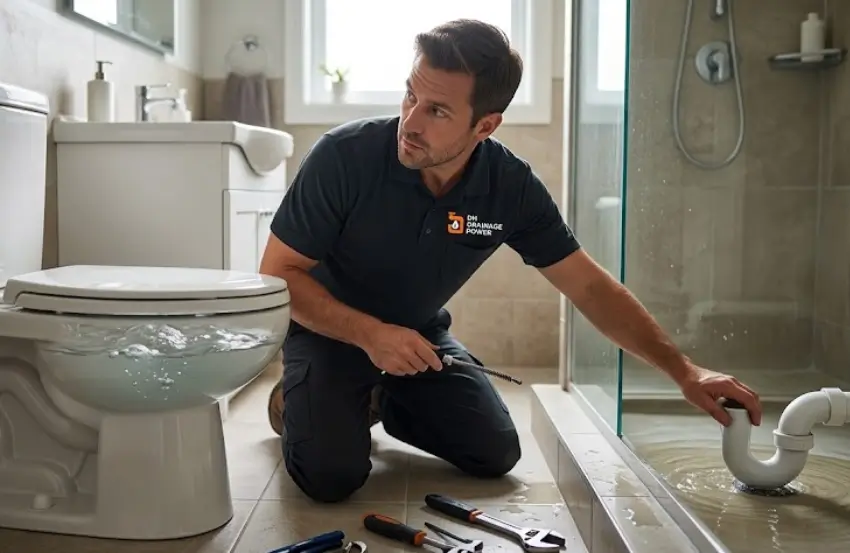
When your toilet makes bubbling noises while the shower drains, or dirty water starts rising through the shower waste, the problem may be deeper than a simple blocked plughole. Both fixtures could be affected by a restriction in the drainage pipe they share, preventing wastewater and air from moving freely. The combination of toilet gurgling and shower backing up often indicates a partially or completely blocked drainage line. As shower water enters the system, trapped air may escape through the toilet bowl. If the obstruction becomes severe, wastewater may return through the shower outlet, particularly when another bathroom fixture is used. Ventilation faults can also cause gurgling, although they do not always explain an actual wastewater backup.
For homeowners and landlords across London, these symptoms deserve attention because they can develop into unhygienic overflows and water damage. DH Drainage Power provides drain unblocking, fault finding and CCTV drain inspections across London and surrounding areas, with emergency drainage support available 24/7. If both fixtures are reacting to each other, stop unnecessary water use and arrange an inspection rather than repeatedly flushing the toilet or running the shower.
Why Does Your Toilet Gurgle When Shower Water Drains?
A toilet and shower can behave unusually when they connect to the same wastewater drainage system. Although they have separate outlets, the water eventually travels through connected pipes towards the main drainage line.
Normally, wastewater flows away while air moves through the drainage and ventilation system to help maintain appropriate pressure.
When a blockage restricts that flow, the movement of water can create pressure changes. Air may be pushed or drawn through nearby fixtures, producing the bubbling or gurgling sound heard in the toilet.
How Shared Bathroom Drainage Connections Work
In a typical bathroom, wastewater travels through different pipe connections:
-
The shower carries water through its waste outlet and trap.
-
The toilet discharges wastewater into a larger soil pipe.
-
Branch pipes connect these fixtures to the wider drainage system.
-
Ventilation arrangements help maintain appropriate air pressure.
-
Wastewater eventually flows towards the property’s drainage connection.
The exact arrangement depends on the building’s age, layout and plumbing design.
In some properties, the shower and toilet connect to the same branch or downstream drainage line. A restriction beyond their connection can therefore affect both fixtures.
This is why a blockage does not necessarily have to sit directly beneath the shower to cause shower drainage problems.
Why Does the Toilet Bubble Instead of Simply Draining Slowly?
Bubbling is often related to air movement rather than wastewater reaching the toilet bowl.
As water encounters a partially blocked pipe, displaced air may seek another route. Depending on the drainage arrangement, this pressure change can disturb the water seal in the toilet.
You might notice bubbling immediately after turning on the shower or hear gurgling shortly after water starts flowing away.
However, toilet noises alone cannot confirm exactly where a blockage exists.
A drainage inspection may be necessary to distinguish between a pipe obstruction, inadequate ventilation and other drainage faults.
What Causes Toilet Gurgling and Shower Backing Up?
Several problems can interfere with the way bathroom wastewater moves through drainage pipes.
Understanding these possible causes helps you recognise whether the issue is minor or requires professional attention.
1. A Blockage in the Shared Drainage Pipe
One of the most likely causes is an obstruction in a section of pipe serving both the shower and toilet.
Hair, soap residue, toilet paper and other waste can gradually restrict drainage. When wastewater reaches the obstruction, it may drain slowly, create pressure changes or return towards another fixture.
A blockage located downstream of the toilet and shower connections can explain why both fixtures show symptoms together.
2. Hair and Soap Residue Accumulation
Shower drains collect hair, soap residue and debris during everyday use.
These materials can build up around the waste outlet or trap, eventually restricting water flow.
A local shower blockage normally causes slow drainage or standing water in the shower tray. It does not necessarily explain why the toilet is gurgling.
If both symptoms occur together, the obstruction may be further along the connected drainage system.
3. Wet Wipes and Unsuitable Flushed Items
Wet wipes, sanitary products, excessive toilet paper and other unsuitable items can accumulate in drainage pipes.
Unlike ordinary toilet paper, many wipes do not break down readily after flushing.
These materials may catch on rough pipe surfaces, bends or existing debris, progressively restricting wastewater flow.
As the obstruction grows, fixtures connected to the same drainage route may begin behaving unusually.
4. Restricted Drainage Ventilation
Drainage systems need appropriate ventilation to manage changes in air pressure when wastewater flows.
If a vent becomes restricted or an air admittance valve is faulty, pressure changes can produce gurgling sounds and interfere with trap seals.
Ventilation issues can therefore explain a toilet that bubbles when another fixture drains.
However, a ventilation fault should not automatically be blamed when wastewater is physically backing up into the shower. An obstruction or downstream drainage problem must also be investigated.
5. Tree Root Intrusion or Damaged Pipework
Tree roots can enter drainage pipes through damaged joints or existing defects.
Once inside, roots may trap waste and reduce the available space for wastewater.
Cracked, displaced or deteriorating pipes can create similar difficulties.
These problems may cause recurring blockages, especially when the pipe is repeatedly cleared without addressing the underlying defect.
A CCTV drain inspection can help identify certain internal pipe conditions and guide further action.
6. A Restriction in the Main Drain or Sewer Connection
Sometimes the issue extends beyond an individual bathroom.
A blockage in a downstream private drain or shared sewer may affect multiple fixtures, bathrooms or properties.
Warning signs may include slow drainage throughout the building, wastewater appearing in the lowest fixtures, or drainage chambers overflowing outside.
Where shared or public sewer infrastructure is involved, responsibility for investigating the problem may rest with the relevant sewerage company.
How Can You Identify the Cause from the Warning Signs?
Different drainage symptoms offer useful clues, although none provides a definitive diagnosis on its own.
| Warning sign | Possible cause | Recommended action |
|---|---|---|
| Toilet gurgles when shower runs | Shared pipe restriction or ventilation issue | Monitor the symptoms and arrange assessment if persistent |
| Shower drains slowly but toilet works normally | Hair or debris near the shower waste | Check and clean accessible debris safely |
| Wastewater rises through shower drain | Downstream blockage or wastewater backup | Stop using affected fixtures and seek urgent help |
| Toilet bubbles when another toilet flushes | Shared branch or downstream drainage problem | Arrange professional drainage assessment |
| Several bathrooms drain slowly | Main drainage restriction | Investigate the wider system |
| Gurgling returns after drain clearance | Remaining obstruction, pipe damage or ventilation fault | Consider further investigation or CCTV inspection |
| Strong sewage odour and wastewater overflow | Possible sewage backup | Avoid contact and arrange urgent assistance |
The most important distinction is whether the problem affects one fixture or several connected fixtures.
A single slow shower often has a localised obstruction. When the toilet gurgles and water backs up through the shower, a shared drainage restriction becomes more likely.
Is It Dangerous When Shower Water Backs Up Into the Bathroom?
A shower backup can present hygiene and property risks, particularly when the water may contain wastewater from toilets or other fixtures.
Even when the returned water looks relatively clear, its source may be uncertain.
Wastewater can contain bacteria and other contaminants. Contact should therefore be avoided until the cause has been identified.
The UK Government’s flooding and health guidance explains the importance of appropriate hygiene and precautions when water may be contaminated.
Potential Problems if You Ignore the Warning Signs
-
Sewage contamination: Wastewater may spread across bathroom floors and other occupied areas.
-
Damage to flooring: Repeated water exposure can affect finishes, joints and vulnerable subfloors.
-
Persistent odours: Wastewater or disturbed trap seals can create unpleasant smells.
-
Further drainage restrictions: Continued use may worsen an existing blockage.
-
Disruption to the property: Toilets and showers may become unusable while the drainage system is investigated.
In commercial buildings, an overflowing bathroom may also affect staff, customers and the availability of essential facilities.
If wastewater is rising through a shower outlet, it is safer to treat the situation as an urgent drainage problem rather than a routine maintenance issue.
What Should You Do When the Toilet Gurgles and the Shower Backs Up?
The safest immediate action is to reduce the amount of wastewater entering the affected drainage system.
If the shower is already backing up, continuing to use connected fixtures may cause additional wastewater to escape.
Step 1: Stop Using Affected Bathroom Fixtures
Avoid running the shower or repeatedly flushing the toilet.
If several fixtures are affected, temporarily stop using sinks, washing machines and other appliances that may discharge into the same blocked drain.
This helps limit further wastewater entering the restricted pipe.
Step 2: Check for Visible Debris
If there is no sewage overflow and the shower waste is safely accessible, inspect the visible opening for hair or loose debris.
Remove only material that can be reached without dismantling concealed pipework.
A removable hair catcher may be cleaned as part of normal maintenance.
Do not reach into contaminated wastewater or attempt to open drainage chambers.
Step 3: Observe Which Fixtures Are Affected
Make a note of when the gurgling occurs.
For example, does the toilet bubble only when the shower runs, or does it also react when a sink drains?
If multiple fixtures are already showing signs of a blockage, avoid creating additional flow merely to test the system.
Useful observations include unusual sounds, where water appears, whether the problem has happened before and whether neighbouring properties are affected.
Step 4: Avoid Chemical Drain Cleaners
Chemical drain cleaners are not a dependable solution for a blockage in a shared drainage pipe.
They may fail to reach the obstruction, create hazardous conditions if wastewater returns, or pose risks when someone later needs to work on the drain.
Never mix drain-cleaning products with bleach, acids or other cleaning chemicals.
If a chemical product has already been used, tell the drainage professional before any work begins.
Step 5: Contact a Drainage Specialist
If both the toilet and shower are affected, professional assessment is usually more appropriate than repeated DIY attempts.
DH Drainage Power provides drain unblocking services in London for issues involving blocked toilets, showers and connected drainage systems.
Explain which fixtures are affected, when the problem began and whether wastewater is returning into the bathroom.
How Do Professional Drainage Engineers Diagnose the Problem?
When toilet gurgling and shower backing up occur together, the objective is to find the actual source of the drainage restriction.
Clearing debris from the shower outlet alone may not address an obstruction further downstream.
Initial Drainage Assessment
A drainage professional may begin by checking the symptoms, affected fixtures and available drainage access points.
They may investigate whether the problem is confined to one bathroom or affects other parts of the property.
Where appropriate and safe, drainage flow tests can help narrow down the affected section.
This initial assessment guides the choice of clearance or inspection method.
Drain Unblocking and Clearance
Where an obstruction is identified, the engineer selects a method suitable for the pipe’s condition, location and blockage.
Professional drainage equipment may include mechanical clearance tools or high-pressure water jetting where appropriate.
The aim is to remove the obstruction and restore wastewater flow without unnecessarily disturbing the plumbing system.
Different blockage materials and pipe conditions require different approaches, so a single technique is not suitable for every situation.
CCTV Drain Inspection for Recurring Problems
When a blockage returns or the cause remains uncertain, a CCTV drain inspection in London may be useful.
A camera can help investigate accessible drainage pipework for signs of:
-
Remaining debris or restricted flow
-
Tree root intrusion
-
Cracked or damaged pipes
-
Displaced joints
-
Structural obstructions
-
Other visible drainage defects
A CCTV survey does not assess every possible ventilation or above-ground plumbing fault. Additional checks may be needed if the inspection does not reveal the cause.
Drain Repairs When Pipe Damage Is Found
If the investigation identifies structural damage, the appropriate next step may involve repairing the affected drainage section.
The recommended method depends on the pipe material, accessibility, condition and nature of the damage.
Repairs should be based on the actual findings rather than assuming that every recurring blockage requires pipe replacement.
Can You Prevent Toilet Gurgling and Shower Drainage Problems?
Not all drainage problems are preventable, especially those involving damaged pipework or shared sewer infrastructure.
However, sensible maintenance can reduce the likelihood of avoidable blockages.
Everyday Drainage Maintenance Tips
1. Use a shower hair catcher. Regularly remove collected hair before it enters the waste pipe.
2. Keep inappropriate items out of toilets. Only flush urine, faeces and toilet paper. Dispose of wipes, sanitary items and other products in a bin.
3. Avoid pouring fats and oils into sinks. Allow cooking grease to cool and dispose of it appropriately.
4. Pay attention to changes in drainage behaviour. Repeated gurgling, unusual odours or slower flow may indicate a developing problem.
5. Keep accessible wastes clean. Follow the fixture manufacturer’s instructions for routine maintenance.
6. Investigate recurring blockages. Repeatedly clearing the same obstruction without identifying its cause may allow the underlying problem to continue.
7. Maintain relevant property records. Landlords and property managers can record previous blockages, inspections and repairs to help identify recurring issues.
Good drainage habits cannot correct every fault, but they can reduce unnecessary obstructions and make developing problems easier to recognise.
Are Gurgling Toilets More Common in Older London Properties?
Drainage layouts vary considerably across London, especially between older terraced houses, converted flats and newer developments.
Some older properties may have drainage arrangements that have been altered during extensions or bathroom renovations.
These changes can make the route of connected waste pipes less obvious.
Ageing joints, pipe deterioration and previous repairs may also contribute to drainage difficulties.
However, the age of a property does not prove that its drains are defective.
Drainage Considerations for Flats and Shared Buildings
In converted houses and apartment buildings, bathroom fixtures may discharge through pipework shared by multiple properties.
A restriction in a communal drainage section can potentially affect fixtures in different flats.
If several occupants report similar problems, a building-wide issue becomes more likely.
Property managers should establish which fixtures and units are affected, arrange appropriate investigation and coordinate access where necessary.
Who Is Responsible for a Shared Drain Blockage?
Drainage responsibility depends on where the obstruction is located, which properties the pipe serves and whether it forms part of an adopted public sewer.
Within Thames Water’s service area, the company explains that private drains serving only one property are generally the property owner’s responsibility, while adopted shared sewers and public sewers are its responsibility.
For more information, read Thames Water’s sewer pipe responsibility guidance.
In flats or managed developments, responsibility for private communal pipework may also depend on lease terms and management arrangements.
DH Drainage Power covers London, Greater London and surrounding service areas, including Wembley, Croydon, Hounslow, Kingston upon Thames and Watford.
When Should You Call for Emergency Drainage Assistance?
Occasional gurgling without other symptoms is not always an emergency, but active wastewater backup requires more urgent attention.
Contact a drainage specialist promptly when:
-
Wastewater rises through the shower when another fixture is used.
-
The toilet appears close to overflowing.
-
Multiple bathrooms become difficult to use.
-
Sewage odours accompany visible wastewater.
-
An outside drainage chamber or gully is overflowing.
-
A previous blockage has returned.
-
Wastewater threatens electrical equipment, flooring or occupied rooms.
If electrical installations may have become wet, keep clear and seek appropriate electrical safety advice. Keep children and pets away from potentially contaminated areas.
For homes, offices, restaurants and rental properties, early intervention can help limit disruption and identify the correct next step.
DH Drainage Power offers 24/7 emergency drainage support across London and surrounding areas. Availability does not imply a guaranteed attendance time.
Frequently Asked Questions
1. Why does my toilet gurgle every time I take a shower?
Your toilet may gurgle because shower wastewater changes air pressure inside a restricted drainage pipe. If both fixtures connect to the same drainage route, a partial blockage can disturb the water in the toilet bowl. A ventilation fault may produce similar noises. If the gurgling continues or the shower starts backing up, arrange a professional drainage assessment.
2. Can a blocked shower drain cause my toilet to bubble?
A blockage limited to the shower trap does not usually cause toilet bubbling. However, an obstruction in a shared pipe further along the drainage system can affect both fixtures. The toilet may gurgle when water passes through the restricted section. Identifying which pipe is affected is important before choosing a clearance method.
3. Is a gurgling toilet always a sign of a blocked sewer?
No. Toilet gurgling can result from a local drainage obstruction, an issue in a shared branch pipe or a ventilation problem. A blocked public sewer is only one possibility. If other fixtures or neighbouring properties are also affected, a wider drainage restriction becomes more likely and should be investigated.
4. Should I keep using my shower if the toilet is gurgling?
If the toilet gurgles but no water is backing up, reduce unnecessary water use and investigate the issue. If wastewater starts rising through the shower outlet, stop using connected fixtures. Additional water could increase the risk of overflow. Persistent or worsening symptoms justify professional attention rather than repeated testing.
5. Can a CCTV drain survey identify why my shower backs up?
A CCTV drain survey can help identify blockages, root intrusion, damaged joints and other visible defects inside accessible drainage pipes. It can be particularly useful when a blockage keeps returning. However, camera inspections do not diagnose every ventilation or above-ground plumbing problem, so an engineer may recommend additional checks depending on the symptoms.
6. Who should I contact if my toilet and shower share a blocked drain?
If the blockage appears to affect a private drain serving only your property, a professional drainage contractor is usually an appropriate first contact. If several neighbouring properties are affected or the problem appears to involve a public sewer, contact the relevant sewerage company. In managed buildings, inform the landlord or property manager as well.
7. Does DH Drainage Power offer emergency help for toilet and shower backups in London?
Yes. DH Drainage Power provides 24/7 emergency drainage support for homes and commercial properties across London and surrounding areas. Its listed services include blocked toilet clearance, drain unblocking, CCTV inspections and drain fault finding. Call 07897041092 or use the contact page to explain the symptoms, your location and whether wastewater is overflowing.
Conclusion: Address Connected Bathroom Drainage Problems Early
When a toilet gurgles as the shower drains or water backs up through the shower outlet, the two symptoms may point to a shared drainage restriction. The most sensible approach is to stop unnecessary water use, avoid chemical drain cleaners and identify whether the issue affects multiple fixtures.